
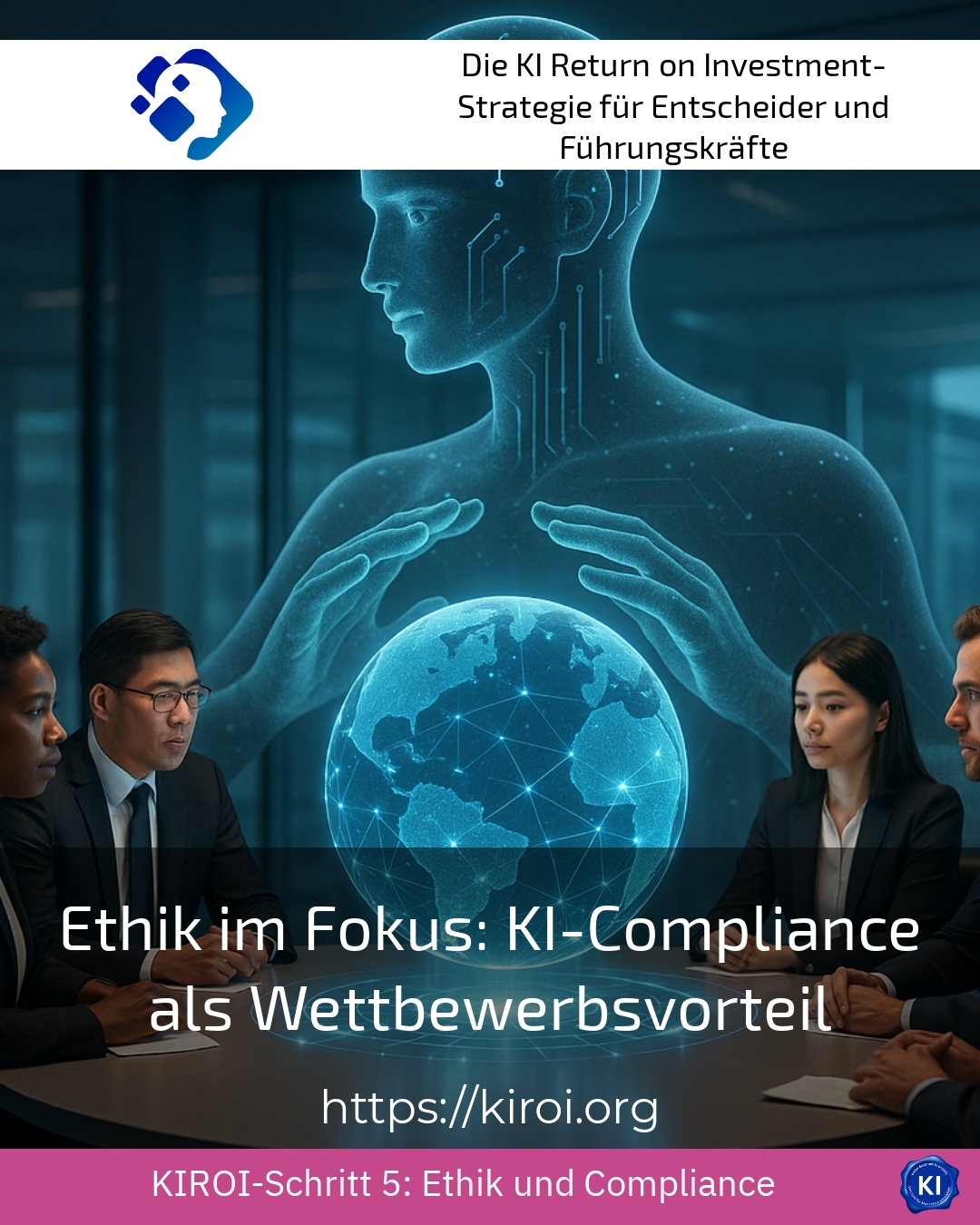
Imagine a single algorithmic misjudgment not only costing your company millions but also the trust of an entire generation of customers. In a world where intelligent systems increasingly make decisions about credit applications, staff selection, and medical diagnoses, the question of responsible use of these technologies becomes the crucial differentiator. AI compliance as a competitive advantage is no longer a theoretical construct, but a tangible strategic necessity that decides market position and long-term business success. Companies that invest in ethical frameworks today secure loyal customers and motivated employees tomorrow.
Why responsible technology use is becoming an imperative
The rapid development of algorithmic decision-making systems has ushered in a new era of corporate governance. Simultaneously, stakeholders' expectations for transparency and accountability are growing significantly. Regulators worldwide are continuously tightening their requirements for the deployment of automated systems. The European AI Act sets standards that are attracting attention far beyond the continent's borders [1].
This development is particularly evident and sustainable in the financial sector. Major banking institutions are now implementing comprehensive governance structures for their credit scoring models. These systems must demonstrably be free of discriminatory patterns and their decisions must be comprehensibly documented. A leading European financial institution recently revised its entire risk assessment, integrating ethical auditing mechanisms. Insurance companies are following suit, establishing their own ethics boards for their pricing systems. Asset managers are also increasingly subjecting their algorithmic trading strategies to ethical audits.
The healthcare sector faces similar challenges with the integration of intelligent diagnostic systems. Clinics using imaging analysis methods must be able to ensure the traceability of their findings. Pharmaceutical companies are utilising algorithmic systems for drug development and require clear validation processes. Health insurance providers are relying on automated benefits checks and are therefore under public scrutiny.
AI Compliance as a Competitive Advantage in the Recruitment Process
Personnel decisions are among the most sensitive application areas for automated decision support. Companies that use ethically sound systems in this area benefit from this strategic alignment in multiple ways. They avoid legal risks and simultaneously position themselves as attractive employers for value-oriented talent. An international technology group has subjected its applicant management software to a comprehensive bias audit and actively communicates this. Retail companies train their HR departments in the critical handling of algorithmic suggestions when selecting candidates. Consulting firms are intensively developing their own frameworks for the ethical evaluation of recruiting tools.
Best practice with a AIROI customer
A medium-sized manufacturing company with over three thousand employees faced the challenge of modernising its recruitment process while maintaining ethical standards. Transruptions coaching supported the project team intensively over an eight-month period in implementing a new applicant tracking system. Together, we developed a catalogue of criteria that systematically excludes and documents discriminatory patterns. The HR department received training on the critical interpretation of algorithmic recommendations and their limitations. The establishment of an internal ethics committee, which conducts regular audits of system outputs and suggests improvements, proved particularly valuable. Employees report increased trust in the fairness of selection processes across the entire company. Applicant numbers rose by a significant twenty percent following transparent communication of these measures. The company is now successfully positioning itself as an ethically acting employer in its industry and region. Employee turnover in the first year of employment has measurably decreased because new employees experience and value the corporate culture as authentic. This example shows how AI compliance as a competitive advantage can become concretely effective.
Transparency as the foundation of sustainable customer relationships
Consumers are developing an increasingly nuanced awareness of the use of algorithmic systems in their daily lives. They expect transparency regarding when and how automated decisions can influence their lives. Companies that proactively meet these expectations build robust relationships of trust with their customers.
In the e-commerce sector, this development is materialising in diverse and interesting ways. Online retailers explain to their customers how product recommendations are generated and which data is used. Streaming services offer insights into their personalisation algorithms and allow users to adjust them. Travel portals transparently document which factors influence their dynamic pricing and why. This openness creates acceptance and significantly reduces complaints about perceived disadvantages. Customers feel respected and remain loyal to the platform longer than with non-transparent providers.
Telecommunications companies are following similar paths with their customer service applications with great success. Chatbots clearly identify themselves as automated systems and always offer a human alternative. Voice assistants explain how they work and point out their limitations when complex queries are received. Network optimisation algorithms are explained in understandable language and their impact is presented.
Implementing ethical governance structures in practice
Putting ethical frameworks into practice requires a systematic approach and clear lines of responsibility within the organisation. Successful organisations establish dedicated roles to monitor algorithmic systems and their impact. Chief Ethics Officers are becoming increasingly important and report directly to senior management in many corporations.
Industrial companies are increasingly relying on Quality Gates for algorithmic development projects and their release. Every new application undergoes a multi-stage ethical review by various experts before deployment. Car manufacturers have long standardised and documented such processes for their driver assistance systems. Mechanical engineers are successfully applying similar procedures to their predictive maintenance systems. Logistics companies regularly check their route optimisation algorithms for unintended discriminatory effects in certain regions.
Energy suppliers face particular challenges with their smart grid applications and their control. The distribution of resources through algorithmic systems must be fair and understandable for all stakeholders. Municipal utilities are developing participation formats where citizens can gain insight into these decision-making logics. Grid operators are working with consumer advocates to review their systems for fairness.
Best practice with a AIROI customer
A trading company with a Europe-wide branch network wanted to fundamentally modernise its inventory management systems while also fulfilling compliance requirements. The existing algorithms exhibited biases that systematically disadvantaged certain regions in terms of goods supply. As part of transruptions coaching, we intensively supported the development of an ethical framework for the entire supply chain management. First, together with the project team, we identified all critical decision points in the system and documented them. Subsequently, we developed metrics that enable continuous monitoring for fairness and provide early warnings. The company implemented a dashboard that visualises regional supply differences and signals the need for action. Branch managers received training on interpreting the system outputs and escalating problematic patterns in practice. Customer satisfaction in previously disadvantaged regions increased significantly and measurably after system optimisation. Branch employees report fewer complaints about goods availability in their daily work. The company is now actively using this initiative in its sustainability communication and positioning itself accordingly. The collaboration with transruptions coaching continues as further system areas are to follow and be optimised.
AI compliance as a competitive advantage through employee engagement
The internal dimension of ethical technology use deserves special attention and appreciation within companies. Employees working with algorithmic systems require guidance and certainty in their day-to-day work. Clear ethical guidelines sustainably strengthen the workforce's trust in company management.
Media companies are intensively training their editors in the critical use of automatically generated content. Journalists are learning to contextualise and question algorithmically generated research findings before publishing them. Publishers are developing guidelines for the responsible use of text generation tools in daily editorial work. Advertising agencies are raising awareness among their creatives about the ethical implications of personalised campaign control and its limitations.
Educational institutions are integrating corresponding competences into their curricula for future specialists and managers. Universities offer further training programmes for professionals that practically teach and apply algorithmic ethics. Corporate academies develop internal training formats tailored to industry-specific challenges and focus on practical application.
Regulatory Developments as an Opportunity for Proactive Companies
Forward-thinking organisations don't see new regulations as a threat, but as a driver of innovation and an opportunity. They use compliance requirements to optimise their processes and secure long-term competitive advantages. The head start over reactive competitors can be considerable and have a sustainable impact.
Chemical companies have already experienced this with environmental regulations and have learnt from it. Those that invested in clean technologies at an early stage are now reaping the benefits of lower compliance costs and a better reputation. Similar trends are now emerging in the field of algorithmic governance and are set to intensify. Pharmaceutical companies that establish robust validation processes significantly speed up their regulatory approval procedures thanks to the trust they inspire in the authorities. Financial services providers with mature compliance structures are tapping into new markets faster than their competitors.
Technology companies are increasingly positioning themselves as providers of ethically certified solutions in their markets. This differentiation particularly appeals to public sector clients and value-driven businesses. Start-ups are making responsible development a core component of their brand identity and business model. Established players are reacting and are increasingly consistently integrating corresponding standards into their product development.
My AIROI Analysis
A systematic consideration of these developments reveals a clear pattern: the ethical use of technology is evolving from a nice-to-have to a strategic imperative for future-proof businesses. Organisations that invest in appropriate structures today are positioning themselves optimally and proactively for upcoming market demands. AI compliance as a competitive advantage manifests itself on several levels simultaneously and reinforces each other.
Firstly, robust governance structures significantly and sustainably reduce legal and reputational risks. The costs of subsequent system corrections typically far outweigh preventative investments and burden organisations. Secondly, transparent practices strengthen the trust of customers, employees, and business partners alike, and in the long term. This trust demonstrably translates into loyalty, commitment, and a willingness to cooperate from all stakeholders. Finally, proactive compliance enables faster market entry and product development in regulated environments compared to reactive measures.
transruptions coaching supports companies in navigating this complex transformation through every stage. Experience from numerous projects shows that successful implementations combine technical excellence with lasting cultural change. Clients often report initial resistance that turns to enthusiasm as soon as the first signs of success become apparent. Investing in ethical structures not only pays off financially but also provides purpose and direction. Employees identify more strongly with employers who act responsibly and communicate this effectively. The time for decisive action has come, because competitive advantages will go to those who act early and remain consistent.
Further links from the text above:
[1] EU AI Act – European Commission
For more information and if you have any questions, please contact Contact us or read more blog posts on the topic Artificial intelligence here.









 Deutsch
  English (UK)