
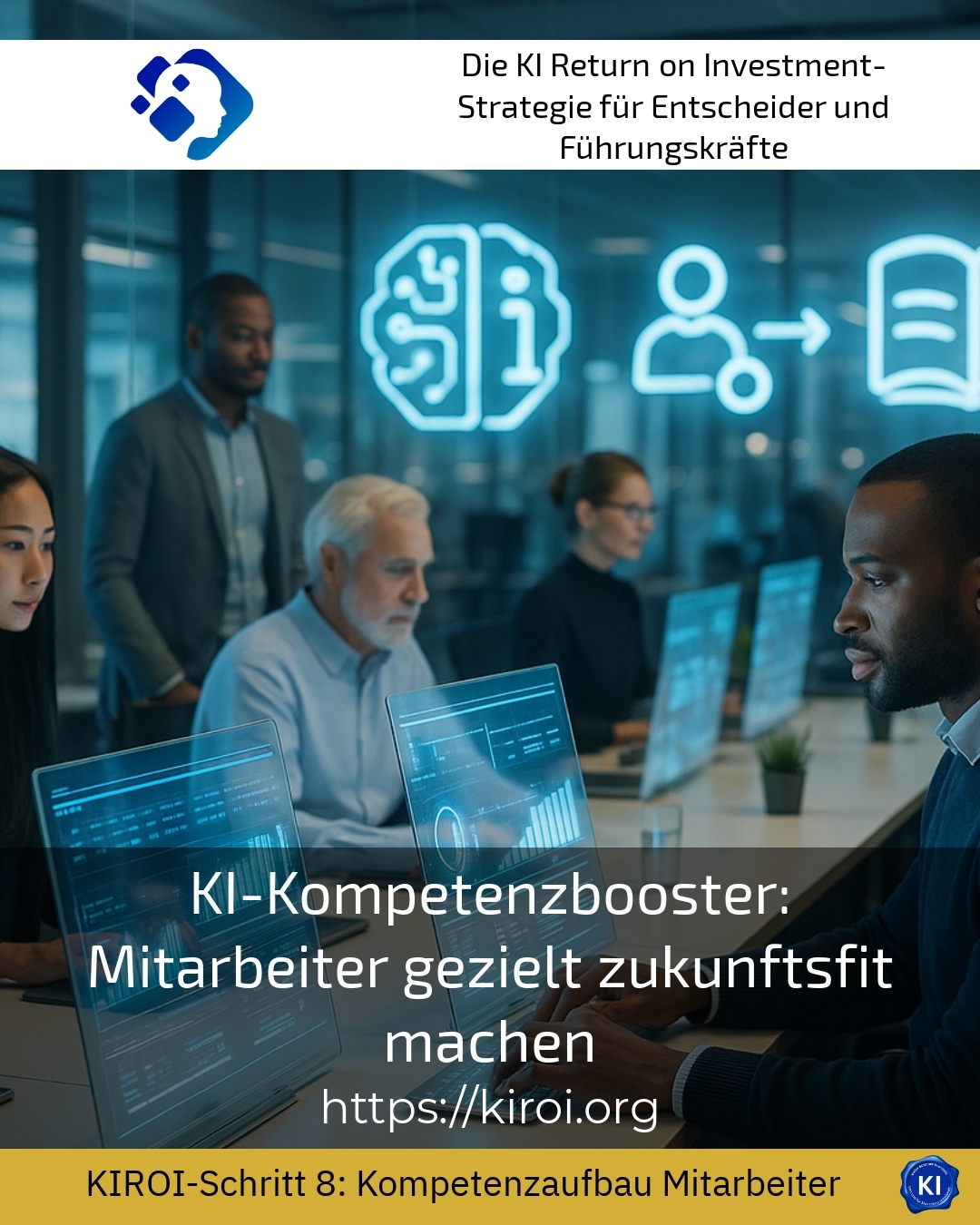
The digital revolution is changing workplaces at a pace that is simply overwhelming many companies and presenting their workforces with entirely new challenges. As machines increasingly take on complex tasks, the crucial question arises of how employees can not only keep pace but actively benefit from these developments. AI Competency Booster: Making employees fit for the future This becomes a strategic imperative for organisations of all sizes. Those who do not invest in the skills of their teams today risk falling behind the competition tomorrow. But how can this transformation be achieved in practice, and which methods have already proven themselves?
The transformation begins in the mind: why traditional training is no longer enough
Traditional further education formats often reach their limits when imparting digital competencies. The speed of technological innovation far exceeds the adaptability of conventional seminar concepts. Employees regularly report that theoretical knowledge from multi-day workshops already seems outdated after just a few weeks. For this reason, progressive organisations are relying on continuous learning processes that are firmly integrated into everyday work. This approach makes it possible to apply new insights directly in practice and thus anchor them sustainably.
For example, a medium-sized manufacturing company realised that while its designers possessed excellent specialist knowledge, they struggled to use generative design tools effectively. Instead of a one-off training session, a mentoring programme was established where experienced colleagues shared their knowledge weekly in short practical sessions. A logistics provider proceeded similarly, introducing its dispatchers incrementally to predictive analytics methods while placing particular emphasis on hands-on experience. An insurance group, meanwhile, developed an internal learning platform where employees could share self-made tutorials on new technologies and learn from each other.
Best practice with a KIROI customer
An international financial services provider faced the challenge of preparing its client advisors for intelligent analysis systems that could automatically generate portfolio recommendations. Initial scepticism within the team was significant, as many employees feared being replaced by the new technology. As part of our transruption support, we jointly developed a multi-stage qualification concept that considered both technical and psychological aspects. Initially, we conducted workshops where the workings of the systems were transparently explained, helping to alleviate fears. Subsequently, we accompanied selected pilot teams through their first practical experiences and systematically gathered feedback. The results were incorporated into the further development of the training concept, which was eventually rolled out company-wide. After one year, over eighty percent of the advisors reported that they found the new tools to be a valuable support in their work and that the quality of their advice had significantly improved. The continuous support from experienced coaches, who were available at any time for questions and uncertainties, proved particularly valuable.
AI Competence Booster in Practice: Successful Implementation Strategies
The successful introduction of new technological capabilities requires far more than simply providing learning materials or access to training platforms. Instead, it is crucial to establish a learning-conducive corporate culture where experimentation and even failure are accepted as necessary components of the development process. Leaders play a key role in this, as their own behaviour signals the actual importance of continuous professional development within the company. When managers actively engage in learning themselves and openly share their experiences, this also motivates their teams to participate.
A pharmaceutical company set up so-called innovation labs, where staff from different departments worked together to solve specific problems whilst exploring new technologies. This cross-departmental collaboration proved particularly fruitful for knowledge transfer. A retail company introduced regular ‘lunch-and-learn’ sessions, where colleagues learned from and inspired one another in a relaxed atmosphere. A mechanical engineering firm, meanwhile, used gamified learning elements to sustainably boost its workforce’s motivation for digital topics.
Targeted upskilling of employees through individual learning paths
The heterogeneity of the workforce requires differentiated qualification approaches that take into account varying prior knowledge, learning styles, and professional requirements. Standardised, one-size-fits-all programmes often miss their mark because they can neither prevent the under-challenging of advanced employees nor the over-challenging of less experienced colleagues. Adaptive learning systems, which analyse individual progress and adjust content accordingly, offer a promising solution. This way, each employee can progress at their own pace and receive exactly the support they need.
For example, an energy provider implemented a competency mapping system that recorded the existing skills of each employee and, based on this, generated tailored learning recommendations [1]. An advertising agency developed peer-learning tandems, where digitally savvy junior staff and experienced creatives benefited from each other and grew together. In a healthcare company, microlearning units were introduced that could be flexibly integrated into the often hectic daily work routine and yet enabled substantial learning progress.
The role of leadership in the AI skills booster
Without active commitment from leadership, even the most sophisticated qualification initiatives remain ineffective and will sooner or later get lost in day-to-day business. Managers must not only provide resources but also allocate time for learning and recognise it as a fully-fledged part of working hours. Clients often report that their learning efforts get overlooked in everyday life because operational urgencies always take precedence and there are no protected time slots for further development. Transruption coaching can provide valuable impetus here and support leaders in establishing a sustainable learning culture.
A telecommunications provider introduced mandatory learning times, which were blocked in the calendar and could not be used for other appointments [2]. This measure clearly signalled that further training was not a secondary concern, but enjoyed strategic priority. At an automotive supplier, executive workshops were held in which managers learned how to optimally guide and support their teams in digital transformation. A consulting firm established a mentoring programme where partners personally took on sponsorship for junior staff.
Best practice with a KIROI customer
A long-established family-run retail business approached us because it was struggling to get its long-serving staff on board with digital sales support systems. The workforce was, on average, over fifty years old and often felt apprehensive about new technologies. Our transruptions coaching initially focused on the managers, who themselves had little experience with the new systems and were therefore unable to provide authentic support to their teams. We developed a management training programme that enabled managers to act as digital role models and address concerns within the team. At the same time, we identified so-called ‘change champions’ in each branch, who were the first to be trained and subsequently supported their colleagues. These change champions proved to be the key to success, as they enjoyed the trust of their teams and were able to resolve issues on an equal footing. After eighteen months, the usage rate of the new systems had risen from less than twenty per cent at the outset to over eighty per cent. Employee satisfaction also improved significantly, as people felt they were not being left to fend for themselves on this journey.
Overcoming resistance and sparking enthusiasm
Resistance to change is a natural human phenomenon that cannot be overcome by pressure, but only through understanding and empathy. Employees who are afraid of change first need reassurance that their previous achievements are valued and that their jobs are not at risk. Only on this basis can they open up to new opportunities and begin to recognise the chances presented by new technologies. Transruption coaching supports companies in addressing these psychological barriers and fostering a positive attitude.
A media company held storytelling workshops where employees shared their personal transformation stories and encouraged others. These success stories from within their own colleagues were far more convincing than abstract presentations about the benefits of new technologies. In a construction company, excursions were organised to pioneering firms, allowing teams to experience firsthand what successful digital transformation looks like [3]. A hotel chain developed an internal certification programme that made digital competencies visible and improved participants' career opportunities.
Securing sustainability: from one-off measure to continuous process
The true success of qualification initiatives is not shown in the number of completed training sessions, but in the actual application of what has been learned in daily work. Many companies invest significant sums in training programmes, yet miss the crucial phase of practical transfer. Targeted support can make the difference here by helping employees to consolidate new behaviours and avoid relapsing into old patterns. The establishment of reflection routines and regular feedback loops contributes significantly to the anchoring of what has been learned.
A technology group implemented weekly retrospectives where teams systematically reflected on their learning experiences and identified opportunities for improvement. A financial institution developed a buddy system where employees supported and motivated each other in applying new skills. Regular skills reviews were introduced at a food producer, which made individual development levels visible and served as a basis for further learning steps.
My KIROI Analysis
The systematic development of digital skills within the workforce has proven to be one of the most critical success factors for the future viability of organisations. My many years of experience in supporting transformation projects clearly show that technological investments, without corresponding investments in the people behind them, regularly fail to achieve their hoped-for effects. The AI Competency Booster: Making employees fit for the future This is not a one-off project, but a continuous process that must be firmly anchored in the company culture.
What has always particularly impressed me with my KIROI projects is how quickly initial scepticism can turn into enthusiasm when people receive the right support and are allowed to experience real success. The keys to success lie in individual guidance, the commitment of leadership, and the consistent practical focus of all measures. Companies that embrace these principles will not only secure their competitiveness but also gain a motivated and engaged workforce that sees change as an opportunity, not a threat. The future belongs to those organisations that know how to take their employees along on this journey and inspire them.
Further links from the text above:
[1] McKinsey: How to build a skills-based organisation
[2] Harvard Business Review: Learning Is a Learned Behaviour
[3] Gartner: Employee Learning and Development
For more information and if you have any questions, please contact Contact us or read more blog posts on the topic Artificial intelligence here.











 Deutsch
  English (UK)