
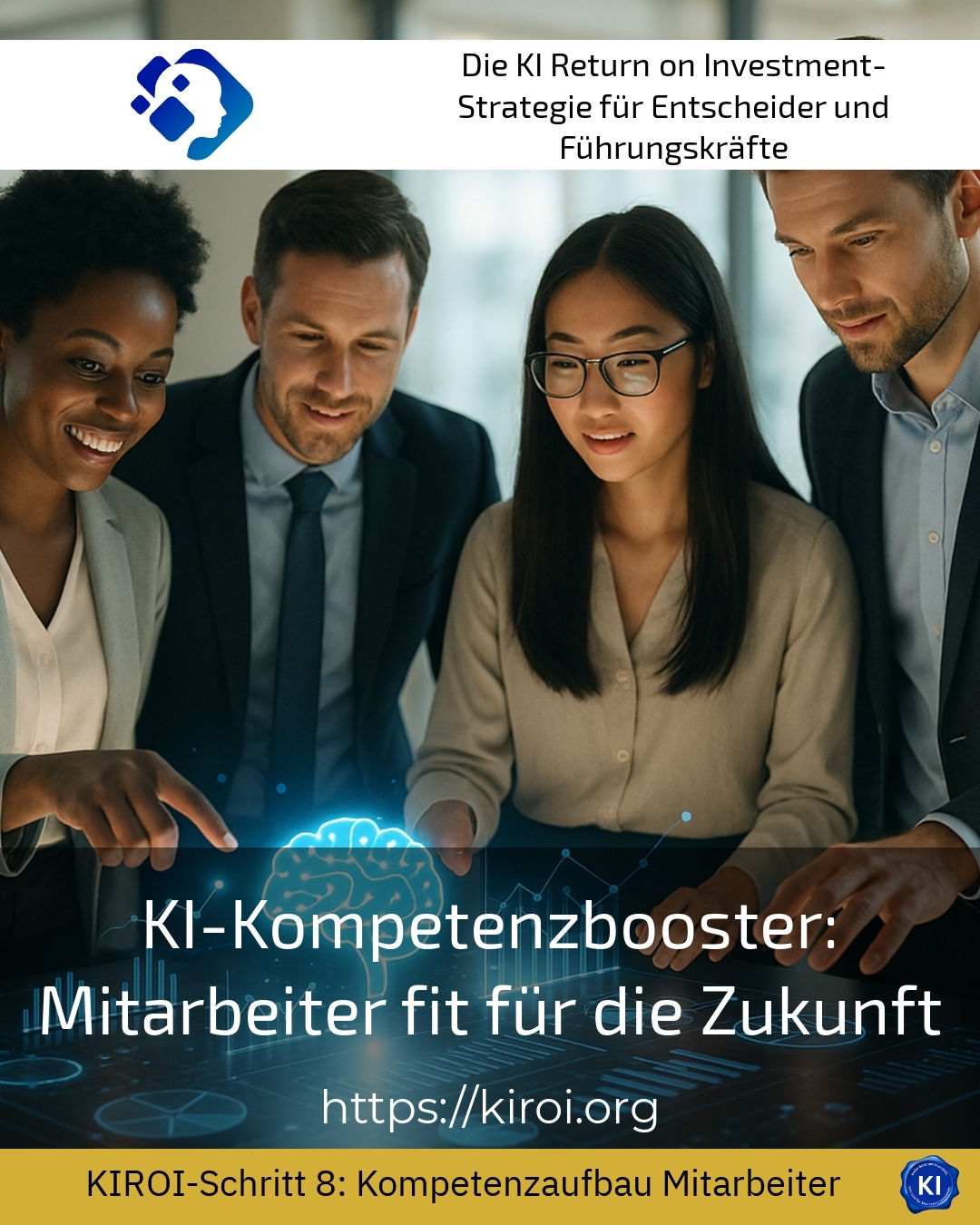
The digital transformation is changing workplaces at a rapid pace. Companies are facing the challenge of preparing their workforce for entirely new demands. AI Skills Booster It is developing into a crucial tool for making employees fit for the future. Those who do not invest in further training today will lose out tomorrow. But how can teams be sustainably empowered and inhibitions overcome? This article presents practical approaches and concrete methods for successful skills development.
Why traditional further education is no longer enough
The world of work is undergoing a fundamental transformation. Automated processes are taking over routine tasks. At the same time, entirely new job profiles and fields of activity are emerging. Employees must learn to work together with intelligent systems. They require skills that did not exist a few years ago. Traditional training formats are reaching their limits here. A two-day seminar rarely imparts sustainable competencies. Learners return to their workplace and quickly forget what they have learned. Therefore, new approaches and continuous support are needed.
This change is particularly evident in the financial services sector. Administrative staff in banks are increasingly working with automated checking systems. Customer advisors are using intelligent analysis tools for personalised recommendations. Compliance departments are relying on pattern recognition for fraud prevention. Insurance companies are automating claims processing with image recognition systems. All these changes require new qualifications and a revised understanding of work.
The AI Skills Booster as a Strategic Instrument
A well-thought-out competency development programme operates on several levels. It first imparts fundamental understanding of the new technologies. Building on this, it develops practical application skills. Finally, it fosters critical thinking and ethical reflection. This holistic approach distinguishes sustainable qualification from superficial quick courses. Guidance from experienced coaches and consultants plays a central role here.
transruptions-Coaching offers precisely this form of support for transformation projects. The guidance encompasses both strategic planning and operational implementation. Leaders receive stimuli for creating learning-conducive frameworks. Teams are supported in integrating new ways of working. Individual employees are shown personalised development paths.
Best practice with a KIROI customer
A medium-sized financial firm with approximately three hundred employees faced a significant challenge. The workforce displayed considerable reservations about automated processes in customer advisory services. Many feared job losses due to intelligent systems. Management decided on a comprehensive support programme using the KIROI methodology. Initially, we conducted in-depth discussions with all department heads and team spokespersons, identifying specific fears and resistance. In workshops, employees themselves developed ideas for sensible application scenarios, recognising that the new tools would facilitate their work rather than replace it. Within six months, attitudes shifted considerably. Acceptance rose from an initial twenty percent to over seventy percent. Continuous support through regular reflection sessions was particularly important, allowing employees to ask questions and share experiences. Today, many report significantly increased job satisfaction, appreciating the relief from routine tasks and the new development opportunities.
Practical Building Blocks of an AI Competency Booster Programme
Successful qualification programmes combine various learning formats. E-learning modules enable self-paced, self-directed learning. In-person workshops encourage exchange and practical application. Mentoring programmes connect experienced employees with new starters. Project-based learning embeds knowledge into daily work. This diversity caters to different learning types and preferences.
In the insurance industry, certain formats have proven particularly effective. Claims adjusters learn how to use automated assessment systems by reviewing real-life cases. Sales representatives practice using intelligent advisory tools through role-playing exercises. IT staff receive in-depth technical training on the systems in use. Managers train in simulations to make strategic decisions under changed circumstances.
The Role of Leaders in Competence Development
Leaders play a key role in transformation processes. They shape the learning culture and send important signals. When supervisors actively learn themselves, it motivates the entire workforce. An open error culture encourages experimentation with new tools. Regular feedback supports the individual development of employees.
Bank executives often report similar challenges. Many teams struggle to balance day-to-day operations with learning time. Employees from different generations bring varied prior experience. Integrating new skills into existing processes requires patience. Transruption coaching offers valuable support through experienced guidance.
An example from the field of asset management illustrates the importance of leadership. A team of investment advisors was tasked with using new analytical tools. The team leader first underwent intensive training himself. He then supported his employees during their initial applications. He praised progress and responded constructively to difficulties. After three months, the entire team was working with the system routinely.
Overcoming resistance and building motivation
Changes trigger uncertainty in many people. This reaction is natural and understandable. Successful skills development takes these concerns seriously. It creates space for open conversations and honest exchange. Instead of ignoring fears, they are actively addressed.
In the financial sector, certain concerns and themes regularly arise. Long-serving employees fear their accumulated knowledge might be devalued. Younger employees worry about their career prospects. Many wonder which skills will be in demand in the future. These issues deserve attention and professional support.
At a credit institution, we developed a future workshop together with employees. The participants worked out their own scenarios for their future tasks. They identified competencies they wanted to develop. This participatory approach significantly boosted motivation. The employees experienced themselves as active shapers of their professional future.
Best practice with a KIROI customer
A regional savings bank with numerous branches wanted to modernise its customer advisory services. The introduction of an intelligent recommendation system met with scepticism within the sales team. Experienced advisors feared that their personal expertise might lose significance. Younger colleagues, on the other hand, saw opportunities, but also new performance requirements. We accompanied the introduction process with a multi-stage programme. In the first phase, we organised information events for all employees. During these, we transparently explained how the system worked and its limitations. Subsequently, we trained so-called 'pilots' who acted as multipliers within their teams. These pilots received intensive training and regular coaching. They gained initial experience and openly shared it with their colleagues. After the pilot phase, we gradually rolled out the system across all branches. We continuously adapted the training programme based on employee feedback. The exchange between different branches in regular network meetings was particularly valuable. Experienced advisors eventually realised that the system complements their expertise, rather than replacing it. They now use the time saved for more in-depth customer consultations.
The AI competence booster in the context of corporate culture
Sustainable skills development requires cultural change. Learning must be understood as an inherent part of work. Companies should integrate explicit learning times into work schedules. Successes in skills acquisition deserve recognition and appreciation. A learning organisation continuously develops.
In practice, various approaches to cultural change emerge. Some financial institutions introduce regular learning days for all employees. Others create dedicated innovation labs for experimentation and trying things out. Still others integrate learning objectives into performance reviews and development plans. All these measures signal the strategic importance of continuous development.
An asset management company has established a particularly innovative learning culture. Every Friday afternoon, interested employees meet for voluntary knowledge exchange. They present new findings, share experiences, and discuss challenges. These informal learning formats effectively complement structured training programmes. Participation is voluntary, but explicitly supported by management.
Measurable success through systematic evaluation
Investments in skills development must be able to demonstrate their value. That is why systematic evaluation is an integral part of every professional programme. This is not only about satisfaction surveys after training. What is crucial is the actual increase in skills and their application in day-to-day work.
In the insurance sector, specific key figures can be observed. The processing time for standard operations can be shortened. The quality of risk assessments can be improved. Customer satisfaction can increase through personalised advice. These success indicators motivate employees and justify further investments.
At the same time, qualitative methods capture the softer factors of change. Regular surveys reveal the development of attitudes and mindsets. Focus groups allow for deeper insights into experiences and perceptions. Observations of daily work life complement employees' self-assessments. This interplay of different perspectives provides a comprehensive picture [1].
Long-term prospects and continuous adaptation
Technological development is progressing relentlessly. What is considered advanced today can be obsolete tomorrow. Therefore, competence development must be understood as an ongoing process. One-off training programmes are not sufficient for sustainable change. Instead, continuous learning and adaptation cycles are needed.
Leading financial service providers have recognised this and are acting accordingly. They are establishing permanent further training structures within their organisations. They are creating roles such as Learning Managers or Digital Coaches. They are investing in modern learning platforms and infrastructures. They are promoting self-organised learning and peer-to-peer exchange.
An example from the area of digital payment services illustrates this impressively. The company has set up an internal academy programme for all employees. Every employee has a personal learning budget and time allowance. Regular skill assessments identify individual development needs. Personalised learning paths guide them through relevant content and exercises [2].
My KIROI Analysis
The upskilling of employees for the digital future is not an optional extra task. It is among the most strategically important investments for any forward-looking company. AI Skills Booster This provides a structured framework for sustainable qualification. It combines basic technical knowledge with practical application skills. It takes into account individual learning needs as well as organisational conditions.
From my experience with numerous projects in the financial sector, clear patterns of success emerge. Companies that understand competence development as a holistic process achieve better results. Involving employees in the design process increases acceptance and motivation. Leaders play a central role as role models and supporters. Continuous support ensures the transfer into everyday work.
At the same time, I often observe preventable stumbling blocks. Timeframes that are too short underestimate the depth of necessary changes. A lack of resources for learning time frustrates motivated employees. Insufficient connection to strategic goals creates the impression of arbitrariness. These mistakes can be avoided through professional planning and support.
The KIROI approach offers a proven framework for this. It combines technological expertise with organisational development competence. It considers the human factors of change processes. It enables tailored solutions for different company contexts. This helps organisations truly make their workforce fit for the future [3].
Further links from the text above:
[1] Bitkom – Artificial Intelligence and Digital Competencies
[2] McKinsey – Insights into Artificial Intelligence
[3] KIROI Blog – Methodology and Practical Examples
For more information and if you have any questions, please contact Contact us or read more blog posts on the topic Artificial intelligence here.











 Deutsch
  English (UK)