
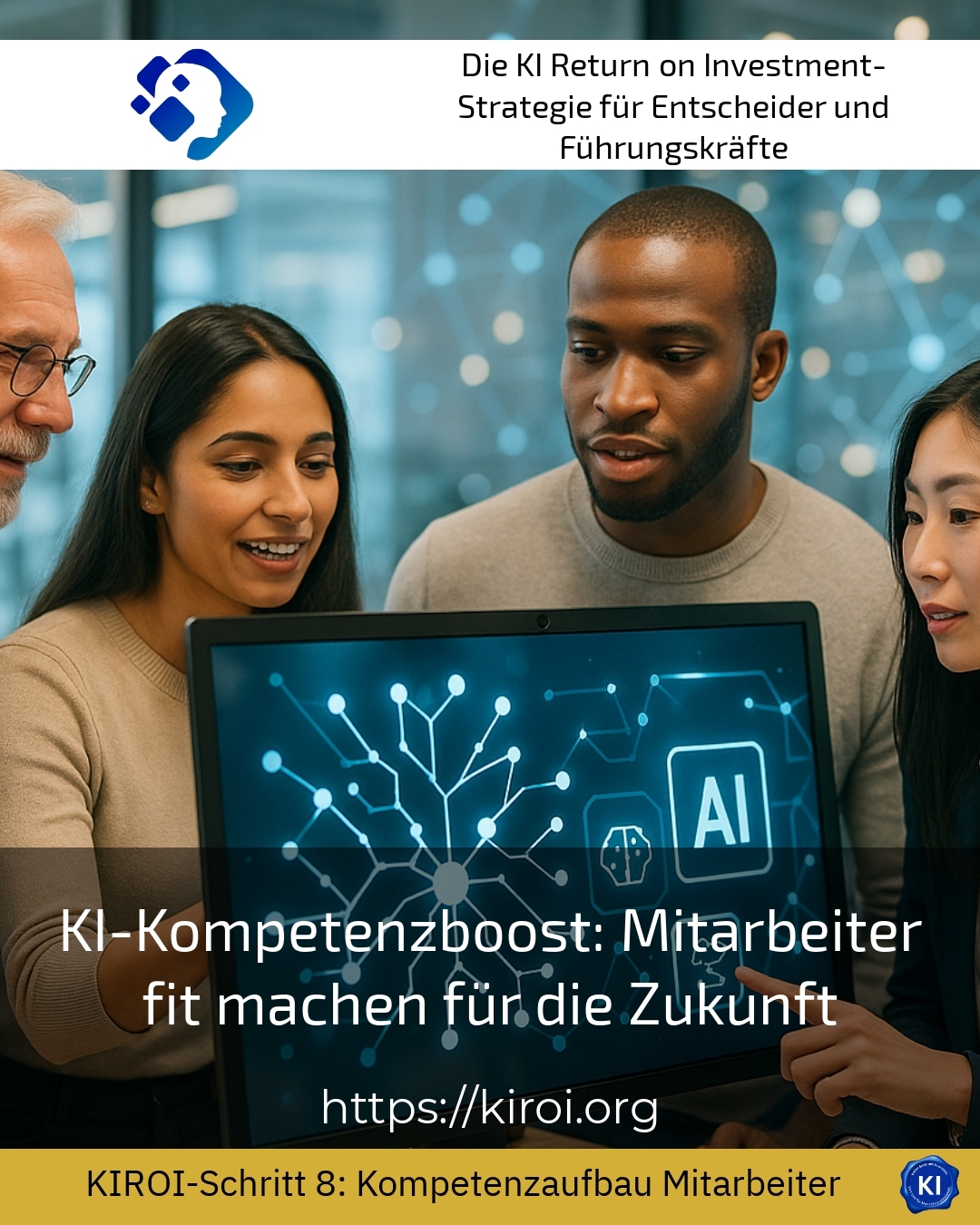
The digital transformation is changing workplaces at a rapid pace. Companies face a crucial question: How do they prepare their workforce for these changes? A targeted AI skills boost: Getting staff ready for the future becomes a strategic success factor. This isn't just about technical knowledge. Rather, people need to learn how to collaborate intelligently with intelligent systems. This development affects all industries and all levels of hierarchy equally.
Why the AI skills boost: Making employees fit for the future is becoming indispensable
The world of work is undergoing a fundamental transformation. Automated processes are taking over repetitive tasks. At the same time, entirely new fields of activity are emerging. Employees therefore require different skills than they did just a few years ago. Analytical thinking is gaining importance. Creative problem-solving is becoming a key competence. And the ability to collaborate between humans and machines will determine professional success.
Many leaders report uncertainty within their teams. Employees are wondering if their qualifications are still in demand. These concerns are understandable and must be taken seriously. That's why transruptions-Coaching supports companies with projects relating to the upskilling of their workforce. The focus here is on practical skills development. Theoretical knowledge alone is not enough.
This development is particularly evident in the financial sector. Bank advisors today use algorithmic analysis tools. They need to be able to interpret and communicate their results. In healthcare, intelligent systems support diagnostics. Medical staff therefore require an understanding of these technologies. The job profile is also fundamentally changing in retail [1].
The human component in technological change
Technology does not replace people. However, it significantly changes their tasks. An accountant today works differently than ten years ago. Automated systems take over routine bookings. People focus on analysis and decision-making. This shift requires new skills and ways of thinking.
Clients and customers often report initial resistance. Teams are initially sceptical of new tools. However, with the right support, scepticism can turn into curiosity. The key lies in the appreciative involvement of all stakeholders. People want to understand why changes are necessary. They want to be able to actively shape them.
Best practice with a KIROI customer
A medium-sized manufacturing company faced a significant challenge. The workforce was to work with new automated systems. However, many employees had concerns about their job security. The company, in collaboration with transruptions-Coaching, developed a comprehensive qualification programme. First, those responsible analysed the actual skills required for each department. Then, tailored learning paths were created for different professional groups. Machine operators learned to use and understand intelligent maintenance systems. Quality controllers received training on interpreting automated inspection results. Team leaders developed skills for leading in hybrid work environments. The programme spanned six months and included both theoretical and practical modules. Support from experienced mentors within the company was particularly important. Upon completion of the programme, over eighty percent of participants reported increased self-confidence. Productivity demonstrably increased. At the same time, employee satisfaction significantly improved. This example impressively demonstrates how well-thought-out skills development can be successful.
Strategies for a Sustainable AI Skills Boost: Making Employees Fit for the Future
Successful qualification programmes follow specific principles. They take into account the individual starting situations of the learners. They offer different learning formats for different preferences. And they integrate what has been learned directly into everyday work [2].
In the logistics sector, companies are using simulations, for example. Warehouse staff train there on how to use automated picking systems. Dispatchers practise collaborating with route optimisation tools. Managers learn to make data-driven decisions. These practical approaches significantly accelerate learning transfer.
Interesting developments are also emerging in customer service. Service staff are increasingly working with intelligent assistance systems. These analyse customer queries and suggest solutions. However, humans remain responsible for empathetic communication. It is precisely this combination that requires new skills [3].
Designing individual learning paths
Not all employees have the same starting point. Some have a natural flair for technology. Others possess deep expertise in their field. A good qualification programme takes these differences into account. It builds on existing strengths. And it specifically addresses individual skill gaps.
This is particularly diverse in the insurance industry. Claims handlers require different qualifications from actuaries. Sales representatives, in turn, have specific requirements. Each professional group interacts differently with automated systems. Consequently, training programmes must also differ.
Transruptions Coaching provides valuable impulses for design here. The analysis always begins with a thorough stocktake. Where are people currently? What competencies will be needed in the future? How big is the gap between them? Only then are tailor-made development programmes created.
The role of leaders in change
Leaders significantly shape a company's learning culture. They must embody and support change. In doing so, they face their own challenges. Their competencies also need to evolve. Managing teams in hybrid work environments requires new skills.
This is clearly evident in the hotel industry. Hotel managers today coordinate staff and automated systems. Receptionists work with intelligent booking platforms. Housekeeping teams use optimised cleaning schedules. Management must bring all these elements together.
It is a similar situation in the restaurant industry. Restaurant managers use ordering systems and staff scheduling tools. They need to understand and utilise their capabilities. At the same time, customer focus and team leadership remain central. Finding this balance requires continuous development.
Best practice with a KIROI customer
A retail company with multiple branches wanted to systematically develop its managers. The previous training formats were no longer sufficient. Together with transruptions-Coaching, an innovative management programme was created. First, those responsible defined the future leadership competencies required. Digital collaboration and data-driven decision-making played a central role in this. The programme combined various learning elements. Online modules conveyed theoretical foundational knowledge. Face-to-face workshops enabled intensive exchange and practice. Peer learning groups encouraged learning from each other. Each manager also received a personal development plan. The practical projects between modules were particularly valuable. Participants directly applied new methods in their branches. They reported on their experiences and learned from mistakes. After a year, clear improvements in leadership quality were evident. Employee surveys confirmed a more positive perception of superiors. Staff turnover in the participating branches noticeably decreased. This project demonstrates the importance of holistic management development.
Psychological safety as a foundation
Learning requires courage and openness. People must be allowed to make mistakes. Only by doing so do they develop new skills. Leaders create the necessary framework conditions for this. They foster a culture of experimentation.
Forward-thinking companies in the construction sector are establishing such learning cultures. Construction managers encourage their teams to use digital planning tools. Mistakes made during use are viewed as learning opportunities. This attitude significantly accelerates the adoption of new technologies [4].
A transformation is also taking place in agriculture. Modern farms are focusing on precision farming. Farmers and their employees are learning to use sensor-based systems. Drones monitor fields and deliver valuable data. Interpreting this information requires new skills.
Measurable success through systematic development of competencies
Investment in staff development must pay off. Companies therefore need key performance indicators to measure success. These include quantitative and qualitative aspects. The development of productivity can often be measured directly. Staff satisfaction and engagement are also relevant indicators.
In the energy sector, companies measure error rates, for example. After training measures, these often decrease significantly. Technicians work more safely with complex systems. Maintenance intervals are extended through predictive maintenance. All of this has a positive impact on profitability.
The healthcare sector is showing similar developments. Nursing staff are making more efficient use of digital documentation systems. Doctors are benefiting from intelligent decision support systems. The quality of patient care is measurably increasing. At the same time, employees are gaining time for the interpersonal aspects of their work.
Develop long-term perspectives
Competency development is not a one-off project. It must happen continuously. The world of work is constantly changing. Companies therefore need long-term development strategies. These must remain flexibly adaptable.
This is particularly evident in the media sector. Journalists today work with automated research tools. Graphic designers use generative design systems. Newsrooms analyse reader behaviour with intelligent algorithms. These changes require continuous learning from all those involved.
Transruptions-Coaching supports organisations in establishing learning structures. The focus is on sustainability and personal responsibility. Teams are to be empowered to manage their own learning process. Leaders play an important role model function in this [5].
My KIROI Analysis
The need for systematic skills development is undeniable. Companies across all sectors face comparable challenges. Technological development is progressing unstoppably. People must be empowered to help shape these changes. Targeted AI skills boost: Getting staff ready for the future becomes a decisive competitive factor.
The examples presented impressively show the breadth of requirements. From the manufacturing industry to the service sector, job profiles are fundamentally changing. Successful companies recognise this development in good time. They invest proactively in the qualification of their workforce. In doing so, they focus on holistic approaches rather than isolated training measures.
The human dimension of change seems particularly important to me. Technology alone does not solve problems. People need to understand how to work with new tools. They need to have confidence in their own ability to learn. Leaders play a crucial role in this. They shape the learning culture and create psychological safety.
Transruption coaching can offer valuable support to companies in this transformation. The guidance includes analysis, concept development, and implementation. Individual solutions take into account the specific circumstances of each organisation. Sustainability and personal responsibility are at the core of the work. This leads to qualification programmes with measurable added value for all involved.
Further links from the text above:
[1] McKinsey: The Future of Work
[2] World Economic Forum: The Future of Jobs Report
[3] Bitkom: Digital Transformation
[4] Haufe: HR Management
[5] Harvard Business Review: Leadership
For more information and if you have any questions, please contact Contact us or read more blog posts on the topic Artificial intelligence here.











 Deutsch
  English (UK)