
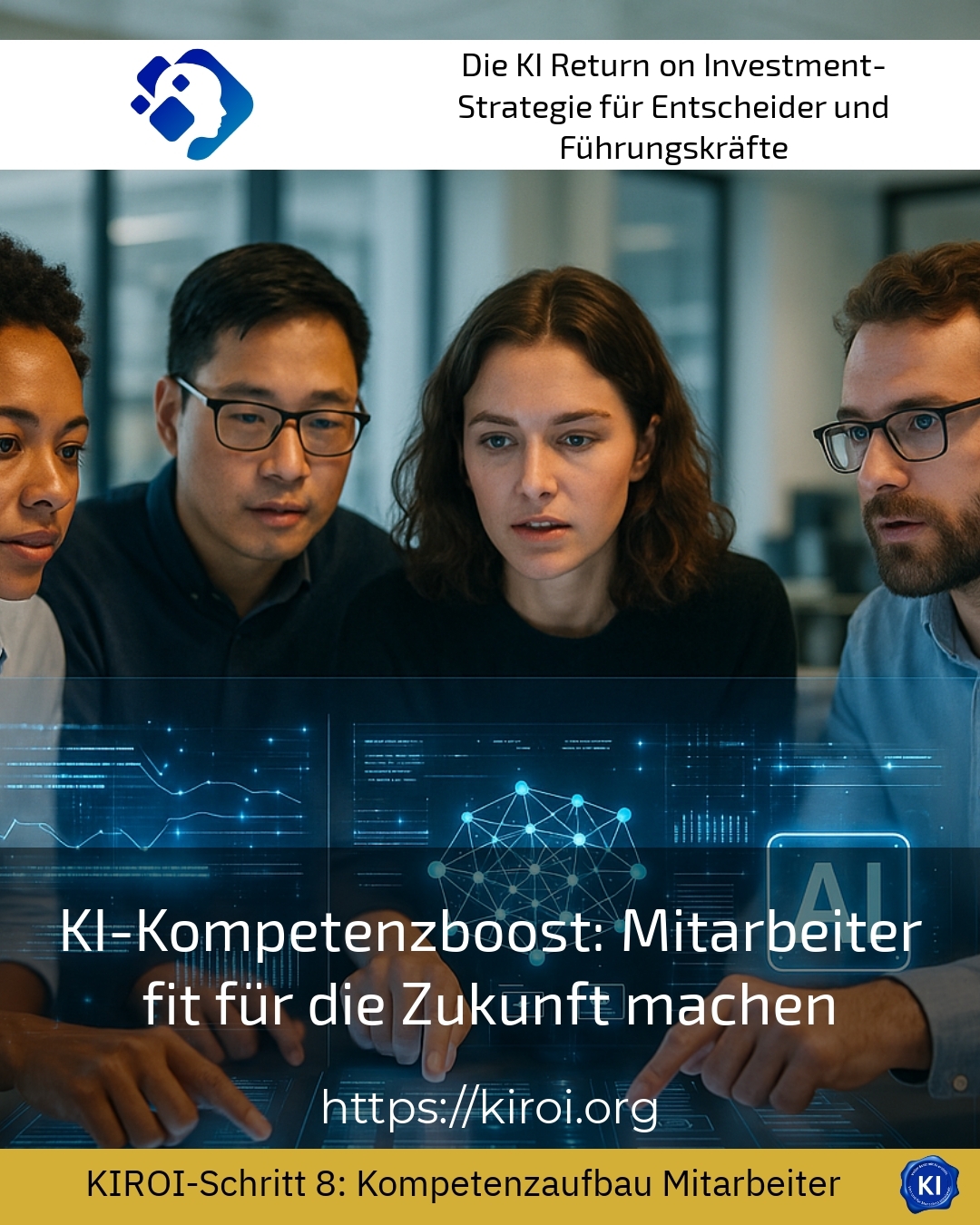
Imagine your workforce navigating with confidence through a world where intelligent algorithms are fundamentally changing their daily work. AI Skills Boost: Getting Employees Ready for the Future is no longer a distant vision, but an urgent necessity for businesses of all sizes. But how can this transition be managed without causing anxiety or losing valuable knowledge? The answer lies in thoughtful support that meets people where they are. In this article, you will learn what concrete steps organisations can take to sustainably strengthen their teams while fully exploiting the potential of modern technologies.
Why AI skills have become indispensable today
The world of work is currently undergoing profound change. Intelligent systems are taking over routine tasks, creating space for creative activities. At the same time, new demands are emerging for human skills. Companies face the challenge of systematically developing their employees. This includes not only technical knowledge but also a fundamental understanding of digital contexts.
In healthcare, clinics are already using intelligent diagnostic systems that support radiologists in image interpretation and grant them valuable time for more complex cases. Nursing staff benefit from automated documentation aids that can significantly reduce administrative burdens. Algorithmic analyses are also considerably accelerating the development of new active ingredients in pharmaceutical research [1].
These developments demonstrate that technological progress and human expertise ideally complement each other. However, this symbiosis is only successful if employees acquire the necessary competencies. Managers often report a lack of confidence within their teams due to a lack of clear direction and practical training opportunities. This is precisely where professional support comes in, providing impetus and developing individual learning paths.
The AI competence boost as a strategic element of personnel development
A sustainable qualification strategy takes into account different learning types and backgrounds of experience. Not every employee brings the same prerequisites, which is why flexible formats are crucial. Some people learn better in hands-on workshops, while others prefer self-directed learning with digital resources. A successful strategy therefore combines different methods and creates spaces for exchange.
In the banking sector, institutions are increasingly implementing training programmes for their client advisors so that they can competently use intelligent analysis tools. Insurance companies are training their claims handlers in the use of automated claims assessments in order to optimally combine human judgment and machine precision. Auditing firms are also investing heavily in the further training of their employees, as algorithmic auditing procedures are becoming increasingly standard [2].
Transruptions Coaching supports companies with these transformation projects and helps them to develop tailor-made concepts. Experience shows that success largely depends on the involvement of everyone concerned. If employees understand the purpose and can actively help to shape it, acceptance of new ways of working increases significantly.
Best practice with a KIROI customer
A medium-sized logistics company with approximately three hundred employees faced the challenge of introducing intelligent route planning systems. Management recognised early on that technical implementation alone would not be sufficient. Together with transruptions-coaching, a comprehensive qualification program was developed that involved all hierarchical levels. Warehouse workers received practical training showing them how the new systems could make their daily lives easier. Dispatchers learned to critically evaluate algorithmic recommendations and adapt them if necessary. Managers were trained to guide their teams through the change process and take concerns seriously. A mentoring programme, where tech-savvy employees acted as contact persons for less experienced colleagues, proved particularly valuable. After six months, ninety percent of the workforce reported increased confidence in using the new tools. The error rate in order processing decreased by about fifteen percent, and employee satisfaction improved measurably. This example illustrates that a holistic approach, which places people at the centre, enables sustainable success.
Practical ways to boost AI competence sustainably across different departments
Each department has specific requirements, which is why standardised training concepts are rarely optimal. Marketing teams benefit from training on intelligent analysis tools that can predict customer behaviour. HR departments require knowledge about algorithmic pre-selection in applications and its ethical implications. Production employees, in turn, should understand how predictive maintenance systems work and what data is relevant for them.
In the automotive industry, manufacturers train their engineers intensively in the use of generative design tools, which accelerate design processes. Quality inspectors learn to operate image recognition systems and interpret their results. Sales staff also receive training so that they can competently inform customers about connected vehicle functions [3].
Retailers are increasingly focusing on further training in intelligent inventory management and personalised customer engagement. Store managers are being trained to use data-based recommendations for assortment planning. Sales staff are receiving training on operating interactive consultation systems, which are intended to enhance the shopping experience. These examples show what industry-specific successful qualification can look like.
Overcoming obstacles and constructively using resistance
Change processes almost always encounter resistance, which is why their constructive management is crucial. Clients often report fears of job loss, which must be taken seriously. Others express concerns about their work being monitored by intelligent systems. Dismissing such worries outright would be counterproductive, as they often touch upon legitimate issues.
In the education sector, teachers are sometimes sceptical of new technologies because they feel their pedagogical autonomy is threatened. Universities address these concerns through participatory development processes in which lecturers are actively involved. Schools report positive experiences when teacher training covers not only technical but also didactic aspects.
Interesting dynamics are also emerging in the trades, as traditional professions meet digital innovation. Joinery businesses are integrating computer-controlled manufacturing systems and training their employees accordingly. Electricians are increasingly using intelligent diagnostic tools that support complex troubleshooting. Plumbing companies are also relying on digital planning tools that can optimise project workflows.
Transruptions-Coaching supports organisations in using resistance as a valuable source of information. Experience shows that critical voices often point to blind spots that would otherwise be overlooked. A culture of open communication not only promotes acceptance but also improves the quality of implementation.
Sustainable embedding of the AI competence boost in the corporate culture
One-off training measures quickly fizzle out, which is why long-term embedding is essential. Learning organisations establish continuous further training formats that can react to current developments. Regular reflection sessions enable the exchange of experiences and the identification of further learning needs. Managers act as role models by actively learning themselves and sharing their insights.
In the media industry, publishers are establishing internal knowledge platforms where editors document their experiences with text-generating systems. Broadcasters are setting up innovation labs where employees can experiment and learn from each other. Advertising agencies are promoting cross-functional teams where creatives and data experts work together on projects.
Public administration faces particular challenges because bureaucratic structures can make change difficult. Nevertheless, there are encouraging examples from municipalities that systematically train their employees. Citizen services use intelligent chatbots as support, with staff monitoring these systems and intervening if necessary [4]. These developments show that even traditionally oriented organisations can shape change.
Best practice with a KIROI customer
A municipal administration with around five hundred employees wanted to introduce digital citizen services and recognised the need for training early on. In collaboration with transruptions-Coaching, a multi-stage programme was developed that addressed various target groups. Case workers received practical training on using intelligent form assistants, which pre-structure citizen requests. Team leaders were trained in interpreting data analyses to deploy resources more efficiently. The establishment of an internal support hotline, where trained colleagues answered questions, was particularly valuable. The authority also introduced regular learning circles where employees exchanged experiences and learned from each other. An incentive system recognised special commitment to further training and promoted a positive learning culture. After one year, employees reported increased job satisfaction because repetitive tasks had decreased. Processing times for standard enquiries fell by an average of thirty percent without any loss of quality. Citizens expressed positive feedback about faster response times and more competent advice. This project impressively demonstrates how systematic training can have a transformative effect in the public sector too.
The human dimension of technological change
Technology alone does not create sustainable success, which is why people must be at the centre. Emotional intelligence and critical thinking are gaining importance because machines cannot replicate these skills. Creativity and empathy are becoming key competitive advantages in an increasingly automated world. Companies that foster these qualities position themselves favourably for future challenges.
This is particularly evident in the hospitality industry, as personal service remains crucial. Hotels use intelligent systems for reservations and room service, yet the warm welcome remains human. Restaurants rely on algorithmic inventory planning, while chefs unleash their culinary creativity. Tour operators combine data-based recommendations with personal consultation that caters to individual wishes.
The care and social professions also illustrate that technology can support but not replace us. Intelligent assistance systems relieve care workers of documentation tasks and create time for personal attention. Therapists use data-driven analyses to supplement their clinical experience. Social workers benefit from information systems that clearly present complex case constellations [5].
Developing future-proof skills through the AI skills boost
Certain skills will be especially valuable in a technology-driven world of work. Data literacy enables critical evaluation of information and informed decision-making. Problem-solving skills help to tackle complex challenges systematically. Communication strength remains indispensable because human interaction will continue to be central.
The energy sector impressively illustrates the need for new competency profiles. Grid operators require specialists who can monitor and control smart grids. Wind farm operators are training their technicians in the use of predictive maintenance systems that minimise downtime. Energy consultants are also expanding their skills to support customers in integrating smart home technology.
In the legal sector, job profiles are also changing noticeably. Law firms are using intelligent research tools that identify relevant judgments and specialist literature. Legal professionals must learn to critically assess these results and apply them to specific cases. Notaries are relying on automated document creation, though legal review still requires human expertise.
My KIROI Analysis
The systematic qualification of employees for a technology-driven world of work represents one of the most important strategic levers of our time. My analysis of current developments shows that organisations that invest early in comprehensive skills development achieve significant advantages over hesitant competitors. The speed of technical implementation is less important than the quality of human support during the transformation process.
Particularly noteworthy is the realisation that technical training alone rarely leads to success. Instead, a holistic approach is required that considers emotional, social, and cultural dimensions equally. Companies that involve their employees as active co-creators consistently report better results than those that implement changes top-down. Investing in communication and participation pays off many times over.
From my perspective, the importance of continuous professional development will continue to increase because technological developments are accelerating. One-off training measures will not be sufficient to remain competitive in the long term. Instead, organisations must establish learning-friendly structures that enable permanent growth. Transruption coaching can provide valuable impulses and support companies in this demanding task. The future belongs to those organisations that consistently promote and unleash their greatest resource, namely the creativity and adaptability of their people.
Further links from the text above:
[2] PwC: Digital Transformation
[3] VDA: Automation in the Automotive Industry
[4] BMI: Modern Administration
For more information and if you have any questions, please contact Contact us or read more blog posts on the topic Artificial intelligence here.











 Deutsch
  English (UK)