
The transformation in customer service through chatbot optimisation
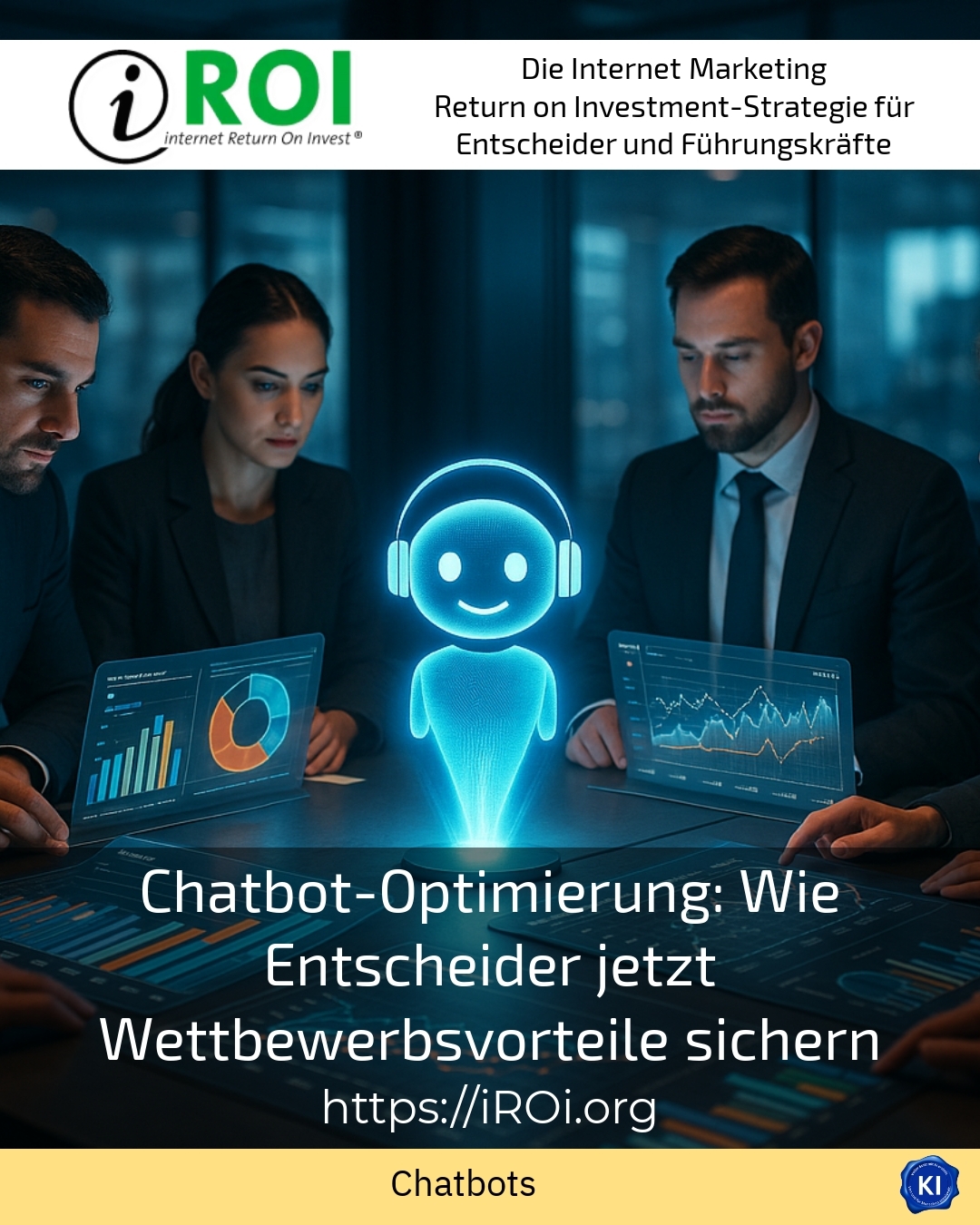
Chatbot optimisation is increasingly important for companies as it allows them to secure competitive advantages. The continuously advanced technology enables automated customer interactions around the clock and efficiently addresses repetitive concerns. This noticeably reduces waiting times and unburdens staff resources as bots take over routine tasks.
This development is particularly relevant in sectors such as retail, healthcare, and finance. Here, clients often report that personalised responses via chatbot significantly improve the user experience. Chatbot optimisation ensures that the bot not only answers questions but also understands context and offers suitable solutions.
BEST PRACTICE at company XYZ (name changed due to NDA contract) An e-commerce provider has accelerated the answering of product questions through targeted chatbot optimisation. The bot can now not only query stock levels but also provide recommendations for alternative products, which promotes sales. Customer satisfaction demonstrably improved as the system was active 24/7, reducing waiting times to a minimum.
How chatbot optimisation increases efficiency
The targeted optimisation of chatbots allows companies to process many customer enquiries in parallel and efficiently. A major advantage lies in the scalability of such systems: even with high user numbers, response times remain stable. This means that there is no overload during peak times. At the same time, staffing requirements for handling standard enquiries are significantly reduced.
Typical use cases include appointment booking, data-driven inquiries, or simple technical support requests. Relieving employees creates space for strategic tasks that add more value. Furthermore, chatbot optimisation enables continuous evaluation of interactions, helping companies to identify trends and tailor their offerings accordingly.
BEST PRACTICE at ABC (name changed due to NDA contract) A financial service provider was able to halve the processing time for common customer queries regarding account opening through improved chatbot optimisation. The bot's intelligent pre-qualification and document checks led to faster access to services. Employees report less routine work and, at the same time, higher customer satisfaction.
Sustainable competitive advantages through chatbot optimisation
Decision-makers are increasingly focusing on chatbot optimisation to strengthen their long-term digital strategy. The combination of constant availability, personalisation and efficient data handling supports targeted customer retention and acquisition. Thanks to modern technologies, such as AI-driven dialogue management, chatbots are becoming more intelligent and can understand even more complex requests.
Furthermore, chatbot optimisation is often linked to sustainability aspects. Efficient algorithms and energy-saving hosting solutions reduce the ecological footprint, which is an important argument for many companies. The expertise to continuously improve chatbot performance therefore proves to be a crucial factor in competition.
BEST PRACTICE at LMN (name changed due to NDA contract) A healthcare provider optimised its chatbot so that it not only automatically handles medical FAQs but also proactively identifies user issues and forwards them to experts. This led to shorter waiting times and increased patient satisfaction, supported by data-driven, personalised advice.
Tips for successful chatbot optimisation
Crucial for successful chatbot optimisation is first of all a precise analysis of user interactions with the bot. Only by understanding which topics users most frequently seek support for can the chatbot be systematically improved. Additionally, regularly gathering feedback from the user base helps to quickly identify and eliminate weaknesses.
The chatbot should also be placed in clearly visible locations across digital channels and communicate its benefits through clear prompts. Proactive engagement, for example via chat invitations, can increase the interaction rate. Integration into existing communication channels such as social media or email further improves availability and user-friendliness.
Ultimately, high quality standards for dialogue content and responses are crucial. Chatbots should be continuously updated with current information and industry-specific knowledge. Only in this way can the user experience remain consistently positive and in-depth.
What questions do decision-makers bring about chatbot optimisation?
Decision-makers frequently ask how they can achieve the best impact with a limited budget or how chatbots can be flexibly integrated into existing systems. Many are looking for inspiration on how to measurably improve user satisfaction and how to support internal teams during the transition. This is where chatbot optimisation provides practical solutions without making unrealistic promises.
A common challenge is also finding the right level of automation, so as not to lose human contact, but still to achieve efficiency gains. Many companies find support from expert advice during the change process to be very helpful.
My analysis
Chatbot optimisation isn't a one-off step, but rather an ongoing process. Those who are crucial in accompanying this journey receive valuable impulses and can strategically strengthen their business. The diverse areas of application and industry examples show that adaptive, data-driven improvements often lead to measurable added value. This is how they secure a contemporary position in the competition against digital transformation.
Further links from the text above:
[1] A Comprehensive Guide To AI Chatbots In 2025
[2] Chatbot Development: How to Secure Competitive Advantages for…
[4] Chatbot Optimisation: 8 Tips to Improve Chatbot Performance
[5] How chatbots can increase efficiency in companies
For more information and if you have any questions, please contact Contact us or read more blog posts on the topic TRANSRUPTION here.









 Deutsch
  English (UK)