
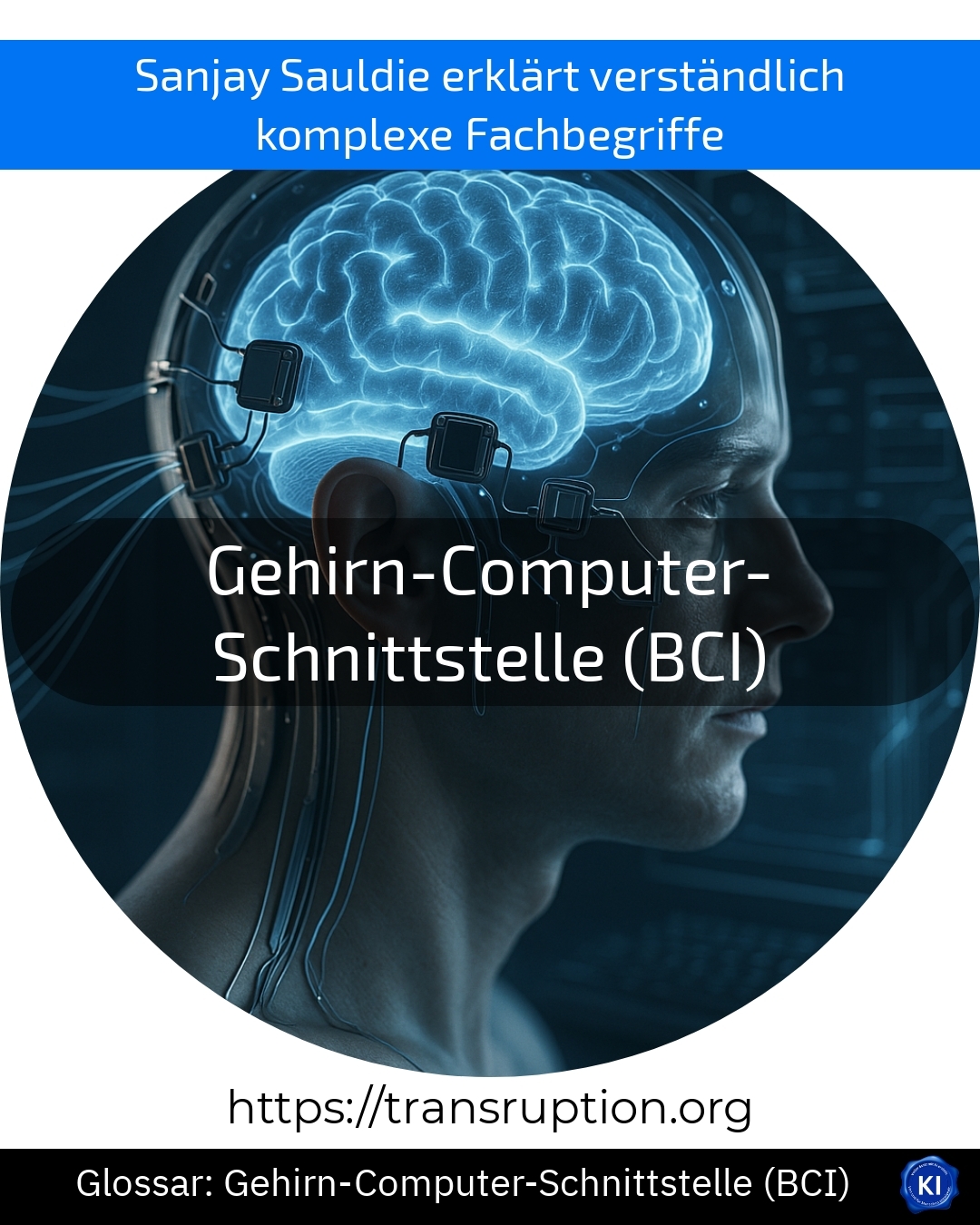
Brain-computer interfaces (BCIs) are part of the fields of artificial intelligence, the digital society, and robotics. With a BCI, thoughts can communicate directly with computers or machines – entirely without a keyboard, mouse, or voice commands. The technology translates brain signals into digital commands, allowing devices to be controlled by thoughts alone.
A simple example: people who can no longer move their arms or legs can use a brain-computer interface to steer a wheelchair with their thoughts. Special sensors attached to the head measure brainwaves and send them to a computer, which translates them into a control command for the wheelchair.
The application areas for BCIs are constantly growing – from medicine and robotics to gaming and everyday uses. This innovation offers huge opportunities, especially for people with physical impairments, and can greatly simplify tasks. Although the technology is still under development, it already shows what great potential the connection of our brains with modern technology holds.











 Deutsch
  English (UK)