
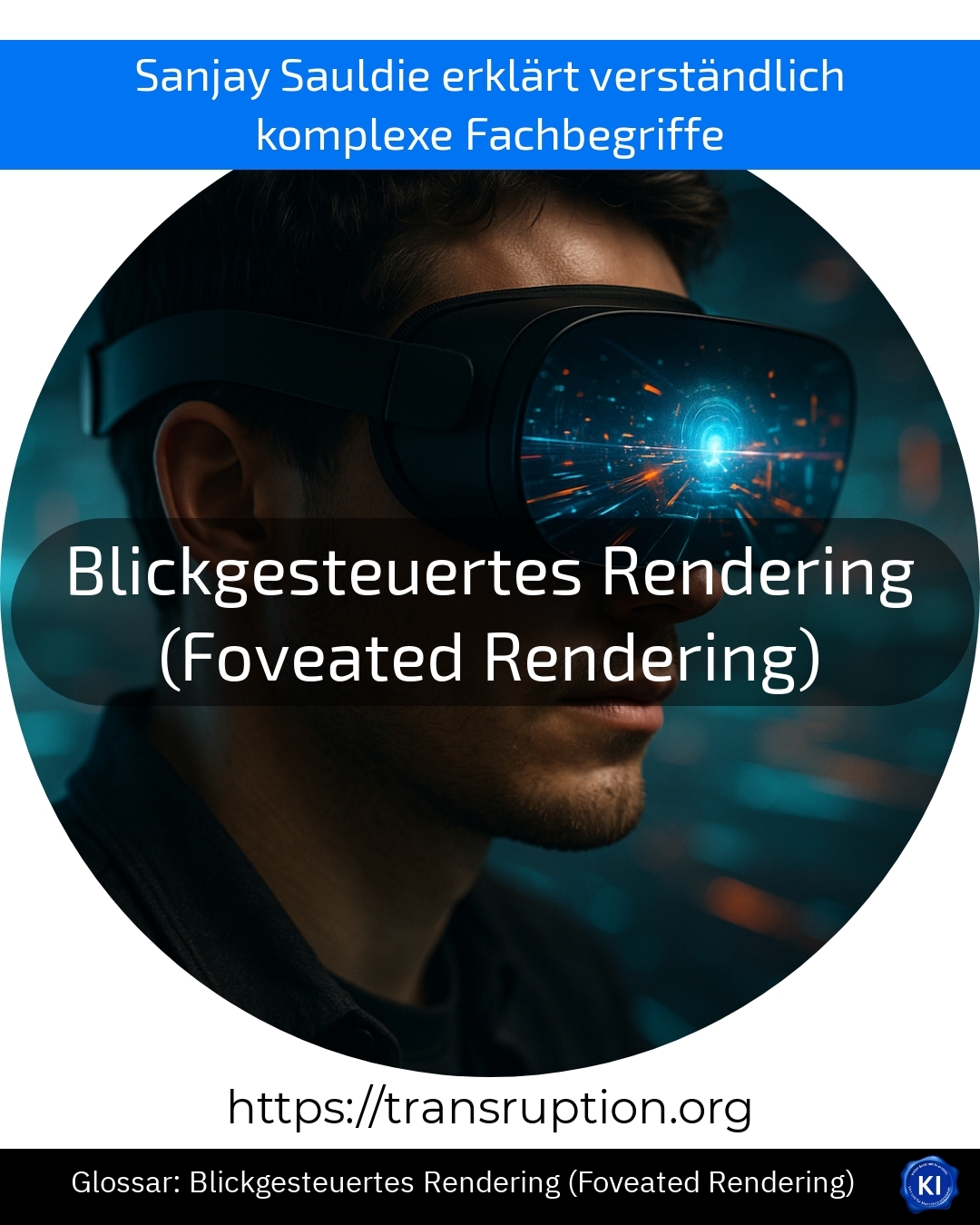
Gaze-controlled rendering (foveated rendering) is primarily at home in the fields of virtual and augmented reality, artificial intelligence, and digital transformation. This technique is used to render virtual worlds particularly efficiently in VR headsets or augmented reality applications.
When using foveated rendering, it is precisely calculated where the user is currently looking. Only this area is rendered in the highest level of detail. The surrounding area, however, is shown with fewer details, as the human eye sees less sharply there anyway. This saves a tremendous amount of processing power and energy without any perceivable loss in quality for the user.
A vivid example: Imagine you're wearing a VR headset and playing a car racing game. Your gaze is always fixed on the road ahead. Only this area is displayed perfectly and in detail, while the sky or the grandstand at the edge remains blurred. This makes the game run much more smoothly and puts less strain on the graphics card.
Foveated rendering is therefore an important building block for making virtual worlds more realistic and affordable to experience.











 Deutsch
  English (UK)