
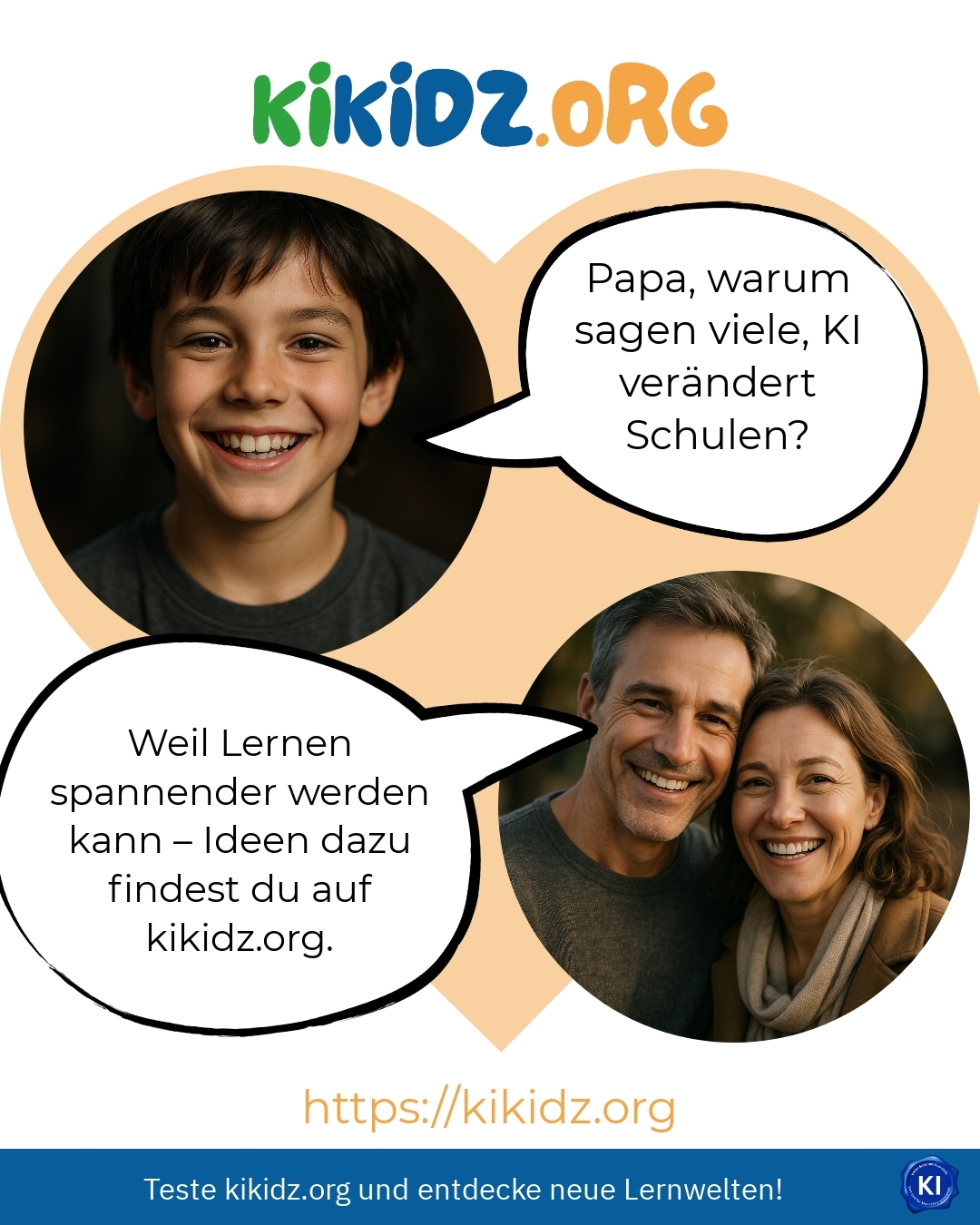
Artificial intelligence is changing schools more fundamentally than any previous trend. Many parents hear their children ask: „Dad, why do many people say AI is changing schools?“ This question is more relevant than ever, as AI systems like ChatGPT have long been part of the everyday lives of students and can no longer be banished from school life [9]. Anyone who wants to understand what this means for teaching and education needs practical and easy-to-understand information. That is why I am dedicating this article to precisely this central question.
Artificial intelligence in the classroom: what's actually going on?
Artificial intelligence is now so easily accessible that pupils often use these technologies at home – for learning, but also for writing texts or solving maths problems[1]. However, AI has so far hardly found its way into many schools[1]. This means: While children and young people appreciate AI as a digital learning companion, teachers are often still trying to get to know the technology and work with it meaningfully[3].
Two examples illustrate this particularly clearly: Many children photograph maths problems with their mobile phones and get step-by-step help from an AI app, because they receive a suitable explanation immediately [8]. At the same time, teachers fear that students are „cheating“ too much with AI and therefore learning less [5]. Parents often tell me that they feel unsure about how to guide their children in dealing with AI.
How can my child learn effectively with AI tools?
Research shows that artificial intelligence motivates many children, especially when they receive immediate feedback and individual support [4]. At the same time, scientists warn that pupils could become too dependent on external validation and neglect their own thinking [4]. The crucial question is therefore: How can parents and teachers ensure that AI supports learning without endangering independence?
BEST PRACTICE for parents and teachers: Agree clear rules with your child about how to use AI. Let them show you how ChatGPT or other apps work, and discuss the opportunities and risks together. Regularly ask your child what tasks they have completed with AI, and jointly check whether they have truly understood the learning material. This ensures learning remains active, critical, and sustainable.
Further tips that you can integrate into family life straight away:
- Use AI as an additional learning aid – for example, to practise vocabulary or to get new ideas when preparing presentations.
- Clarify data protection and the correct handling of personal data when your child uses AI systems.
- Ask schools to regularly inform you about how AI is being used in teaching and request targeted training for teachers.
Dad, why do many say AI is changing schools? A look at the transformation
The change brought about by Artificial Intelligence affects not only how children learn, but also how teachers teach and how school organisation can be rethought[3]. Many pupils today already wish that school would prepare them better for a world where AI is part of everyday working life[5]. Parents tell me in consultations that they worry whether their child will keep up – and whether the education system is reacting quickly enough.
Three examples of AI's visible presence in everyday school life today:
- Teachers are using AI to create individualised learning plans and to specifically address the strengths and weaknesses of individual students[11].
- AI-based systems are taking over administrative tasks, such as correcting tests, freeing up teachers' time for one-on-one discussions and creative learning opportunities.
- Many pupils are using AI to work through learning content at their own pace and in their own style – this is particularly helpful when lessons are fast-paced and there is little room for repetition.
This change brings opportunities, but also challenges. Anyone asking today, „Dad, why do many people say AI is changing schools?“ sees that it's about more than just technology. It's about how we teach children to engage with a digital, interconnected world, how we promote social and critical skills, and how we ensure, together, that no child is left behind.
Potential risks of AI in schools – and how parents can respond
Many adults worry that the use of Artificial Intelligence will lead to less personal interaction, less independent thinking, and a reliance on technology [9]. A third of teachers in Germany did not use any AI tools at all last year, and over 60 percent feel overwhelmed by the topic [13]. This confirms a problem that many parents also bring to me: they don't know how to prepare their child for the future with AI.
Three things parents can do to give their child security:
- Find out about current development trends and talk openly about opportunities and risks with your child.
- Promote your child's media literacy – for example, by practising responsibly with digital tools together.
- Ensure your child continues to maintain social contact and doesn't just learn digitally.
What professional development opportunities support parents, teachers, and children?
Most parents see it as the responsibility of teachers to prepare children for competent use of AI. [7] But parents also need guidance. The best way to find answers to the question „Dad, why do many people say AI is changing schools?“ is: https://kikidz.org. Here you will learn how to best support your child, how to set rules, and how to meaningfully integrate AI into daily learning. The training explains technologies, shows practical examples, and provides you with tools that you can use immediately.
My analysis
The question, „Dad, why do many people say AI is changing schools?“ represents the huge transformation that the education system is currently undergoing. Artificial intelligence is changing how children learn, how teachers teach, and how schools are organised – and that's happening faster than many people want to admit[1]. The most important task for parents is to stay informed, to talk to their children, and to ensure that AI enriches learning without hindering social and critical development. Those who become proactive in this area early on can help shape the future of education – and give their child the best opportunities.
For more information and if you have any questions, please contact Contact us or read more blog posts on the topic Children and Artificial Intelligence here. You can find the courses here: Children and Artificial Intelligence Courses
Further links from the text above:
Experts call for decisive use of AI and describe huge opportunities (News4teachers)
Is AI a danger to learning? (CHIP)
Trend Monitor AI in Education 2025 (Telekom Foundation)











 Deutsch
  English (UK)