
Have you ever wondered why some companies fail to implement intelligent systems, while others gain the full trust of their customers and effortlessly meet all regulatory requirements?
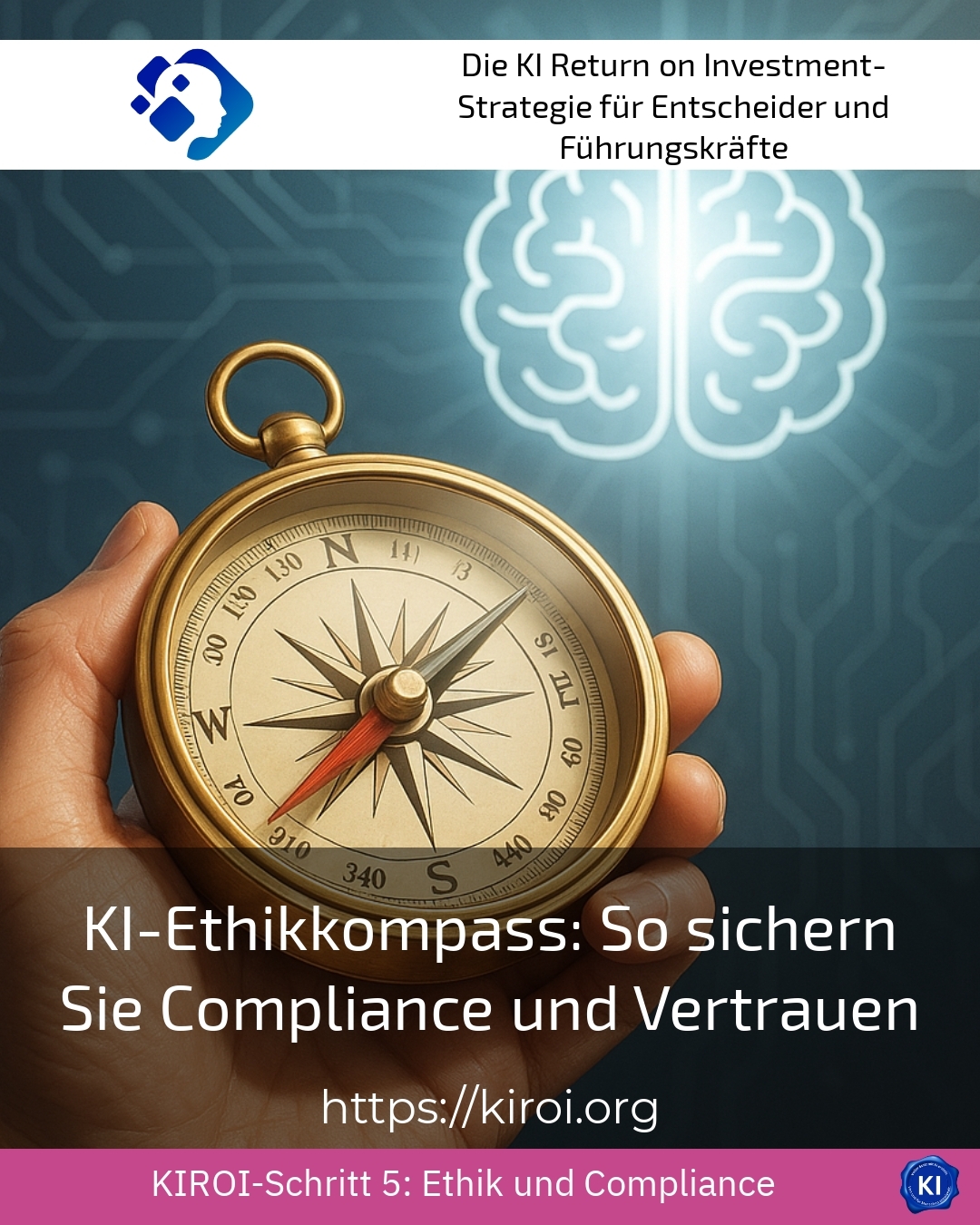
The answer lies not only in the technology itself, but rather in the way organizations approach it in a thoughtful and strategic manner. AI Ethics Compass: How to Ensure Compliance and Trust Establishing a strategic foundation that goes far beyond mere compliance and places genuine value orientation at the center. In a time when algorithmic decisions increasingly influence our daily lives, the question of ethical responsibility and comprehensible decision-making becomes increasingly pressing, which is why companies are well advised to set the right course early on and to keep both legal frameworks and societal expectations in mind.
Why ethical guidelines have become indispensable today
The rapid development of learning systems has triggered profound changes in almost all economic sectors, bringing both enormous opportunities and significant risks. Companies that employ intelligent automation face the challenge of not only achieving technical excellence but also upholding ethical principles that justify the trust of their stakeholders. European legislation has created a binding framework with the AI Act [1], which obliges organizations to classify their algorithmic systems according to risk categories and take appropriate measures.
In practice, it is often the case that companies have built technically skilled teams, but underestimate the ethical dimension of their projects. For example, a financial services provider that implements automated credit decisions must ensure that no discriminatory patterns in the training data distort the decisions. A healthcare company that uses diagnostic support systems has the responsibility to ensure that medical professionals retain the final decision-making authority and that patients are informed about the use of such technologies. A retail conglomerate that uses personalized recommendation systems must communicate transparently how customer profiles are created and what data is processed in the process.
Best practice with a AIROI customer
A medium-sized company in the industrial manufacturing sector approached us because it had encountered significant resistance from the workforce in introducing a predictive maintenance system. The employees feared that the performance monitoring system could be misused and their jobs would be at risk in the long term. Together with the transruptions coaching team, we developed a comprehensive communication plan that explained the system’s functioning and defined clear limits for its use. We established an ethics board, which was composed of equal numbers of men and women and acted as a dispute resolution body. The operating agreement we jointly drafted stipulated that no personal performance data should be collected and that all collected information should serve solely for machine optimization. After six months of intensive support, both the management and the works council reported on a significantly improved working atmosphere. The acceptance of the system increased significantly, as the workforce felt actively involved in the introduction process and their concerns were taken seriously.
AI Ethics Guide: How to ensure compliance through systematic governance
Establishing an effective ethical framework requires more than simply adopting guidelines that get buried in drawers and are not taken into account in day-to-day operations. Rather, it involves creating living processes that embed ethical reflection as an integral part of project work, while remaining flexible enough to respond to new challenges. Organizations that successfully take this path often report an increased climate of innovation, because the clear guidelines paradoxically create more room for creative experimentation.
For example, an insurance company that automates claims forecasts should conduct regular audits to ensure that certain populations are not systematically disadvantaged. A telecommunications provider that uses customer service chatbots must ensure that users have the ability to connect with a human contact at all times. A logistics company that uses learning algorithms to optimize routes should assess whether the efficiency gains are at the expense of drivers, by creating unrealistic time constraints.
The five pillars of a robust ethical framework
Transparency forms the foundation of any trustworthy system, because it enables those affected to understand decisions and, if necessary, contest them. Fairness requires that no individual or group be unjustly disadvantaged, which requires continuous review of the results. Privacy ensures that personal information is processed only to the extent necessary, and that individuals retain control over their data. Accountability means that it must always be clear who bears responsibility for the consequences of algorithmic decisions. Human oversight ensures that critical decisions are not fully delegated to machines.
In the energy sector, for example, utilities use intelligent networks that analyze consumption patterns and predict peak loads, while the challenge is to protect the privacy of households while still producing meaningful forecasts. In the human resources sector, companies are increasingly relying on automated pre-selection of applications, but must be painfully careful to ensure that no discriminatory criteria influence the decision-making process [2]. In the education sector, adaptive learning systems are emerging that create individual learning paths, with the risk that students are prematurely placed into certain categories that affect their further development.
Trust as a strategic competitive advantage in the digital age
Companies that have a credible AI Ethics Compass: How to Ensure Compliance and Trust Companies that can demonstrate this differentiation from competitors that neglect this aspect are increasingly becoming more competitive. Studies show that consumers are willing to pay higher prices if they can trust that their data will be treated respectfully and that no opaque algorithms will decide on them [3]. This insight transforms ethical behavior from a cost factor to a real factor of value creation that is reflected in customer loyalty and brand reputation.
A pharmaceutical company that relies on data-driven approaches in drug development gains the trust of patients when it openly communicates how clinical data is protected. An automotive manufacturer that develops assisted driving systems must be transparent about the situations in which the system assumes control and when human intervention is required. A media company that curates personalized news feeds should disclose the criteria used to select content and how to avoid filter bubbles.
Best practice with a AIROI customer
An international trading company faced the challenge of implementing an automated fraud prevention system that would identify suspicious transactions in real time. The biggest challenge was to keep the false positive rate low enough so that legitimate customers were not mistakenly identified as fraudsters, which would have led to frustrating purchase cancellations. As part of our support, we developed a tiered escalation model that introduced additional verification steps when moderate suspicion was detected, rather than immediately blocking transactions. We intensively trained the customer service team to explain to affected customers why certain security measures were triggered. Particularly important was the establishment of a quick complaint process through which falsely flagged transactions could be manually reviewed within minutes. The results after one year of operation were remarkable, as fraud losses decreased significantly, while at the same time customer satisfaction levels remained stable and even increased slightly, because the customer’s sense of security was strengthened through transparent communication.
Practical steps for implementing ethical standards
The introduction of an ethical framework ideally begins with a comprehensive assessment of all existing and planned algorithmic systems, which are then categorized according to their risk potential. Subsequently, it is advisable to assemble interdisciplinary teams that combine technical expertise with ethical reflection, also incorporating external perspectives. Developing concrete evaluation criteria that must be worked out before any project begins creates binding standards and prevents ethical considerations from being overlooked in the project process.
A construction company that uses drones for site monitoring should define clear rules regarding when and how these devices may be used, and who has access to the recorded data. A restaurant that uses demand forecasts for personnel planning must ensure that the resulting shift schedules adequately take into account the interests of the employees. A sports club that analyzes performance data of its athletes is responsible for ensuring that this sensitive information is not disclosed to third parties without consent.
The role of transruptional coaching in ethical transformation
In many of the projects that are brought to us, it is evident that technical solutions exist, but that the organizational integration is lacking or encountering resistance. Transruptions coaching accompanies companies in mastering not only the technical aspects, but also in dealing with the cultural changes that accompany the introduction of intelligent systems. Often, clients report that only through this holistic approach were the hoped-for benefits realized, because acceptance and understanding within the organization have grown.
A services company in the field of business consulting approached us because internal resistance to a new knowledge management system threatened to block the project. A medium-sized machine manufacturer sought support in developing a data strategy that aligned both customer needs and data protection requirements. A municipal utility needed guidance to convince the city council to implement intelligent meters without creating fears of surveillance.
Future prospects and regulatory developments
The regulatory landscape is continuously evolving, and companies that are currently operating in a solid AI Ethics Compass: How to Ensure Compliance and Trust As organizations establish their digital strategies, they will be better positioned to meet new requirements tomorrow. International standards such as the ISO standards for risk management in learning systems are gaining in importance and are increasingly becoming a prerequisite for business relationships [4]. The societal debate about the responsible handling of intelligent technologies is intensifying, and companies that are pioneers in this area are actively shaping the rules of the game of tomorrow.
In agriculture, precision farming systems are emerging that optimize resource use while combining ecological sustainability with economic efficiency. In the tourism sector, intelligent systems are personalizing travel experiences, the challenge being to find the balance between helpful personalization and intrusive monitoring. In the manufacturing sector, digital assistants facilitate quote calculation, but they must respect the expertise of the professionals and be understood as support, not a substitute.
My AIROI Analysis
The intense focus on ethical issues in the introduction of intelligent systems reveals a fundamental paradox of our time, because on the one hand these technologies promise enormous efficiency gains and new opportunities, but on the other they carry risks that could permanently damage the social trust in digital innovation without careful control. My analysis of numerous projects shows that success depends less on technical brilliance than on an organization’s ability to involve all stakeholders and to take their legitimate concerns seriously. Companies that view ethical reflection as a tedious duty exercise miss the opportunity to build a real differentiating feature that can be more valuable in the long term than short-term efficiency gains. Investing in transparent processes, fair algorithms, and human oversight pays off because it lays the foundation for sustainable customer relationships and engaged employee cultures. The challenge is to embed this insight from the boardroom to the operational level, while fostering a culture where critical questions are welcomed and ethical concerns are understood as valuable impulses. Those who make the right decisions today will be among the winners of a development that will shape our economy and society for decades to come.
Further links from the text above:
[1] EU Artificial Intelligence Act – European Commission
[2] Federal Anti-Discrimination Office – Information on algorithmic discrimination
[3] Bitkom – Studies on digital trust
[4] ISO/IEC 23894 – Risk management for AI systems
For more information and if you have any questions, please contact Contact us or read more blog posts on the topic Artificial intelligence here.











 Deutsch
  English (UK)