
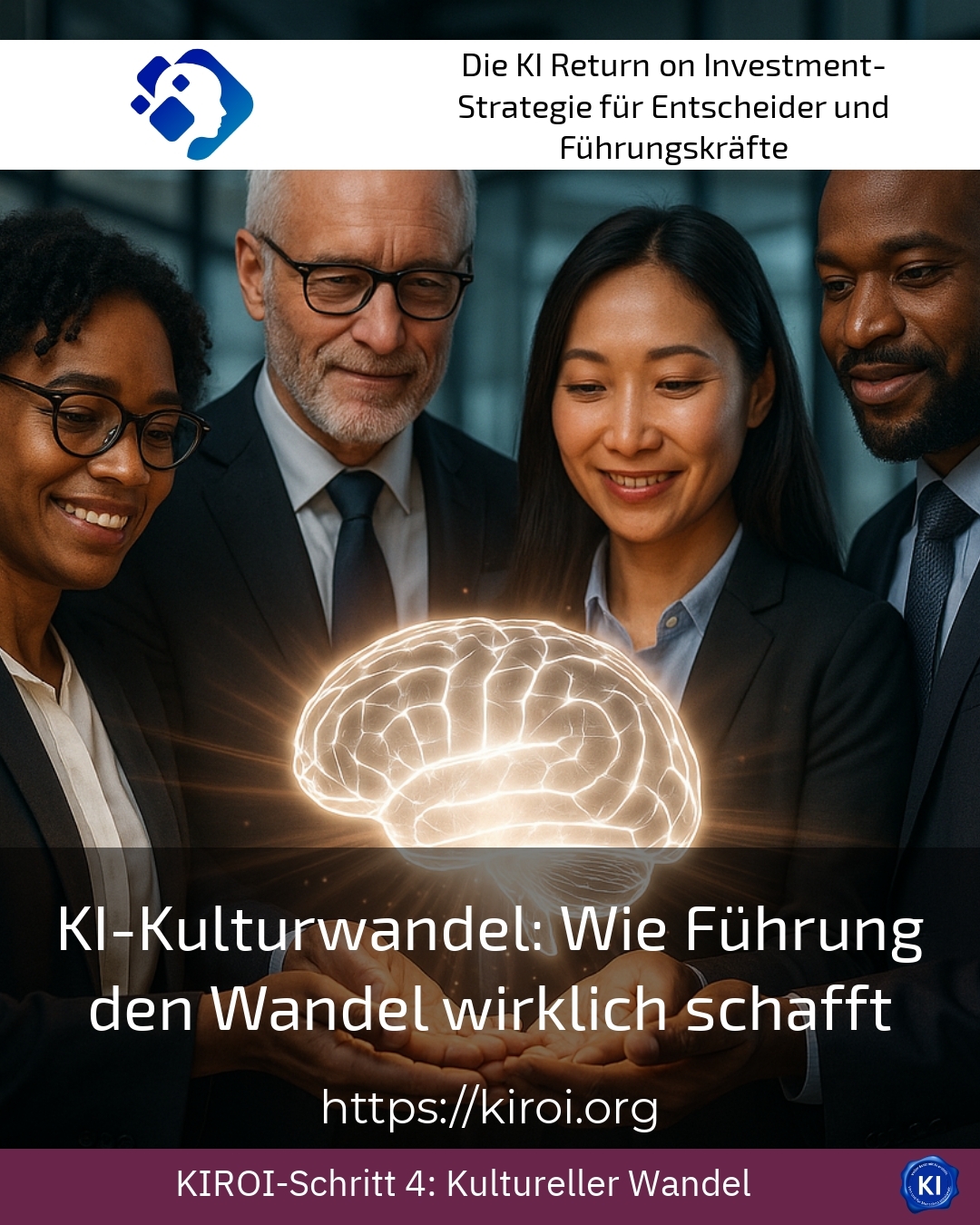
Imagine your entire organisation is facing a transformation that is more far-reaching than any previous change. The introduction of intelligent systems is changing not only processes, but also mindsets and working methods. The AI Culture Change: How Leadership Truly Drives Transformation this is not a technical question, but a profoundly human challenge. Leaders frequently report resistance, fears and uncertainties within their teams. This is precisely where a new kind of support comes in, going far beyond traditional consultancy.
The invisible barrier between technology and man
Many organisations invest significant resources in new technologies without adequately considering the human dimension. For example, a medium-sized manufacturing company implemented an intelligent quality assurance system designed to automatically detect defects. The technology worked perfectly, but the employees hardly used it. The workforce felt bypassed and feared surveillance. In another case, a logistics company introduced automated route planning. However, the drivers systematically ignored the system's suggestions. They trusted their own experience more than the algorithms.
A third example demonstrates the complexity even more clearly: a retail company relied on AI-supported demand forecasting for its inventory management. The buyers, however, continued to order based on gut feeling. They had never really understood the system and felt patronised by the new technology. These examples illustrate a central point: technological innovation alone does not create change. The true AI Culture Change: How Leadership Truly Drives Transformation starts in the minds and hearts of people.
Why traditional change management approaches often fail
Traditional change programmes frequently rely on information and training as their primary tools. However, these approaches fall short because they underestimate the emotional dimension. Employees have legitimate concerns about their future. They wonder whether their skills will still be needed tomorrow. A financial services provider experienced this during the introduction of automated credit checks. The clerical staff felt replaceable and demotivated. Their expertise suddenly seemed to be worthless.
An energy supplier had similar experiences when implementing smart grid control. The experienced technicians saw their decades of experience being called into question. They reacted with passive resistance and scepticism. A healthcare provider also struggled with comparable challenges. The introduction of AI-supported diagnostics caused unease among specialist doctors. They feared a devaluation of their medical expertise.
Best practice with a AIROI customer An international mechanical engineering company faced the challenge of fundamentally transforming its service organisation. The company wanted to introduce predictive maintenance to forecast machine failures. Initially, the service technicians reacted with resistance to this change. They felt their professional competence was threatened and that they were being degraded to mere operators. Transruptions coaching accompanied the organisation through this difficult process with a special focus on the managers. Together, we developed a communication strategy that took their fears seriously. The technicians were actively involved in system optimisation and contributed their empirical knowledge. Their expertise was not replaced, but rather supplemented and enhanced by intelligent systems. After six months of intensive support, the mood changed noticeably. The technicians realised that they were more valuable than ever. They became sought-after experts who solved complex problem cases, while routine tasks were automated. This example impressively demonstrates how important human support is during technological transformations.
AI cultural shift: How leadership truly drives change through new competencies
Leaders face the task of learning themselves while simultaneously enabling others. This dual challenge initially overwhelms many experienced managers. An insurance company recognised this problem early on and invested in the development of its management level. The executive board completed intensive learning programmes on intelligent systems themselves. As a result, they gained credibility with their teams and were able to communicate authentically.
A media company took a similar path when introducing automated content creation. The editorial directors first had to overcome their own reservations. Only then could they convincingly bring their teams along. A construction company also gained valuable experience with this approach. The project managers learned not to see intelligent planning tools as competition. They understood them as tools that support their decision-making ability.
The role of emotional intelligence in the digital age
Ironically, the more tasks machines take over, the more important human skills become. Empathy, creativity and judgement cannot be automated. A telecommunications provider recognised this during the transformation of its customer service. While simple enquiries were processed automatically, employees focused on complex concerns. As a result, the quality of customer relationships improved significantly.
A retailer had comparable experiences in its branches. Intelligent systems automatically took over inventory management and ordering. The sales staff gained time for personal advice and customer relationships. A pharmaceutical company also used this development to its advantage. The field service staff were relieved of administrative tasks. They were able to concentrate on building trusting relationships with doctors.
Best practice with a AIROI customer A regional bank was facing profound changes due to the introduction of intelligent advisory systems. In future, customer advisors were to be supported by algorithms in making investment recommendations. The initial scepticism was significant and threatened the entire transformation process. The transruptions coaching accompanied all levels of hierarchy through this challenging phase. We initially worked intensively with the managers on their own attitude towards the change. They learned to acknowledge uncertainty as a normal part of any transformation. In workshops, the advisors jointly developed scenarios for their future role. They realised that their relationship skills could not be replaced by technology. The intelligent systems took over data analysis and product selection as a supporting function. The advisors gained time for in-depth conversations about their clients' life goals and wishes. After a year, clients frequently reported increased job satisfaction and better customer relationships. The bank also recorded a significant increase in customer loyalty and the referral rate.
Practical steps for a sustainable transformation
The path to a new working culture requires patience and a systematic approach. Quick fixes do not exist, but proven approaches can support the process. An automotive supplier developed a phased approach for its plants. Initially, small pilot projects were launched to gain experience. The employees were able to gradually build trust in new systems.
A chemical company relied on intensive participation in system design. The later users were involved in development processes from the beginning. This created ownership and acceptance increased significantly. A food manufacturer also pursued a participative approach in its transformation. The production employees actively contributed their process knowledge. The resulting systems were a better practical fit than externally developed solutions.
The importance of continuous guidance
Transformation is not a project with a defined endpoint, but an ongoing process. Organisations require continuous support in navigating through change. To achieve this, a technology company established internal transformation facilitators across all departments. These employees were specially trained and supported their colleagues. They acted as a bridge between technical innovation and human needs.
A transport company created similar structures for its administration. The transformation facilitators served as contacts for concerns and ideas alike. They gathered feedback and provided impetus for improvements. An educational provider also used this approach when digitising its services. The lecturers received ongoing support from experienced colleagues. As a result, the change felt less threatening and was seen more as an opportunity.
AI Cultural Shift: How Leadership Truly Drives Change in Daily Practice
Implementation requires consistency and leadership by example every day. Lip service is not enough, as employees observe closely. A consumer goods manufacturer made this experience during the transformation of its marketing department. The managers used the new tools themselves actively and visibly. By doing so, they signalled openness and encouraged their teams to explore.
A logistics service provider pursued a similar approach in its warehouses. The shift managers worked with the new systems themselves and showed a willingness to learn. They admitted their own mistakes and thus created a fault-tolerant culture. A tourism company also benefited from authentic leadership during its transformation. The executive board openly shared its own learning processes with the workforce. This transparency built trust and significantly reduced resistance.
My AIROI Analysis
Observations from numerous transformation projects show a clear pattern: technological introductions rarely fail because of the technology itself. The decisive factor is almost always the human dimension of change. Leaders frequently underestimate the emotional effort that such transformations entail for everyone involved. They focus on implementation plans and training programmes while the deeper fears and resistances remain unaddressed.
Transruption coaching has proved to be a valuable companion in these projects. The combination of a strategic perspective and human sensitivity makes all the difference [1]. Organisations that engage with this holistic approach often report more sustainable results. The investment in cultural guidance pays off in the long run because resistance can be identified and addressed early on.
The AIROI methodology provides a structured framework for analysing and designing transformation processes [2]. It takes into account both technical and human factors and supports managers in navigating complex changes. The coming years will reveal which organisations take the cultural dimension seriously. These are likely to be the ones that remain successful in the long term and are able to retain their staff for the future.
Further links from the text above:
[1] Transruption coaching and transformation support
[2] The AIROI methodology for artificial intelligence in organisations
For more information and if you have any questions, please contact Contact us or read more blog posts on the topic Artificial intelligence here.







 Deutsch
  English (UK)