
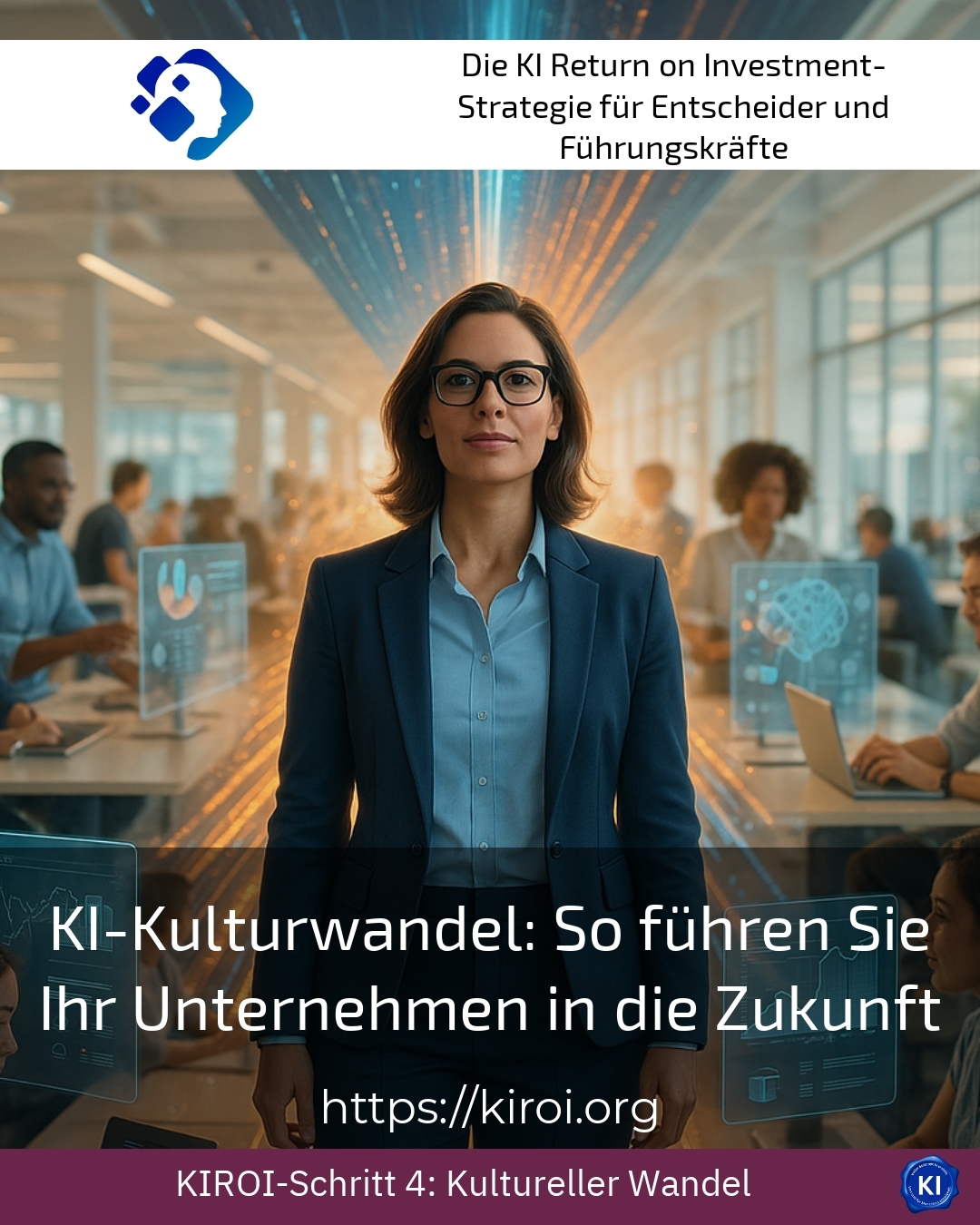
The future no longer knocks politely at the door – it is already standing right in the middle of the room, waiting for businesses to take the next step. The AI cultural change is fundamentally changing how we work, think and make decisions. Leaders are facing an unprecedented challenge. They must navigate their organisations through profound changes. This is long since no longer just about technology. It is about people, mindsets and new forms of collaboration. Anyone who hesitates now risks losing touch with a development that has engulfed all industries. This article shows you concrete ways forward. It gives you impetus for practical implementation in your company.
The dawn of a new era in corporate management
The introduction of intelligent systems marks a turning point in the history of the world of work. Companies from all sectors are increasingly recognising that technological implementation alone is not enough. For example, a logistics company implemented automated route planning. The drivers initially rejected the system completely [1]. Only after intensive discussions and training did their attitude change. A retail company introduced intelligent inventory management systems. Warehouse staff initially felt monitored and controlled. Through transparent communication, the scepticism turned into acceptance. A financial services provider relied on automated customer analytics. The advisers feared for their relevance and their jobs. Management responded with a comprehensive further training programme.
These examples illustrate a central finding. The AI cultural change starts in the minds of people. It requires patience, empathy, and strategic skill. Leaders must learn to connect both worlds. They must balance technological possibilities with human needs. This process is rarely linear or predictable. It requires continuous adaptation and a genuine willingness for dialogue.
Why traditional change management approaches often fail
Traditional change processes frequently follow a linear pattern. They underestimate the emotional dimension of technological transformation. A manufacturing company attempted to introduce intelligent quality control. The traditional top-down approach led to massive resistance. The experienced skilled workers saw their expertise devalued. An insurance company implemented automated claims assessment. The claims handlers felt stripped of their agency by rigid guidelines. A healthcare provider introduced AI-supported diagnostic assistance. The doctors perceived this as an infringement on their professional autonomy.
The crucial difference lies in the depth of the change. Intelligent systems interfere with core competences and identities. They alter how people define their work and their worth. That is why new approaches are needed to accompany this transformation. Transruption coaching supports companies precisely during this transitional phase. It helps to integrate technological and human aspects.
Best practice with a AIROI customer
A medium-sized mechanical engineering company faced the challenge of introducing intelligent maintenance systems, which initially seemed to experienced service technicians like a threat to their decades of acquired expertise. Management opted for intensive support through AIROI methods to shape the change in a human-centred way and integrate the valuable experience of the employees into the transformation process. In several workshop sessions, the technicians worked together with management to figure out how their specialist knowledge could improve and complement the intelligent systems. The employees realised that their expertise was not to be replaced, but rather enhanced. They became active shapers of the new system and developed their own suggestions for improvement. After six months, the initial rejection had turned into genuine enthusiasm. The service technicians frequently reported that they felt supported in their work by the new tools. Customer satisfaction increased measurably because problems were identified and solved more quickly. This example impressively demonstrates how important the human factor is in the transformation process.
The AI cultural shift as a strategic leadership task
Leaders bear a special responsibility in this transformation process. They must lead by example and authentically champion the change. A technology company witnessed how sceptical managers slowed down the entire initiative. Employees took their cues from the signals sent by their superiors. Only when management stood united behind the project did the dynamic change. An energy supplier relied on executive coaching as a first step. The managers learned to reflect on their own fears and uncertainties. This self-awareness enabled them to support their teams more authentically.
A telecommunications company integrated intelligent systems into customer service. Team leaders received intensive training in emotional intelligence and change management. They learned to understand resistance as valuable feedback rather than as a disruptive factor. This changed attitude had a positive impact on the entire organisation. Employees felt taken seriously and listened to. As a result, the transformation process gained significant momentum.
Communication as the Key to Successful Change
Transparent and continuous communication forms the foundation of any successful transformation. Companies frequently underestimate the need for communication during change processes. A pharmaceutical company introduced intelligent laboratory analytics. The scientists received only minimal information about the background. Rumours and apprehensions spread faster than official communications. A media company chose a different path when introducing automated content analytics. The editors were involved in all decisions from the very beginning. Regular townhall meetings created space for questions and concerns. A construction company implemented intelligent project planning tools. The site managers received weekly updates on the status of the implementation. Open office hours enabled direct dialogue with the project team.
The AI cultural change demands new communication formats and channels. Leaders must learn to explain complex technological developments in a way that is easy to understand. At the same time, they need to create space for emotional reactions. This dual task presents many managers with new challenges. Professional guidance can provide valuable impetus during this phase.
Promoting skills development and lifelong learning
The introduction of intelligent systems is fundamentally changing skills requirements. Companies must invest in the further development of their employees. An automotive supplier developed a comprehensive qualification programme. Production staff learned how to handle automated manufacturing systems. Experienced colleagues supported the learning process as mentors. A retail company trained its branch managers in data-driven range planning. Practical application was the focus of the learning concept. Regular practice sessions consolidated the new knowledge sustainably. A consultancy firm introduced intelligent analysis tools for complex projects. The consultants learned to combine human intuition with machine evaluation.
These examples show that competence development takes time and resources. Companies that invest here lay the foundation for sustainable success. Employees feel valued and develop confidence in their future viability. This confidence is crucial for the acceptance of new technologies.
Best practice with a AIROI customer
A large insurance group faced the need to support its claims settlement with intelligent systems, with experienced claims handlers playing a central role in the transformation. Together with AIROI experts, the company developed an innovative learning concept that used the employees' existing expertise as a starting point for further development, thereby expressing appreciation for years of professional experience. The claims handlers were trained as so-called process experts who contributed their specialist knowledge to the development of the new systems and at the same time learned how to use the intelligent tools. This dual role gave employees a sense of importance and influence over the transformation of their working environment. The frequently reported positive feedback significantly exceeded the management's initial expectations. Processing times fell while the quality of decisions rose because human judgment and machine analysis worked together optimally. This project impressively demonstrated what a successful transformation can look like when humans and technology are understood as partners.
Adapt organisational structures for the AI cultural shift
Traditional hierarchies and structures can hinder the transformation process. Companies must adapt their organisation to the new requirements. A chemical company set up cross-functional teams for intelligent process optimisation. Experts from production, IT and research worked closely together. This collaboration accelerated implementation considerably. A logistics service provider created new roles such as „Transformation Coaches“. These employees supported their colleagues in the introduction of new systems. They acted as a bridge between technology and people. A financial institution established an „Innovation Lab“ as a protected space. Here, employees could test new technologies without the pressure to perform. Mistakes were understood as learning opportunities and celebrated.
These structural adjustments signal to employees the seriousness of the change. They create spaces for experimentation and new forms of collaboration. At the same time, they enable quicker adaptations to changing requirements. The AI cultural change requires organisational flexibility at all levels [2].
Understanding and constructively using resistance
Resistance to change is a natural human reaction. It often contains valuable information about potential for improvement. An industrial company initially ignored the concerns of its supervisors. The introduction of automated quality inspection subsequently failed spectacularly. Only a restart involving the critics led to success. A retail company used structured feedback sessions when introducing intelligent pricing. The sales staff contributed valuable practical experience. As a result, the system was made much more practical. A service company trained „change champions“ from among skeptical employees. They won over their colleagues through authentic conviction. The transformation thereby gained credibility and acceptance.
Transruption coaching supports companies with projects related to this sensitive area. It helps managers understand resistance as a resource. It shows ways in which constructive dialogue can succeed. This ability is crucial for the sustainable success of the transformation.
My AIROI Analysis
The analysis of numerous transformation projects clearly shows that technological excellence alone is not enough to successfully shape the profound change triggered by intelligent systems in companies. The decisive success factor lies in the consistent combination of technological innovation with human-centred support, which takes into account both the rational and emotional aspects of the change. Companies that AI cultural change understood purely as a technical project, often fail due to the invisible barriers in the minds and hearts of their employees [3]. The AIROI methodology addresses precisely this gap by systematically incorporating the cultural, psychological and organisational dimensions of transformation, thereby offering a holistic approach to sustainable change.
Leaders face the task of being both visionaries and empathetic guides at the same time, which requires new competencies and often personal development as well. The examples from various industries make it clear that there is no standard solution, but rather that every company must find its own path that suits its specific culture and history. What all successful transformations have in common, however, is the earnest involvement of employees, transparent communication, and the willingness to learn from mistakes and make course corrections. The future belongs to organisations that have understood that true strength lies in the combination of technological capability and human wisdom. I therefore recommend that all companies facing this change seek professional guidance and allow sufficient time for the cultural aspect of the transformation.
Further links from the text above:
[1] McKinsey: Culture – The Make or Break Factor in Digital Transformation
[2] Harvard Business Review: Digital Transformation Insights
[3] World Economic Forum: Artificial Intelligence and Workforce Transformation
For more information and if you have any questions, please contact Contact us or read more blog posts on the topic Artificial intelligence here.









 Deutsch
 English (UK)