
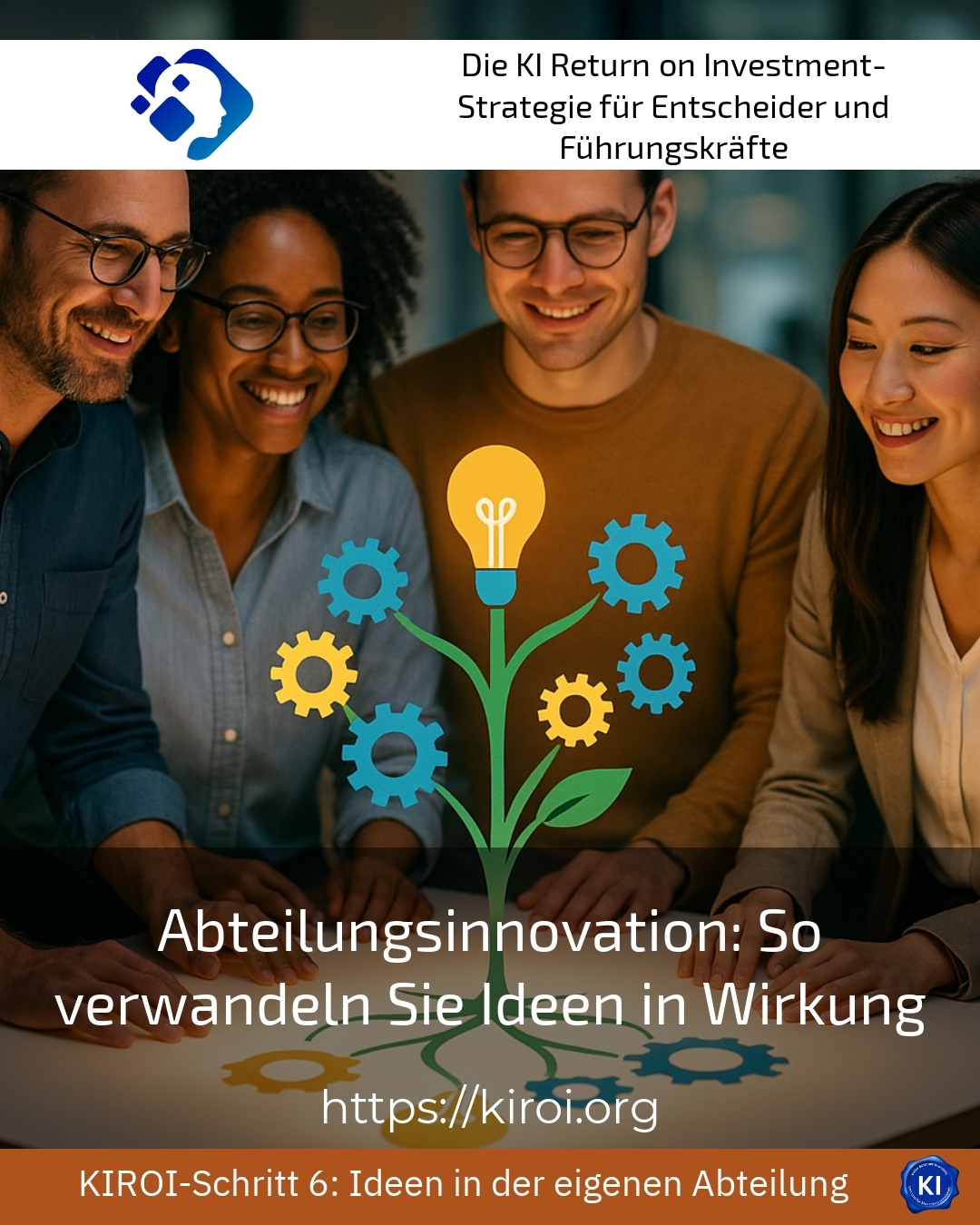
Imagine that your department holds groundbreaking ideas, just waiting to be discovered and implemented. However, most companies fail not due to a lack of creativity, but in the systematic translation of flashes of insight into measurable results. This is precisely where the concept of Departmental Innovation: Turning Ideas into Impact which outlines a structured path for unlocking hidden potential. In this post, you will discover specific methods and mindsets that support leaders in transforming creative impulses into sustainable change.
Understanding the Fundamentals of Successful Departmental Innovation
Before taking individual steps, you should thoroughly analyse the framework conditions. Many executives underestimate the importance of a supportive corporate culture in this regard. An open atmosphere encourages employees to share their thoughts without fear of rejection. At the same time, clear processes are needed to systematically capture and evaluate creative suggestions. Only in this way can loose ideas develop into concrete project proposals with defined milestones [1].
For example, a manufacturing company in the mechanical engineering sector established monthly innovation circles. Team members from various departments present their suggestions for improvement there. The best ideas receive their own budget and a responsible project manager. As a result, the implementation rate increased significantly within a year.
A logistics company is taking a similar approach with digital idea boards. Employees can submit suggestions and comment on them at any time. Management reviews these inputs weekly and provides timely feedback. This makes everyone involved feel heard and valued.
A retail group uses playful elements for idea generation. Gamification mechanisms motivate employees to think creatively. Points and awards reward active participation in the innovation process. This method promotes healthy competition between departments.
Fostering departmental innovation through structured creativity techniques
Creativity rarely arises on its own, but requires targeted stimuli and suitable methods. Design Thinking has established itself as a particularly effective approach because it consistently puts people at the centre [2]. In this method, teams go through several phases, from problem definition and idea generation to prototyping. Each phase builds on the previous one and gradually condenses the original thoughts into concrete solution approaches.
An insurance company used Design Thinking to improve its claims processing. Employees actively put themselves in the shoes of the policyholders. They identified numerous pain points in the existing process. In the end, a significantly more customer-friendly procedure with shorter processing times was developed.
A private bank used similar techniques to develop new financial products. Consultants held intensive discussions with selected customer groups. The insights gained were directly incorporated into product design. The result was tailor-made offers with higher customer satisfaction.
A telecommunications provider combined Design Thinking with agile working methods. Teams worked on concrete improvement suggestions during two-week sprints. Regular retrospectives enabled continuous learning and adaptation. This combination significantly accelerated the implementation of new ideas.
Best practice with a KIROI customer
A medium-sized company in the chemical sector faced the challenge of making its research and development department more innovative because competitors were increasingly launching new products onto the market faster. Transruption coaching supported the management team over several months in establishing new ways of working and thinking. Initially, we jointly analysed the existing structures and identified several bottlenecks in the flow of ideas between hierarchical levels. Employees frequently reported that their suggestions got lost in middle management and never reached the decision-makers. Following this, we implemented a direct communication channel between the staff and senior management, which was opened monthly for innovation topics. Additionally, we trained the team leaders in modern moderation techniques for creative sessions. The result of these measures was a significant increase in high-quality project proposals, several of which have since been successfully implemented and achieved measurable increases in revenue.
Psychological safety as the foundation for departmental innovation
Without psychological safety, every innovation initiative remains toothless. Employees must know that they are allowed to take risks. Mistakes should be seen as learning opportunities, not career setbacks [3]. Leaders play a crucial role-model function here. They must openly communicate their own uncertainties and actively solicit feedback.
A pharmaceutical company introduced so-called failure conferences. There, teams report on failed projects and the lessons learned from them. This transparency significantly reduced the fear of failure. At the same time, a valuable treasure trove of knowledge was created for future initiatives.
An automotive supplier has established anonymous feedback channels for critical comments. Employees can provide honest feedback there without fear of consequences. The evaluation of these inputs provides important insights into potential improvements. Regular updates show which measures have been derived from the feedback.
An energy supplier relied on regular team-building measures to build trust. Joint workshops outside of everyday office life strengthened cohesion. This invested time paid off through more open communication in daily work. Teams dared to experiment more and dealt with setbacks more constructively.
Digital tools to support the innovation process
Modern technologies can significantly accelerate the entire innovation cycle. Collaboration platforms enable the cross-site exchange of ideas. Artificial intelligence helps to recognise patterns in large amounts of data [4]. This makes connections visible that would otherwise remain hidden from the human eye.
An international consumer goods manufacturer is using AI-powered trend analyses for product development. Algorithms search social media for emerging customer needs. The results flow directly into the innovation pipeline. This significantly shortens the time from idea to market launch.
An airline is using virtual reality to design new cabin concepts. Designers can experience prototypes before physical models are built. Feedback from test subjects can be incorporated immediately. This method saves significant development costs and speeds up decision-making.
A financial services provider implemented a central innovation platform for all departments. All project ideas are captured, evaluated, and prioritised there. Transparent dashboards show the progress of individual initiatives. This clarity prevents duplication of effort and promotes cross-departmental collaboration.
Overcoming resistance and strengthening readiness for change
Every change initially meets with resistance, because people naturally favour security. This reaction is completely normal and should not be underestimated. Successful leaders address concerns proactively and take fears seriously. They communicate transparently about planned changes and their expected impact.
A media company supported its digital transformation with extensive training programmes. Employees were given sufficient time to acquire new skills. Mentoring programmes brought experienced and younger colleagues together. This fostered cross-generational knowledge exchange.
A construction company opted for early involvement of the workforce in change projects. Working groups comprising different hierarchical levels jointly developed proposed solutions. This participation significantly increased the acceptance of new processes. Those affected became active shapers of the change.
A healthcare group introduced regular town hall meetings for open communication. The management team there answered employees' questions. These formats of dialogue reduced mistrust and fostered understanding of strategic decisions. At the same time, the leadership received valuable feedback from everyday practice.
Best practice with a KIROI customer
A trading company with a long-standing tradition turned to transruption coaching because its established company culture regularly blocked innovation initiatives and new ideas stood little chance of being implemented. Employees had learned over many years that change involves uncertainty and potential disadvantages, which is why they initially viewed any new development with scepticism. Our coaching approach therefore focused not on structures, but on people and their individual concerns. In one-on-one discussions and group workshops, we identified the specific fears underlying the resistance and explored existing positive experiences with change. Building on this, we collaboratively developed a communication strategy with the management team that highlighted past successes and embedded new initiatives within this positive context. Additionally, we established a pilot programme where volunteer employees could initially test new ways of working on a small scale before they were rolled out to the entire company. This cautious approach significantly reduced resistance and fostered a new openness to innovation.
Ensuring measurability and continuous improvement
What cannot be measured cannot be improved. This old management adage is particularly true for innovation processes. Clear key figures help to document progress and identify the need for correction [5]. Both quantitative and qualitative indicators should be taken into account.
A technology company measures the number of ideas submitted per quarter. It also tracks the implementation rate and the business value achieved by realised projects. This transparency motivates the workforce to participate actively. At the same time, it provides management with important control information.
A hotel chain conducts regular innovation audits at its locations. External auditors assess innovation capability based on defined criteria. Best practices are identified and shared throughout the company. This way, all hotels learn from each other and develop together.
A food producer uses employee surveys to capture their innovation culture. Questions about the perceived openness to new ideas provide valuable insights. The results are linked to concrete measures for improvement. Regular repetitions show the effectiveness of these interventions.
My KIROI Analysis
The systematic transformation of ideas into measurable impact requires a holistic approach that considers people, processes, and technology equally. In my experience with numerous companies, it repeatedly becomes clear that the biggest obstacles rarely lie in a lack of creativity, but rather in insufficient structures and cultural barriers. Transruption coaching supports organisations in identifying and dismantling these blockages step by step, with a constant focus on sustainable changes that extend beyond short-term effects. It seems particularly important to me to recognise that the ability to innovate is not an innate trait, but a learnable competence that can be developed through targeted practice and suitable frameworks. Leaders play a crucial role as role models and enablers, as their own behaviour significantly influences whether employees dare to break new ground. The examples presented from various sectors impressively show that successful departmental innovation is not a question of company size or available budget, but primarily depends on the will to change and consistent implementation. Those willing to question conventional ways of thinking and try new methods will often be surprised by the positive results. The KIROI model offers a proven framework for this, guiding organisations through the transformation process step by step.
Further links from the text above:
[1] Harvard Business Review: Insights on Innovation
[2] IDEO Design Thinking Methodology
[3] Google re:Work: Psychological Safety in Teams
[4] McKinsey: Digital Innovation Strategies
[5] Innovation Management: Key Figures and Measurement Methods
For more information and if you have any questions, please contact Contact us or read more blog posts on the topic Artificial intelligence here.











 Deutsch
  English (UK)