
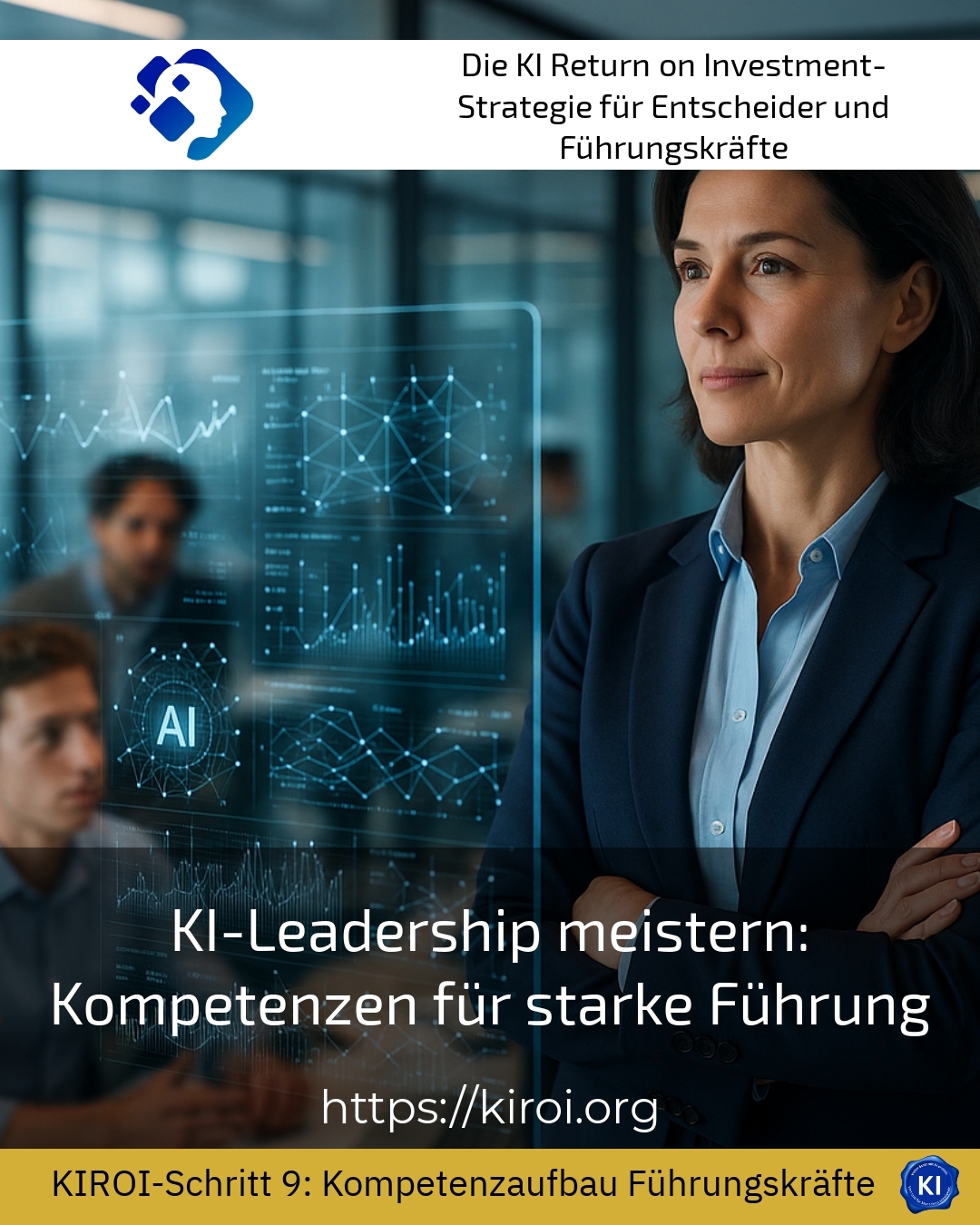
Do you sometimes wonder why some leaders seem to navigate the digital transformation effortlessly, while others fail despite enormous efforts? The answer often lies not in technical knowledge alone, but in a special form of leadership competence that we call Mastering AI Leadership In a time when algorithmic systems increasingly influence decision-making processes, leadership personalities require completely new skills. These competencies go far beyond classical management. They combine strategic thinking with emotional intelligence and technological understanding. Many clients report that they initially feel overwhelmed. Transruptive coaching precisely supports them at this point to create orientation.
Understanding the new reality of leadership
The working world is fundamentally changing through intelligent systems. Leaders face challenges never before seen. They must lead teams that are partly made up of humans and partly made up of automated processes. This hybrid work environment requires a completely new understanding of delegation and control. For example, a medium-sized company in the manufacturing sector faced the question of how to reorganize its quality control. The previous inspection processes were supplemented by image recognition systems, which fundamentally changed the role of quality managers. Instead of conducting the inspections themselves, they now had to interpret and validate the results of the automated inspection. In a trading company, on the other hand, algorithmic systems took over order forecasts, so that buyers suddenly became decision-makers regarding exceptions. A third example is seen in customer service, where chatbots answer simple inquiries and human employees handle only complex cases. All of these changes require leadership that considers both technical and human aspects [1].
Mastering emotional competence as a foundation for AI leadership
Precisely because machines are increasingly taking on analytical tasks, emotional intelligence is gaining importance. Leaders must take their employees’ fears seriously while at the same time fostering enthusiasm for new opportunities. This is a delicate balance that requires a great deal of tact. An example from the healthcare sector illustrates this: When a hospital introduced diagnostic support systems, many doctors initially felt threatened by their expertise. The leadership level had to have intensive discussions and create space for concerns. Only in this way could acceptance be achieved. In an insurance company, claims processors showed similar reactions when automated claims processing was introduced. The team leaders invested a lot of time in individual conversations to capture concerns. At a logistics company, on the other hand, management accompanied their teams through the introduction of autonomous warehouse systems with regular feedback rounds [2]. These examples show that emotional support is indispensable.
Best practice with a AIROI customer
An international financial services company faced the challenge of supporting its entire credit assessment process with algorithmic decision systems. The middle management felt completely torn between the expectations of the management and the fears of their teams. The transruptions coaching accompanied the company through this complex change process over several months. First, we collaborated to analyze the existing communication structures and identified information gaps. Subsequently, we developed a modular training concept that combined technical fundamentals with leadership competencies. The managers learned how to constructively address resistance to change without ignoring or minimizing it. Particularly important was the realization that resistance often signals legitimate concerns. Through regular reflection rounds, the team leaders were able to address their own uncertainties before accompanying their employees. After about six months, most of the leaders reported a significantly improved team dynamic. The employees had begun to perceive the new systems as support rather than as a threat.
Developing strategic foresight in a dynamic environment
Those who lead today must think more creatively than ever before. Technology cycles are continuously shortening, and what seems innovative today may already be outdated tomorrow. Therefore, leaders need the ability to develop scenarios and plan flexibly. In retail, for example, store managers must understand how shopping behavior changes through personalized recommendation systems. A grocery retailer relied on dynamic pricing and had to intensively train its market managers. They needed to understand why prices change and how to communicate this to customers. In the automotive industry, workshop managers face the challenge that vehicles increasingly diagnose their own faults. The role of the mechanic is therefore transforming into that of a systems expert. A media company, on the other hand, introduced algorithmic content recommendations and had to prepare its editors for a completely new way of working [3]. This strategic adaptability can be developed and trained.
Mastering communication as a key competence in AI leadership
The way in which leaders speak about technological changes significantly influences their acceptance. It is not enough to present facts. Leaders must instead tell stories that clarify the connections. In a pharmaceutical company, a department manager successfully communicated the introduction of automated laboratory analysis. He did not talk about increasing efficiency, but about more time for complex research questions. This shift in perspective made a huge difference. At an energy provider, a leader used similar approaches to introduce smart grid technologies. He emphasized the ability to better advise customers. A telecommunications company trained its team leaders in translating technical changes into day-to-day benefits. All these examples show that communication skills are central.
Often executives come to us with the issue of overwork. They report that they could lose their grip on things. At the same time, they feel pressured to understand and explain everything. Transruptive coaching offers the impetus to reduce this strain. We work together on realistic expectations and practical communication strategies.
Ethical leadership in algorithmic decision-making environments
Intelligent systems are increasingly making decisions that directly affect people. Management personnel therefore bear a special responsibility for ethical standards. They must question the basis on which algorithms make recommendations. This is particularly evident in personnel management: When systems preselect applicants, HR managers must ensure that no discriminatory patterns emerge. An example from the banking sector illustrates similar challenges in credit decisions. An insurance company had to critically review its pricing models to ensure fair treatment. In the public sector, government leaders face the task of making algorithmic decisions transparent [4]. This ethical dimension requires reflective ability and a moral compass.
Best practice with a AIROI customer
A company in the human resources services sector implemented an algorithmic matching system for the recruitment of professionals. The management recognized early on that ethical issues would arise and initiated a structured reflection process. As part of the transruptive coaching, we jointly developed an ethics framework for handling automated decisions. This framework defined clear boundaries for algorithmic recommendations and determined when human review is mandatory. The management was trained in asking critical questions and questioning decisions. Particularly important was the development of a complaint mechanism for applicants who felt unfairly treated. After implementation, we conducted regular audits to identify potential biases. The employees reported that they felt more secure thanks to the framework. They were able to better justify their decisions and were less subject to the pressure to blindly trust algorithmic recommendations. As a result, the company positioned itself as a more responsible player in its industry.
Building a basic understanding of technology without expert knowledge
Executives do not need to become programmers, but they do need a solid understanding of technological relationships. This knowledge enables informed decisions and critical questioning. An example from the construction industry shows how a project manager optimized his construction site planning through basic knowledge of predictive analytics. He understood what data the system needed and where its limits lay. In a tradesman’s business, the manager used his acquired basic knowledge to introduce automated order planning. He was able to explain to the employees how the system worked without being an expert himself. A hotelier, on the other hand, relied on algorithmic revenue management systems and invested time in understanding the underlying logic [5]. This basic understanding creates credibility and enables better leadership.
Master the art of AI leadership through continuous learning
The technology landscape is developing rapidly, and stagnation means regression. Therefore, leaders must lead and promote a culture of learning. This means recognizing and openly addressing their own knowledge gaps. In a consulting company, the management established weekly learning hours for all levels of leadership. The participants exchanged ideas about new developments and reflected on practical experiences. In an industrial company, internal experimental spaces were created where management could try new technologies without risk. At a service provider, team leaders worked with their employees to develop learning paths to build technological competencies. These examples illustrate that learning does not signal weakness but demonstrates strength.
Many clients report the relief they feel when they don’t have to embark on their learning journey alone. Transruptive coaching supports the development of individual learning strategies and helps establish sustainable learning habits. We work with concrete practical examples and enable direct transfer into the day-to-day management of the organization.
My AIROI Analysis
The development of leadership skills in an increasingly automated working world represents one of the most significant challenges of our time. According to my analysis, successful leadership is increasingly based less on technical expertise and more on human qualities such as emotional intelligence, ethical reflection, and communicative competence. The leaders I have had the opportunity to mentor share a common characteristic: they are willing to critically question their previous leadership models and to embrace new approaches. This requires both courage and humility. Technological development will not slow down but will continue to accelerate. Therefore, it is crucial to set the right priorities today. Organizations that invest in leadership development will be better positioned than those that rely solely on technical solutions. The human dimension remains central, and leadership is becoming more important than ever before. At the same time, the nature of leadership is changing fundamentally. Control gives way to empowerment, instruction gives way to guidance, and knowledge gives way to learning ability. This transformation requires support, and that is where transruptive coaching comes in. We provide inspiration, accompany development processes, and create spaces for reflection. The path is challenging, but it is worth it for all involved.
Further links from the text above:
[1] McKinsey – The State of AI
[2] Harvard Business Review – Emotional Intelligence
[3] Gartner – Future of Work Trends
[4] World Economic Forum – AI and Ethics
[5] MIT Sloan – Artificial Intelligence Management
For more information and if you have any questions, please contact Contact us or read more blog posts on the topic Artificial intelligence here.







 Deutsch
 English (UK)