
Why do so many brilliant leaders fail to translate their extensive expertise into measurable results, even though they possess all the necessary competencies?
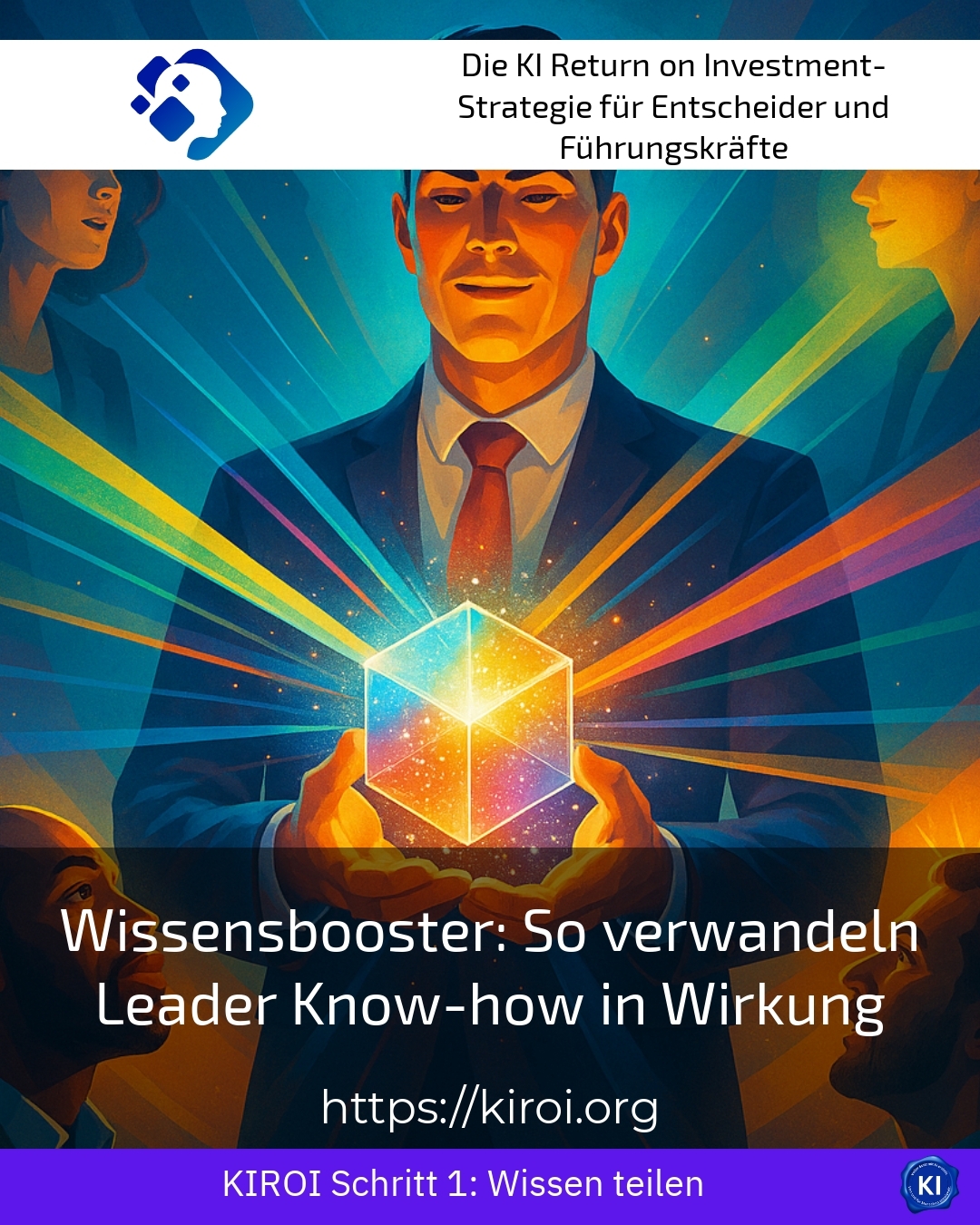
This question concerns decision-makers in numerous industries and organisations worldwide, because the difference between mere knowledge and actual impact largely determines the sustainable success of transformation projects. The decisive Knowledge booster lies not in the accumulation of further information, but in the skilled translation of insights into concrete action impulses. Leaders who master this transfer process frequently report significantly increased employee motivation and improved project outcomes. Time and again, this demonstrates that the connection between strategic thinking and operational implementation represents the decisive lever for sustainable change.
The art of knowledge transformation as a knowledge booster for sustainable leadership
Modern leaders face a paradoxical challenge in their daily work. On the one hand, they have access to an almost unlimited wealth of specialist literature, studies and expert opinions that should theoretically provide them with all the tools for successful decision-making, while on the other hand they must realise that this accumulated know-how by no means automatically leads to the desired results in their organisations.
In the automotive industry, for example, many executives experience this discrepancy particularly clearly when they want to integrate technological innovations into existing production processes. A production manager may have internalised all the specialist literature on lean production, but without the ability to translate this knowledge into the specific corporate culture, the hoped-for increases in efficiency frequently fail to materialise. The situation is similar in healthcare, where hospital directors, despite comprehensive knowledge of quality management, often have difficulty inspiring their teams for new treatment pathways.
In the financial sector, on the other hand, we observe that even highly qualified executives cannot always translate their analytical insights into compelling strategy presentations that actually compel their management boards and supervisory boards to take action. These examples make it clear that simply possessing specialist knowledge is by no means equivalent to the ability to use that knowledge effectively.
Best practice with a AIROI customer
A medium-sized engineering company faced the challenge of systematically making the extensive technical knowledge of its experienced engineers available to the next generation. Transruptions coaching supported the management team in establishing a structured knowledge transfer process that went far beyond conventional documentation methods. First, those involved jointly analysed existing communication channels, identifying significant gaps between the research and development department and the operational manufacturing area. Through targeted workshop formats, it was possible to transform the implicit experiential knowledge of long-standing employees into explicit instructions for action that could be immediately applied by less experienced colleagues. In the process, the managers learned not only to act as transmitters of knowledge, but to function as moderators of a continuous learning process that permeated the entire organisation. After six months of intensive support, those responsible for the project reported a significantly improved error rate in production and an increased willingness to innovate across all hierarchical levels.
From passive consumption to active creation with the knowledge booster principle
The transformation from gathering information to effective action requires a fundamental shift in perspective in the way leaders organise their own learning and that of their teams. This is not about attending even more seminars or studying additional specialist books, but rather about conscious reflection on which knowledge is actually relevant in which situation and how it can be deployed purposefully.
In the logistics industry, for example, progressive leaders have recognised that simply knowing about supply chain optimisation tools is not enough to make complex supply chains resilient. Instead, they systematically develop the ability to decide situationally which tool will deliver the greatest benefit in which context. In retail, on the other hand, it is becoming apparent that successful branch managers are not those who have a theoretical mastery of all sales techniques, but rather those who intuitively grasp which approach achieves the desired effect with which customer type.
This context-sensitive application of specialist knowledge distinguishes mediocre from outstanding leaders in almost all industries and functional areas. The education sector provides particularly clear examples of this, because headteachers who understand how to adapt pedagogical concepts to the specific needs of their pupils demonstrably achieve better learning outcomes than those who implement standardised programmes without modification.
Reflection processes as a catalyst for the personal knowledge booster
An essential building block for the successful translation of knowledge into impact lies in the regular and structured self-reflection that successful leaders integrate into their working day. This is not about superficial introspection, but rather about the systematic analysis of past decisions and their actual effects on the organisation and its members.
In the pharmaceutical sector, some research leaders have made this practice a fixed part of their weekly routine by entering dedicated reflection times into their calendars and taking them just as seriously as important client meetings. In the energy industry, on the other hand, executives are increasingly using structured feedback formats to evaluate and continuously improve the effectiveness of their communication strategies when introducing new sustainability initiatives.
The tourism sector also provides insightful examples, because hotel managers who regularly analyse their guests' feedback and relate it to their own leadership decisions develop a sharper sense of the connections between staff leadership and guest satisfaction. This reflective practice enables them to translate their theoretical knowledge of service excellence into concrete changes in behaviour within their teams.
Best practice with a AIROI customer
An executive from the insurance industry came to transruptions coaching with the concern that her department's sales results were stagnating despite extensive training measures. The joint analysis revealed that while the product knowledge taught was correct, the connection to emotional customer engagement was missing, which is why the sales staff were unable to communicate their expertise convincingly. During the coaching process, the executive first developed a deeper understanding of the different learning types in her team and realised that standardised training formats did not reach all employees equally. As a result, she designed a differentiated approach that appealed to both analytically oriented employees and those with a more intuitive working style, providing each with suitable tools. The support provided by transruptions coaching helped her to question her own communication patterns and try out new conversational formats that enabled a more authentic connection with her team members. After completing the coaching phase, she reported a noticeably improved team dynamic and measurable increases in her department's closing rates.
Communication as a bridge between insight and action
The most effective leaders are characterised not solely by their technical expertise, but above all by their ability to communicate complex matters in such a way that they resonate with their listeners and motivate them to take action. This communicative competence forms the crucial link between what a leader knows and what they can achieve within their organisation.
In the construction industry, for example, project managers regularly face the challenge of explaining technical specifications in such a way that both the tradespeople carrying out the work and the financing investors understand the connections and give their support. In the IT sector, on the other hand, managers have to translate complex technological concepts into a language that reaches and convinces non-technical stakeholders without sacrificing technical precision.
The media sector provides particularly striking examples here, because heads of editorial departments who know how to communicate their journalistic vision in a way that inspires both experienced reporters and newcomers to the profession create working environments in which creativity and quality can flourish in equal measure. This communicative mastery does not happen by chance, but is the result of conscious practice and continuous refinement of one's own powers of expression.
Storytelling as a tool for effective leadership communication
A particularly effective method for transforming abstract knowledge into tangible impulses for action lies in the clever use of stories and metaphors, which can convey complex relationships in an emotionally engaging way. Leaders who master this narrative competence manage to anchor their messages lastingly in the memories of their employees.
In the food industry, successful leaders often use their own company's history to get new employees enthusiastic about quality standards that go beyond mere regulations. In the banking sector, on the other hand, some leaders have recognised that stories about successful customer relationships are far more motivating than abstract sales figures and commission systems.
The sports sector also provides rich examples of effective storytelling in leadership, because coaches who not only teach their athletes technique but also share inspiring stories about perseverance and overcoming adversity frequently achieve extraordinary performance improvements in those they coach. These insights can be transferred directly to corporate contexts.
The systemic perspective on knowledge transfer in organisations
Individual managers can be as competent as they like in handling their specialist knowledge – if the organisational structures hinder the free flow of information, the desired impact frequently fails to materialize. Therefore, successful leaders are increasingly turning their attention to the systemic conditions under which knowledge transfer takes place in their organisations, or indeed fails to take place.
In the chemical sector, some companies have realised that the strict separation between research and production significantly hinders the exchange of knowledge, which is why they have established cross-departmental project teams. In the telecommunications sector, on the other hand, managers are experimenting with new meeting formats designed to promote the informal exchange of knowledge and temporarily break down hierarchical barriers.
The fashion industry also provides interesting approaches, as some companies have recognised that creative dialogue between designers and production staff leads to more innovative collections that meet both aesthetic and practical demands. This systemic perspective on knowledge transfer complements the individual competence development of individual managers with an important organisational dimension.
Best practice with a AIROI customer
A software technology company approached transruptions coaching with the observation that, despite highly qualified developer teams, the rate of innovation was falling significantly behind expectations. The joint analysis revealed that existing communication structures made knowledge exchange between the various product teams virtually impossible, even though everyone involved was fundamentally open to cooperation. During the coaching process, the participating managers developed a new format for cross-team knowledge workshops, which initially took place quarterly and later monthly, systematically promoting informal exchange. The introduction of a rotation principle proved particularly valuable, with developers working in other teams for two weeks at a time, thereby getting to know different working methods and approaches to solutions which they subsequently brought back to their home teams. transruptions coaching accompanied the managers in overcoming initial resistance and supported them in establishing a culture of openness and sharing that had not existed previously. The results significantly exceeded the original expectations, as within a year the number of patent applications submitted doubled and employee satisfaction increased measurably.
The knowledge booster in digital transformation
Progressive digitalisation is changing not only the way companies work, but also the demands placed on leaders in dealing with knowledge and its application in an increasingly data-driven world. This creates both new challenges and unprecedented opportunities for the effective translation of know-how into concrete results.
In the automotive supply industry, for example, managers today must not only master traditional engineering knowledge, but also develop an understanding of data analysis and algorithmic decision-making in order to fully exploit the potential of modern production technologies. In healthcare, on the other hand, digital technologies are opening up new opportunities for the transfer of knowledge between doctors from different specialisms that were previously difficult to realise.
Retail also impressively demonstrates how digital tools can revolutionise knowledge transfer, as retailers who intelligently evaluate customer data and make these insights accessible to their sales teams achieve significantly higher conversion rates [1]. This digital dimension complements traditional leadership skills with a technological component that is becoming increasingly indispensable.
My AIROI Analysis
The systematic examination of the subject from the AIROI perspective reveals that the translation of expertise into measurable impact should by no means be left to chance, but rather represents the result of conscious design and continuous reflection. Leaders who actively manage this process secure a significant competitive advantage for themselves and their organisations in an economic world increasingly characterised by complexity and the speed of change. The examples from various industries outlined in this contribution make it clear that the Knowledge booster no abstract theory remains, but unfolds immediate relevance in concrete leadership situations and can lead to measurable improvements.
Particularly remarkable to me is the observation that technical expertise alone is by no means sufficient to initiate sustainable changes in organisations, but must always be combined with communicative competence and systemic understanding. The managers who achieved the greatest progress in our coaching processes were without exception those who were willing to critically examine their own assumptions and try out new approaches. This openness to learning and development forms the foundation upon which all further competencies can build. At the same time, it becomes clear that structural frameworks within organisations have a considerable influence on the effectiveness of individual leadership efforts, which is why systemic interventions are frequently more effective than isolated individual measures. Professional coaching support can provide valuable impetus in this regard and sustainably support the transfer of insights into daily leadership practice [2].
Further links from the text above:
[1] Harvard Business Review – Leadership Insights
[2] transruptions coaching at risawave
For more information and if you have any questions, please contact Contact us or read more blog posts on the topic Artificial intelligence here.







 Deutsch
 English (UK)