
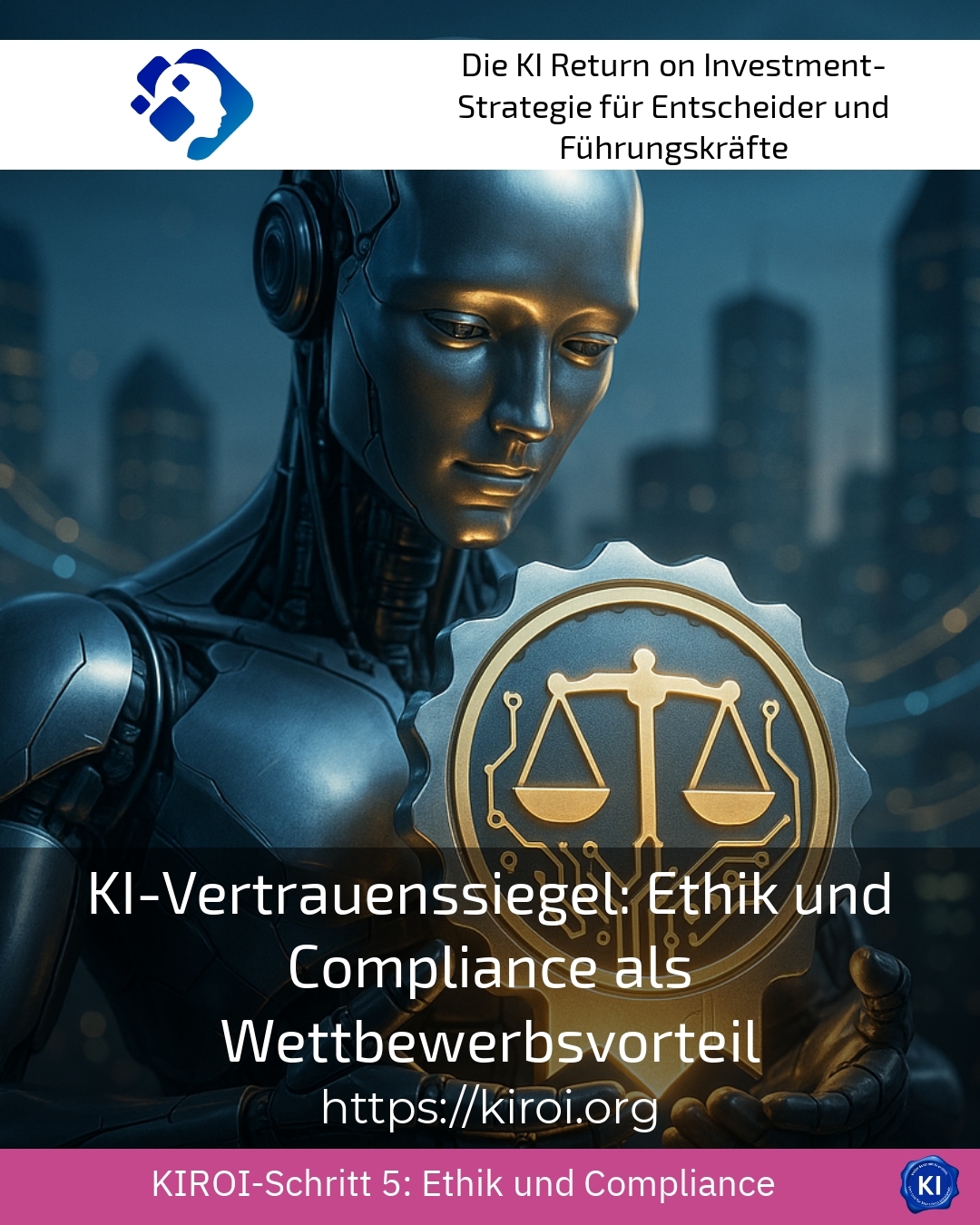
The digital transformation is fundamentally changing almost every sector. Companies face a crucial question. How can they implement algorithmic systems while building customer trust? AI Trust Seal develops into a strategic differentiating factor. It signals ethical conduct and legal compliance. Those who invest in certifications today secure competitive advantages tomorrow. This development particularly affects sensitive business areas. These are areas where automated systems decide on loans, insurance, or healthcare benefits. The following sections show concrete ways to implement trustworthiness.
Why ethical principles contribute to business success
Consumers are developing an ever more critical awareness of algorithmic decisions. They question the criteria by which systems judge. Companies that communicate transparently gain loyal customers. A documented ethical framework creates the basis for sustainable customer relationships. For example, financial service providers make extensive use of automated credit checks. Customers want to understand why certain decisions are made. Insurance companies use algorithmic risk assessments and must demonstrate fairness. In healthcare too, systems analyse patient data for diagnostic support. Patients expect the utmost care and comprehensible processes here.
One AI Trust Seal It transparently documents compliance with ethical standards. It shows customers that companies take responsibility. Banks frequently report increased customer trust following certifications. Insurers see better conversion rates with transparent communication. Healthcare facilities experience higher patient satisfaction through explainable systems. These positive effects justify investments in compliance structures. Furthermore, legal risks are significantly reduced. Regulatory authorities honour proactive action during audits.
Best practice with a KIROI customer
A medium-sized financial company approached us with a specific challenge. Automated lending processes were leading to complaints from customers who felt they were being treated unfairly. Internal teams were unable to adequately explain the algorithms' decision-making. Together, we developed a comprehensive transparency concept for all automated processes. We first analysed the existing algorithms for potential biases and discriminatory patterns. Subsequently, we implemented explanation modules that made decisions comprehensible to case workers. Staff received intensive training on how to communicate algorithmic decisions to customers. After six months, complaints had significantly decreased by more than sixty percent. The company received a recognised certification for ethical algorithmic systems. Customers have since reported increased trust in the institution's lending decisions. The conversion rate for new customers saw a measurable increase.
Legal frameworks as drivers for certifications
European regulation sets global benchmarks for the handling of algorithmic systems. Companies will in future have to fulfil extensive documentation obligations. Risk-based classifications determine the scope of the requirements. High-risk areas such as financial services are subject to particularly strict regulations. Insurances must be able to make algorithmic decisions explainable. Healthcare facilities require complete evidence of data processing and decision-making processes. These requirements may initially be perceived as a burden by companies. However, they also offer an opportunity for differentiation in competition.
Banks are already investing heavily in compliance infrastructures for algorithmic systems. They are training staff in how to handle ethical issues in automated processes. Insurance groups are developing governance structures for the responsible use of new technologies. Clinics and doctor's practices are establishing ethics committees for digital applications in patient care. These investments pay off in the long term and reduce liability risks. Early adaptation to regulatory requirements avoids costly subsequent adjustments. AI Trust Seal This demonstrates these efforts.
The AI Trust Seal as a Quality Mark for Customers
Certifications provide orientation in a complex technological environment. Customers can hardly assess the quality of algorithmic systems themselves. Independent audit seals reliably perform this evaluation function. In the financial sector, customers increasingly expect proof of fair algorithms. Policyholders want to know that risk assessments are not discriminatory. Patients are more likely to trust diagnostic support if it is certified. This expectation fundamentally changes competitive dynamics across all industries.
Businesses with recognised seals position themselves as trustworthy partners. They actively communicate their ethical standards in marketing and sales. Bank customers are more likely to choose institutions with transparent algorithmic processes. Insurance brokers preferentially recommend providers with proven fairness. Doctors are more likely to refer patients to facilities with certified diagnostic systems. These referral mechanisms further enhance the competitive advantage. The initial effort for certifications thus pays for itself relatively quickly.
Practical steps for implementing ethical principles
The path to certification begins with an honest assessment of existing systems. Companies systematically analyse all algorithmic decision-making processes. They identify potential risks to fairness and transparency. Subsequently, they develop measures for risk mitigation and quality assurance. This process requires the collaboration of various departments and expertise. Technical teams work closely with legal departments and ethics officers. External support from specialised consultants can accelerate the process.
Financial institutions typically begin by documenting their credit scoring algorithms. They then test these systems for unintended discrimination against different customer groups. Insurances review their claims assessment processes for consistency and traceability. Healthcare providers evaluate diagnostic algorithms for clinical relevance and explainability. These analyses often reveal potential for optimisation that goes beyond compliance. Improved algorithms frequently lead to better business outcomes as well. For example, fairer credit decisions measurably reduce default rates.
Best practice with a KIROI customer
A regional insurance group approached our transruption coaching team with a complex concern. Automated claims assessment was yielding inconsistent results for comparable cases. Customers complained about differing treatment for similar claim notifications. The insurer feared reputational damage and regulatory consequences in equal measure. We provided comprehensive support for the project, from analysis to successful certification. Initially, we systematically identified problematic variables within the assessment algorithm. Some factors unintentionally correlated with policyholder demographic characteristics. After rectifying these biases, the consistency of decisions improved significantly. The insurer also implemented a monitoring system for continuous quality control. Staff received training on interpreting and communicating algorithmic decisions to customers. The company successfully achieved the desired certification within nine months. Since then, the insurer has actively utilised the seal in customer communication and marketing.
Employee development as a success factor for sustainable compliance
Technical systems alone do not guarantee the ethical use of automated decisions. Humans must be able to understand and responsibly deploy these systems. Training programmes therefore impart ethical principles and practical skills in equal measure. Bank employees learn to explain algorithmic credit decisions comprehensibly to customers. Insurance claims handlers receive tools to review automated damage assessments. Medical personnel understand the limitations and capabilities of diagnostic support systems. This qualification strengthens employees' trust in the technologies deployed.
Companies frequently establish interdisciplinary ethics committees for algorithmic decisions. These committees critically oversee the development and implementation of new systems. They carefully assess potential impacts on various stakeholder groups. Financial institutions include consumer advocates on these committees. Insurance companies invite external ethics experts to advise their decision-making processes. Healthcare facilities collaborate with patient representatives on system evaluations. This inclusion of external perspectives significantly improves decision quality.
Strategic positioning through documented responsibility
The AI Trust Seal enables clear differentiation from competitors in the market. Companies proactively and confidently communicate their ethical standards externally. They strategically integrate certifications into their brand identity and corporate communications. Banks advertise fair lending decisions as a unique selling proposition compared to competitors. Insurance companies position themselves as transparent partners in their customers' risk matters. Healthcare providers continuously emphasise the quality and safety of their digital offerings.
This positioning is particularly successful at appealing to value-oriented target groups. Younger generations are increasingly paying attention to ethical corporate behaviour when making purchasing decisions. They consciously select financial service providers based on sustainability and fairness criteria. Business customers prefer partners with proven compliance in their supply chains. Regulatory authorities view certified companies more favourably and cooperatively during audits. These diverse advantages mutually reinforce each other to create a sustainable competitive advantage.
Best practice with a KIROI customer
A maximum care hospital sought support with the ethical implementation of diagnostic algorithms. Transruption coaching intensively supported the project over a twelve-month period. The institution wanted to have radiological reporting supported by algorithmic systems. At the same time, the highest ethical standards for the handling of patient data were to be maintained. Together, we developed a governance framework for the clinical use of this technology. The framework defined clear responsibilities and escalation paths in cases of ambiguity or errors. Doctors received extensive training on the critical evaluation of algorithmic reporting suggestions. Patients were transparently informed about the use of supporting systems in their diagnostics. The hospital established a monitoring system for continuous quality control of the algorithms. After successful certification, patients reported increased trust in the diagnostic processes. The institution has since successfully positioned itself as a pioneer for ethical medical technology in the region.
My KIROI Analysis
The development towards certified algorithmic systems is noticeably accelerating across all industries. Companies that invest in ethical foundations today are sustainably securing their future competitiveness. AI Trust Seal This is developing into a key quality feature for customers and partners alike. Regulatory requirements will continue to increase and become stricter. Early adaptation reduces costs and creates experience advantages over competitors. My observation from numerous projects shows a clear trend. Companies with a proactive ethical approach achieve better business results than reactive competitors. They attract talented employees more easily and retain customers for longer. The investment in transparency and fairness pays off multiple times. However, the path to certification requires genuine willingness to change within the organisation. Superficial compliance programmes without real cultural embedding regularly fail. Successful companies understand ethical principles as part of their identity and strategy. They communicate this stance authentically internally and consistently externally. Transruption coaching supports organisations on this path to trustworthy technology use [1]. We provide impetus for strategic positioning and support practical implementation. Clients often report positive side effects from certification projects. Improved internal communication and a strengthened innovation culture are regularly among these. This transformation requires time and commitment at all levels of the organisation. However, the effort is definitely worthwhile for companies with a long-term perspective.
Further links from the text above:
[1] KIROI Methodology for Responsible Technology Implementation
For more information and if you have any questions, please contact Contact us or read more blog posts on the topic Artificial intelligence here.











 Deutsch
  English (UK)