
Have you ever wondered why some companies seem to glide effortlessly into the digital future, while others, despite enormous investments, stagnate and lose their competitiveness?
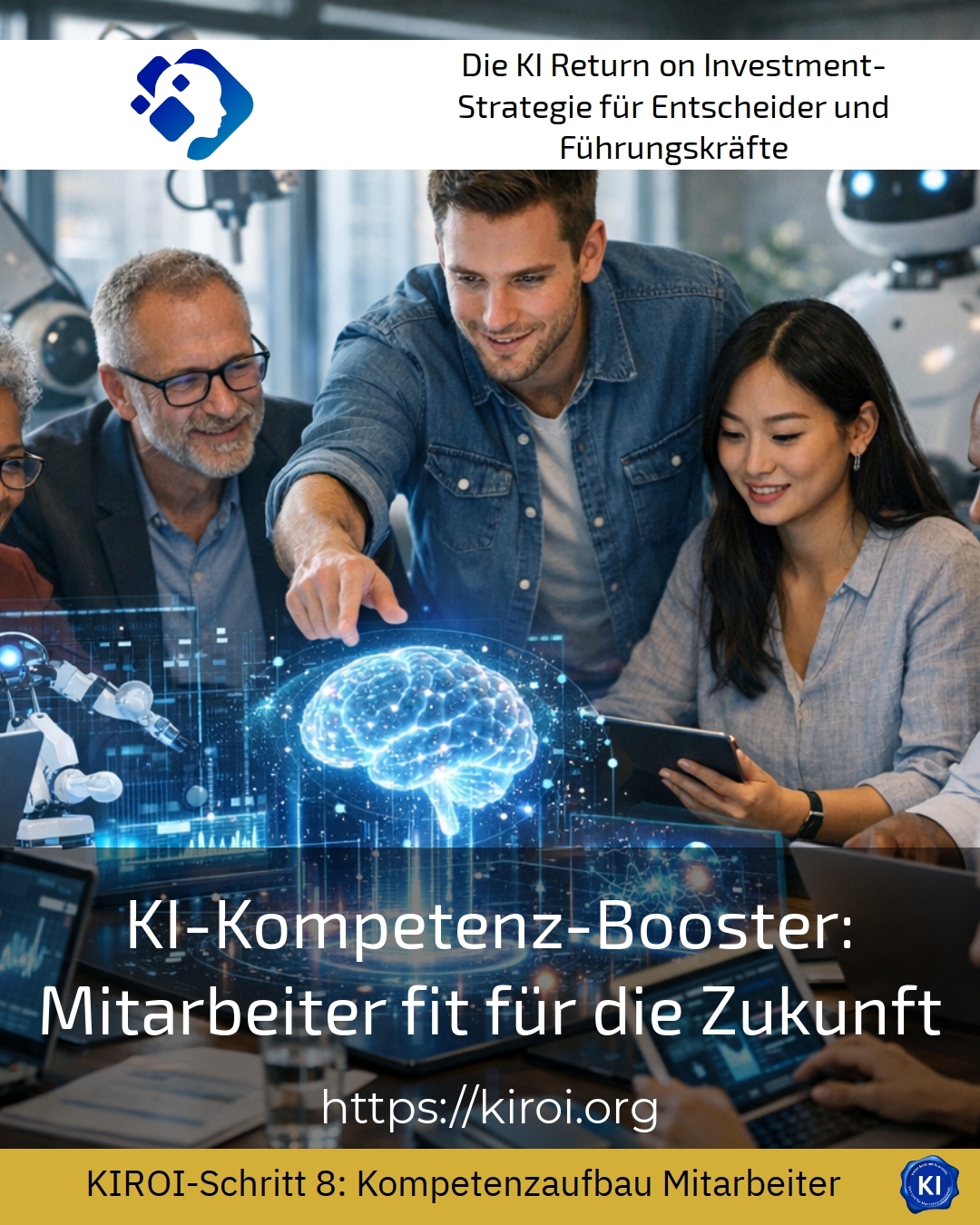
The answer lies not in the technology itself, but in the people who are supposed to use it. The crucial difference between success and stagnation manifests itself in the ability of the workforce to not only use new digital tools, but to employ them strategically and creatively. An effective AI Skills Booster In doing so, it transforms hesitant users into confident creators of their own professional futures. This is where modern human resources development comes in, because it recognizes that technological change always means human transformation as well. Companies that want to prepare their employees for the future must therefore think beyond traditional training concepts. They must create a culture in which continuous learning and experimental work become an integral part of everyday work.
Why traditional further education is no longer sufficient
The speed of technological change has accelerated dramatically in recent years. Traditional seminars and multi-day workshops can hardly keep up with this pace. By the time a comprehensive curriculum is developed, approved, and rolled out, the underlying technologies have often already evolved further. This discrepancy between learning speed and innovation speed presents completely new challenges for human resources professionals.
A medium-sized machine-building company from southern Germany invested substantial sums in an extensive training program for its designers [1]. The employees were to learn to integrate generative design tools into their work processes. Despite extensive in-person training, the actual use of the new tools remained shockingly low. Only when the company fundamentally changed its approach and implemented continuous learning support directly in the workplace did the desired success materialize.
A large insurance company experienced similar experiences when introducing automated claims processing. After three days of intensive training, the claims officers felt informed but by no means empowered. Only an accompanying mentoring program with experienced colleagues from the IT department created the necessary bridge between theoretical knowledge and practical application. A trading company, on the other hand, successfully experimented with so-called learning tandems, in which each digital-savvy employee accompanied a more skeptical colleague over several months.
Best practice with a AIROI customer An international logistics service provider faced the challenge of transforming its entire dispatching process to intelligent route planning. The initial skepticism of experienced dispatchers was enormous, as many felt threatened by their expertise. The transruptions coaching accompanied the company in developing a completely new approach. Instead of positioning technology as a substitute for human expertise, it was established as a booster. The dispatchers learned to incorporate their decades of experience as an indispensable complement to algorithmic optimization. They became curators of the machine recommendations and developed a deep understanding of when the automated recommendations were useful and when they were not. The program spanned six months and included weekly reflection rounds, individual coaching conversations, and practical experimentation spaces. The employees often reported that they felt for the first time as active agents of change. The acceptance of the new systems increased measurably, and the turnover in the department dropped significantly.
The AI Competence Booster as a holistic development approach
Modern competence development in the context of intelligent technologies requires a fundamental change in perspective. It is no longer primarily about imparting operating knowledge; rather, it involves developing a fundamentally new attitude towards technological change. This attitude cannot be taught in seminars; it must be developed through accompanied practical experience.
A pharmaceutical manufacturer developed an innovative program for its research department. The scientists were to learn to use predictive analysis tools for drug research [2]. Instead of a traditional training, the researchers initially received simple experimental tasks without any performance pressure. They were allowed and encouraged to make mistakes, test boundaries, and share their experiences in moderated exchange sessions.
A media company took a similar approach when integrating automated text generation into the editorial team. Initially, journalists were given tasks where the use of the new tools was explicitly voluntary. Only when the first success stories began to spread did interest within the entire editorial team noticeably increase. A financial services provider, on the other hand, relied on internal competitions where teams developed creative application ideas for the new analysis tools. The best ideas were actually implemented, which significantly increased the motivation of all involved parties.
Psychological safety as the foundation of the AI competence booster
Any successful development of competencies begins with creating an environment where experimentation is allowed and failure is accepted. Without psychological safety, employees remain stuck in familiar routines, even when these are obviously inefficient. The fear of mistakes and negative consequences is more powerful than any incentive to change.
One automotive supplier had to learn this painful lesson. The introduction of an intelligent quality control system initially met with resistance from production workers. The employees feared that the system would document their errors and use them against them [3]. It was only when management convincingly assured them that the data would be used solely for process improvement that acceptance began to develop.
A telecommunications provider solved a similar problem through full transparency. The customer service staff gained full insight into the functioning of the new assistance system. They understood what data was collected and what was not. An energy provider went one step further and allowed the affected staff to actively participate in designing the initial implementation parameters. This participatory approach created trust and transformed potential critics into dedicated supporters of the project.
Practical implementation strategies for sustainable development
The successful implementation of a comprehensive competence development program requires careful planning and patient implementation. Rapid successes are possible, but sustainable transformation takes time and continuous support. Companies that seek shortcuts here often pay a high price later in the form of resistance and resignation.
A construction company developed a four-stage model for the development of its construction managers’ competencies. The first stage included purely informational communication about the possibilities of digital site management. The second stage included supervised practical experiments on selected pilot construction sites. The third stage included collegial advice between experienced and new users. In the fourth stage, the construction managers themselves assumed the role of multipliers for their teams.
A food manufacturer implemented a buddy system in which two employees from different departments learned together. The different perspectives proved to be enriching for both parties. A textile company experimented with virtual learning spaces where employees from different locations worked together on case studies. The geographical distance proved to be an advantage because it forced more precise communication.
Best practice with a AIROI customer A mid-sized private bank wanted to qualify its client advisors to use intelligent analysis tools. The traditional training of advisors relied heavily on personal experience and intuitive understanding of customers. The integration of data-driven recommendation systems appeared to many as a threat to this proven expertise. The transruptive coaching accompanied the institute in developing a hybrid competence model. The advisors learned to connect their intuition with the analytical insights of the new systems. They received regular reflection spaces where they could exchange their experiences and jointly develop improvement proposals. Particularly valuable was the realization that the best quality of advice arose when human empathy and machine analysis worked together. The advisors developed a new self-concept as a bridge builder between algorithm and customer. Customer satisfaction increased measurably, and the consultants often reported an increase in job satisfaction.
Leaders as role models in competence development
The attitude of the leadership determines the success of any competence development. When supervisors themselves show uncertainty in handling new technologies, it inspires their teams. The message then is: Even experienced professionals must and can learn. This attitude is far more valuable than a perfect façade.
A steel manufacturer initiated a reverse mentoring program in which young employees coached their managers on digital topics. The initial skepticism of the management level quickly gave way to genuine enthusiasm for the format. A chemical company committed its entire management to participating in a multi-week learning program. The board members openly shared their insights and also their difficulties in the internal communication channel. A machine manufacturer introduced monthly learning hours in which all levels of the hierarchy participated together. The visible learning readiness of the leadership was a strong signal to the entire organization.
Measurable success and long-term impact
The effectiveness of competence development programs can certainly be measured, although not always in short-term metrics. Sustainable changes often do not become apparent until months have passed, or sometimes even years have passed. Companies must therefore be patient and at the same time define appropriate indicators for intermediate success.
An electronics manufacturer developed a differentiated set of metrics for its AI Skills Booster-Program. In addition to classic usage statistics, the company also captured qualitative indicators such as the frequency of improvement suggestions from the workforce [4]. A consumer goods manufacturer relied on regular mood surveys to track the emotional acceptance of the new tools. An IT service provider conducted quarterly competency assessments that included both self-assessments and practical tests.
The long-term impact often manifests itself in indirect effects. Companies with successful programs often report increased innovation across the organization. Employees who have had positive learning experiences once are more open to further changes. This cultural transformation is ultimately the most valuable return of any competency development.
My AIROI Analysis
Observations from numerous accompanying projects show a clear pattern: Successful competence development in the context of intelligent technologies is not a project with a defined end, but a continuous process of organizational transformation. The companies that benefit the most from their investments are those that have understood that technology remains worthless without human competence. AI Skills Booster As a holistic approach, technical knowledge is combined with psychological safety and cultural change. The combination of structured learning formats and free experimentation spaces is particularly effective. Employees need both guidance and space to develop new skills. The role of leaders cannot be overestimated. When supervisors themselves become visible learners, a culture of continuous development is created. Transruptive coaching helps companies in the design of exactly these transformation processes. Experience shows that external support often helps to identify blind spots and break through stuck patterns. Many organizations underestimate the effort required for sustainable change at first. However, the investment is worth it because competent employees are the only competitive advantage that cannot be easily copied. The future belongs to companies that take their people seriously and give them the tools for self-directed learning.
Further links from the text above:
[1] McKinsey: Successful Change Management Starts with Upskilling
[2] Harvard Business Review: Technology and Analytics Insights
[3] World Economic Forum: Future of Work Archive
[4] Gartner: Workforce Planning and Skills Development
For more information and if you have any questions, please contact Contact us or read more blog posts on the topic Artificial intelligence here.







 Deutsch
 English (UK)