
Why do over 70 percent of all transformation projects fail despite the latest technology and millions of dollars in investment?
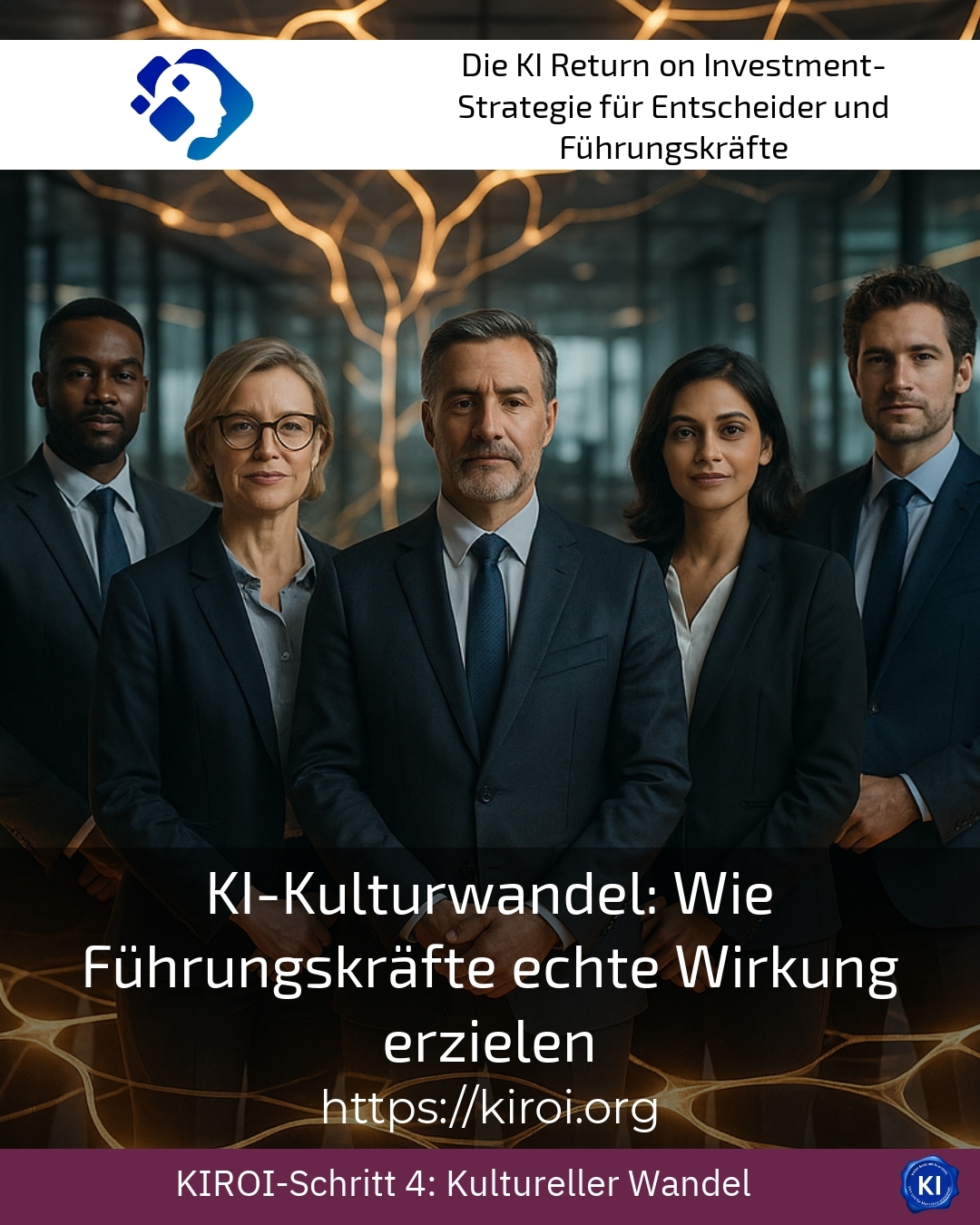
This question concerns decision-makers in companies worldwide. The answer rarely lies in the technology itself. It lies in the invisible structures of an organization. The AI cultural change It presents leaders with completely new challenges. Old leadership models are no longer adequate. Hierarchical decision-making blocks innovation. Employees feel overwhelmed or not included. This is where modern leadership coaching comes in. It supports organizations in shaping real change from within. Transruptive coaching supports leaders in projects around these complex transformation processes. It is not about quick solutions. It is about sustainable growth.
Understanding the invisible dimension of transformation
Technological changes require more than new software or automated processes. They require a fundamental change in thinking and action. Leaders often underestimate the emotional component. Employees bring with them fears, resistance, and reservations. These reactions are human and understandable. For example, a manufacturing company in mechanical engineering introduced predictive maintenance systems. The technology worked flawlessly. Yet experienced technicians refused to cooperate with the new systems. They felt their decades of expertise was devalued. Only through targeted guidance from the leadership level did the situation change. A logistics company experienced a similar situation when introducing automated route planning. The dispatchers saw their role threatened. Through transparent communication and new task definitions, resistance turned into engagement. In healthcare, similar patterns are evident in the implementation of decision support systems. Doctors and nurses often fear the loss of their autonomy.
AI cultural change begins in the minds of leadership
True impact does not come from instructions from above. It develops through role modeling and authentic conviction. Leaders must first reflect on their own attitude. They must learn to deal with uncertainty. They must be able to delegate control. One financial services provider reported on this experience. The board had formulated ambitious digitization goals. The middle management however unconsciously blocked any progress. The managers did not feel included. They did not understand the why or how. Only through intensive coaching as part of disruption coaching did the dynamics change. A retail company made similar experiences when introducing intelligent inventory management systems. The store managers initially only saw the threat to their freedom of decision-making. Through workshops and individual conversations they developed a new perspective. In the energy sector, we often assist clients in integrating smart grid technologies. Here too, the human dimension is at the forefront.
Best practice with a AIROI customer
A medium-sized company in the automotive supplier industry faced a complex challenge. The management had decided to implement intelligent quality control systems across the board. The technical implementation proceeded as planned and within budget. However, after six months, the acceptance rate was below thirty percent. The quality inspectors systematically circumvented the system and resorted to old methods. The error rate remained high. As part of our follow-up, we first analyzed the cultural barriers. We conducted confidential discussions with employees at all levels of the hierarchy. It was revealed that there was a fundamental trust problem. The employees felt that their expertise no longer mattered. The management communicated the project exclusively through efficiency gains and cost savings. The human component was completely absent. Together, we developed a new communication strategy and trained the leadership in empathic conversation skills. We established feedback loops and integrated the experience of long-time employees into the system optimization. After another six months, the acceptance rate was over eighty percent. The error rate dropped by forty percent compared to the initial level.
Developing new competencies for a changing working world
The requirements for leadership have fundamentally changed. Traditional management skills are no longer sufficient. Leaders today need emotional intelligence in particular. They must be able to explain complex relationships in an understandable way. They must build bridges between technical possibilities and human needs. In the banking sector, we are experiencing this with the introduction of automated credit decision processes. Customer advisors are replaced by algorithms. In fact, their role is shifting towards more complex advice. A pharmaceutical company integrated intelligent systems into its research and development. Initially, the scientists feared the loss of creative freedom. Through smart guidance, they recognized the potential for new discoveries. In the education sector, we are guiding leaders in integrating adaptive learning systems. This allows teachers to address learners more individually.
The role of transruptive coaching in the cultural transformation of AI
External support offers crucial advantages in change processes. Coaches bring an unbiased perspective. They identify blind spots and unspoken conflicts. They create a safe space for honest reflection. Transruptive coaching supports leaders in projects involving profound transformations. It is not about ready-made recipes. It is about individual solutions for unique situations. A media company used this support in the integration of automated content creation. The editors initially developed strong defensive reactions. Through structured reflection processes, they discovered new creative possibilities. An insurance company reported similar experiences in claims processing. The claims officers learned to understand technology as a support. In the hospitality industry, we support hotel chains in implementing intelligent guest services. Employees gain time for personal interactions.
Clients often come to us with the following issues: they experience resistance in their teams despite the clear benefits of new technologies. They feel overwhelmed by the speed of change. They are looking for ways to involve their employees without exerting pressure. They want to constructively manage their own uncertainty. These concerns are legitimate and widespread.
Creating sustainable structures for continuous change
One-time training sessions and kick-off events are not enough for real change. Organizations need lasting learning and adaptation structures. They must actively promote and live a culture of error. They must create space for experimentation without immediate pressure for immediate success. A telecommunications company established internal innovation labs with clear spaces for experimentation. The employees independently developed new application possibilities. A retail company introduced regular reflection rounds at all levels. The leaders learned as much as their teams did. In the manufacturing sector, we often see the establishment of learning partnerships. Experienced employees and technically skilled younger colleagues support each other. These structures promote the organic transfer of knowledge and remove barriers.
Best practice with a AIROI customer
A large group of hospitals faced the task of implementing intelligent diagnostic support across the board. The medical professionals reacted with clear skepticism to the planned changes. Especially experienced doctors saw their clinical expertise questioned by algorithms. The nursing staff feared additional documentation burdens without discernible benefits for patient care. Together with the clinical management, we developed a multi-stage support process over eighteen months. First, we worked intensively with the top management on their own attitude and communication skills. Subsequently, we trained department managers in moderating difficult conversations and dealing with resistance. We established a network of internal change facilitators from various professional groups and hierarchical levels. These multipliers received regular supervision and support from our team. The integration of pilot projects with voluntary participation and transparent reporting of success was particularly effective. After the process was completed, job satisfaction had measurably improved and the quality of diagnostics had significantly increased. The managers reported a fundamentally changed conversational culture in their teams.
Achieve measurable results through conscious leadership
Genuine AI cultural change This is reflected in concrete results and changed behaviors. Organizations can measure progress on various indicators. Employee satisfaction in change processes often increases after targeted support. The turnover rate in affected departments often decreases measurably. The adoption rates of new technologies improve significantly. An energy provider documented this development during the implementation of intelligent grid control. Acceptance increased from initially below twenty to over seventy percent. A logistics company observed similar improvements in the implementation of autonomous warehouse systems. The employees independently developed optimization proposals. In the financial sector, clients often report improved collaboration between technical and professional teams after structured support.
My AIROI Analysis
Accompanying transformation processes requires a deep understanding of human dynamics and organizational complexity. Technological changes rarely fail because of the technology itself. They fail because of a lack of preparation among people and structures. Leaders bear a special responsibility for success. They must first reflect on and develop their own attitude. They must learn to deal productively with uncertainty and to accompany others in dealing with it. The AIROI methodology offers a structured yet flexible framework [1]. It combines strategic clarity with human sensitivity. It considers both rational and emotional aspects of change. In my work with leaders, I repeatedly experience the same turning point. It happens when people stop seeing change as a threat. It happens when they start actively participating instead of just reacting. We cannot force or dictate this turning point. We can only enable it through patient accompaniment and authentic support. AI cultural change It is not a one-time project with a beginning and an end. It is a continuous journey that organizations take together. Transruptions Coaching accompanies projects along this demanding journey. It provides impulses, creates spaces for reflection, and supports sustainable development. The results speak for themselves: higher acceptance, better collaboration, and long-term successful transformation.
Further links from the text above:
[1] AIROI-Master plan for sustainable transformation
For more information and if you have any questions, please contact Contact us or read more blog posts on the topic Artificial intelligence here.







 Deutsch
 English (UK)