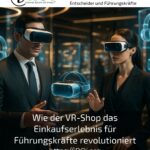
The VR shop opens up entirely new possibilities for managers to make the shopping experience more efficient and immersive. Through the use of virtual reality, the selection process becomes more interactive, personalised, and time-saving, which is of great importance, especially in a business context. Managers benefit from virtual showrooms that make product selection and configuration an almost real-life experience – from anywhere.
How the VR shop supports decision-making
In practice, numerous companies are experiencing how VR shops facilitate complex decision-making for managers. One example is the automotive industry, where managers can virtually experience and inspect individually configured vehicle models before making investment decisions. Audi is already using this capability to provide customers with a comprehensive overview through virtual test drives, something that classic catalogues cannot offer[4].
In the realm of furnishings too, managers report positive experiences. For example, various retail companies have integrated virtual kitchen and furniture planning into their VR shops, which significantly enhances the customer experience. Virtual representation avoids poor decisions, as colours, materials, and sizes can be examined in detail beforehand.
BEST PRACTICE with a client (name withheld due to NDA agreement): In one project, iROI Coaching supported the successful introduction of a VR shop for a large furniture retailer. Managers used this to compare product variants more quickly and thus make the best possible purchasing decisions. The result: shorter coordination times and higher customer satisfaction through individual advice.
Interactive product presentations as a success factor in the VR shop
The VR shop offers executives immersive product presentations that they can actively experience. An example from the luxury sector shows how brands like Bvlgari use virtual reality to present jewellery in detailed 3D experiences, thus creating a personal connection that is missing from simply flicking through a catalogue[1].
In the fashion sector, leading retailers are focusing on virtual try-ons. VR solutions enable digital try-ons of clothing and accessories, which reduces long waiting times and returns [2][5]. Such a digital twin replaces the physical showroom and allows managers to analyse trends and customer preferences more quickly.
BEST PRACTICE with a client (name redacted due to NDA): Through iROI coaching, a VR shop was implemented for a fashion company, enabling impressive virtual fashion shows at both events and for sales. Executives were able to make new collections tangible for partners and customers – with positive feedback on efficiency and reach.
Customer focus through individual consultation in the VR shop
Another strength of the VR shop is the possibility of personalised advice within a digital setting. Executives from the cosmetics sector report how virtual testing tools enable them to simulate the effect of products on different skin types or lighting conditions. This significantly supports the sales process by allowing customers to receive tailored recommendations directly in the virtual space[2].
The VR shop also supports managers in the home and garden sector in virtually planning design and furnishing options with customers – for instance, by placing furniture and plants in 3D within a digital representation of their own living space.
BEST PRACTICE with a client (name omitted due to NDA agreement): iROI Coaching supported a startup developing a VR solution for horticulture. Managers and users can virtually arrange plants and garden elements to determine optimal design ideas. The VR tool thus creates not only inspiration but also concrete implementation security.
Future trends and practical tips for using the VR shop
Leaders should understand the VR shop as a dynamic tool that is continually evolving. Integrating virtual reality into digital business processes opens up new perspectives for strengthening customer loyalty while simultaneously conserving resources. For example, virtual showrooms significantly reduce the need for physical product samples, saving both the environment and budget[5][7].
In practice, iROI Coaching recommends expanding the VR shop step by step, working closely with technology partners. This allows leaders to ensure that the solutions are optimally tailored to their own needs and offer real added value. Training courses and workshops also help to involve employees in the digital transformation.
A key tip is to combine VR shops with real customer experiences. The seamless integration of online and offline experiences helps executives to react flexibly to market demands and continuously improve the shopping experience.
My analysis
The VR shop is not only revolutionising the shopping experience for executives, but also offers them powerful tools to optimise their decision-making processes. Through interactive, realistic product presentations, individual consultation and time savings through virtual showrooms, the world of purchasing is being made more efficient and customer-oriented at the same time. iROI Coaching specifically supports companies in successfully embedding these digital solutions into their projects, thereby creating sustainable competitive advantages.
Further links from the text above:
Using virtual reality to create an immersive product experience
Augmented Reality and Virtual Reality in E-commerce
Retail VR develops immersive brands
How Virtual Reality Can Revolutionise Marketing
VR & AR in E-commerce: Practice & Effects
For more information and if you have any questions, please contact Contact us or read more blog posts on the topic internet Return on Investment - Marketing here.






 Deutsch
  English (UK)