
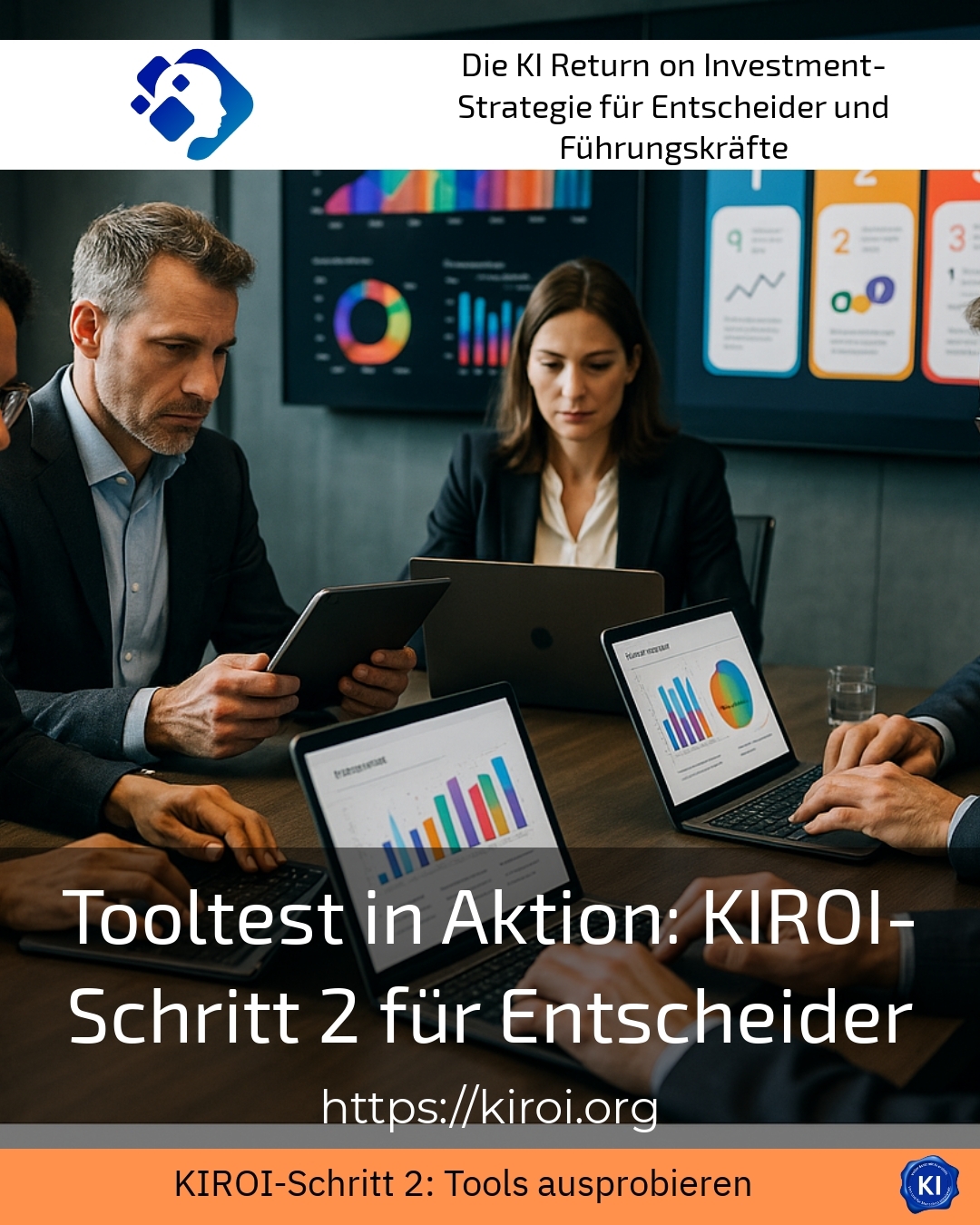
The tool test is a central component for decision-makers today who want to specifically evaluate digital tools and create sustainable added value. Many companies face the challenge of selecting the right solution from a multitude of options. The tool test in AIROI Step 2 offers a structured approach for this, based on practical use cases and sound criteria. This makes it possible not only to check the technical functions but also to ensure integration into existing processes and acceptance by employees.
Why the tool test is indispensable in the decision-making process
Without systematic tool testing, decisions often fall flat. Companies frequently report losing a great deal of time and resources because they choose based on marketing promises or superficial comparisons. Tool testing helps to reduce these uncertainties. It begins with a precise needs analysis and the definition of specific use cases. Only after this are suitable tools selected and tested in real projects.
A manufacturing technology manufacturer is using tool testing to compare different vision systems, with a focus on recognition accuracy and integration into production processes. A healthcare service provider is assessing document automation solutions for usability. A financial services provider is testing various risk analysis tools to ensure integration into their existing IT landscape.
The tool test is therefore more than a mere trial. It is an iterative process that enables continuous learning. Only in this way can the right solution be found and sustainably embedded in the company.
Tool tests in practice: examples from various industries
Trade and Logistics
In trade, the tool test is used to check AI solutions for warehouse management and sales planning for their practical suitability. A logistics company uses the tool test to evaluate route optimisation software with AI algorithms. The tools are tested under real conditions to increase the efficiency of supply chains. This allows companies to identify early on whether a tool delivers the desired results.
Education and Office Organisation
In the education sector, tool testing allows for the selection of AI-powered support tools for personalised learning pathways. In office organisation, tool testing focuses on simplifying routine tasks such as data management through automation. A marketing team is testing various SEO and automation tools to make campaign management more effective.
Facility management and healthcare
A facility manager is testing various maintenance and energy efficiency solutions under real-world conditions to reduce operating costs. In the healthcare sector, document automation tools are being assessed for their user-friendliness and integration. This ensures that the solutions meet the requirements of the employees.
BEST PRACTICE with one customer (name hidden due to NDA contract) A medium-sized manufacturing company wanted to introduce an early warning system for error detection. The tool test was carried out in three phases: First, the requirements were defined, then various systems were tested in production, and finally, employee feedback was collected. The documentation of the test results enabled a transparent decision. The chosen system significantly reduced production downtime and stabilised processes.
How to successfully implement a tool test
A successful tool test thrives on transparency, communication, and a willingness to learn. Involving relevant stakeholders is crucial. This is the only way to create an acceptable and efficient solution for every area. The systematic documentation of all steps and results ensures traceability and transparency.
Companies often report that systematic testing increases employee acceptance. Employees are involved in the process at an early stage, and their feedback is directly incorporated into the evaluation. This prevents the tool from being theoretically suitable but not accepted in practice.
The support provided by transruption coaching helps to provide impetus and guide processes. This creates a safe space where new knowledge is built up and specifically implemented. The tool test becomes not just a technical review, but a strategic element for sustainable development and growth.
My analysis
The tool test within a structured approach, such as in AIROI step 2, offers practical insights that go far beyond mere functionality. It helps decision-makers make the best choice from the multitude of available tools, optimise their use, and sustainably promote acceptance within the company. Comprehensive analysis, the inclusion of user feedback, and ongoing support are important building blocks for success.
Further links from the text above:
Tool Test in AIROI Step 2: How decision-makers find the best AI solutions
Mastering Tool Evaluation: AIROI Step 2 – AI Tools
Tool Testing in Focus: How to Master AIROI Step 2
Tool test in focus: AIROI Step 2 for decision-makers
Tool Test in AIROI Step 2: How Decision-Makers Find the Best
For more information and if you have any questions, please contact Contact us or read more blog posts on the topic Artificial intelligence here.









 Deutsch
  English (UK)