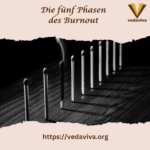
The same spark that once ignited our enthusiasm and passion can transform into a consuming inferno known as burnout, separating us from both our feelings and our work. Here I explain the fifth phase, which can affect anyone at risk.
The fifth phase:
The honeymoon or the initial excitement
In this first phase, people often feel enthusiastic and engaged. There is a general sense of optimism and a strong will, coupled with passion, to overcome obstacles.
2. Onset of stress and initial self-doubt:
In this phase, initial stress symptoms emerge. Small problems are magnified, and one begins to question their ability to meet their obligations.
3. Chronic Stress and the Onset of Anger:
Stress becomes chronic stress when it continues. The excitement over unfulfilled expectations leads to a growing feeling of frustration and physical and emotional fatigue.
4. Ordinary Burnout:
At this severe stage, the daily experience of burnout becomes the norm. A sense of emptiness sets in as performance wanes. This can lead to cynicism and the belief that your actions are insignificant.
5. Burnout and emotional detachment:
Profound fatigue is a hallmark of the final stage of burnout. Hopelessness and a lack of personal fulfilment are common, and there can be a complete emotional detachment from one's work.
What to do?
As the creator of miReiki, I have personally experienced the devastating consequences of burnout and am familiar with its stages – not just in theory, but also in practice. It often starts subtly when our enthusiasm for our task takes over. However, if left unchecked, the initial worries and self-doubt can develop into prolonged burnout and chronic frustration. Burnout, an emotional detachment that isolates us from our inner selves, is the result of this sad journey.
But hope dies last. miReiki can help each individual rediscover who they are. It serves as a friendly companion, to take a moment for oneself, to reflect and to tenderly nurture our inner fire. miReiki can offer a way out of the burnout cycle: Reiki can harmonise the flow of energy, Ayurveda can promote balance in our lives, Yoga strengthens our physical and mental power, and aromatherapy can help our senses relax.
A helping hand from the Burnout:
Do not hesitate to ask for help when you start to experience burnout. When things get tough, miReiki can be a rock to lean on. It is an encouragement to use our inner fire to light our way, rather than letting ourselves be consumed by burnout.
If you have any questions, please do not hesitate to contact me. Contact us or visit Facebook. I would be happy to show you how to recognise and overcome the five stages of burnout. Let's reignite the fire together and discover the path to true inner contentment.
Burnout explained scientifically:
Burnout is a complex phenomenon that has not yet been uniformly defined in science. Nevertheless, some key aspects can be summarised from current research:
Definition and characteristics
Burnout is described as a risk state that arises from prolonged work overload [1]. It is a state of persistent exhaustion resulting from chronic overload [2].
The three main dimensions of burnout are:
Emotional exhaustion
2. Alienation/Cynicism towards work
3. Reduced performance
Symptomatology
Typical symptoms of burnout include:
– Persistent fatigue and lack of energy
– Concentration and memory problems
- Sleep disorders
– Physical complaints such as headaches or back pain
– Feelings of frustration and resentment
– Loss of empathy and idealism
Causes and risk factors
The main causes are considered to be:
Chronic stress at the workplace
Discrepancy between own expectations and reality
Lack of coping strategies
Risk factors include increasing workload intensification, poor work organisation, and bullying[7].
Diagnosis and Classification
Burnout is not a recognised medical diagnosis but is classified in the ICD-11 as an occupational phenomenon[7]. There are no uniform diagnostic criteria. Burnout is often seen in conjunction with other mental health conditions such as depression[6].
Prevention and treatment
Stress management, work-life balance, and a healthy lifestyle are recommended preventatively. Treatment mostly involves psychotherapeutic approaches for stress management and, if necessary, temporary incapacity for work.
In summary, burnout can be described as a multidimensional syndrome of exhaustion, arising from chronic work overload and accompanied by significant psychological and physical impairments.
Sources
[1] https://www.aok.de/pk/magazin/koerper-psyche/psychologie/burnout-so-merken-sie-ob-sie-betroffen-sind/
[2] https://www.schoen-klinik.de/burnout
[3] https://de.wikipedia.org/wiki/Burn-out
[4] https://www.neurologen-und-psychiater-im-netz.org/psychiatrie-psychosomatik-psychotherapie/stoerungen-erkrankungen/burnout-syndrom/
[5] https://digitalcollection.zhaw.ch/bitstream/11475/740/1/ba0211.pdf
[6] https://www.gesundheitsinformation.de/was-ist-ein-burnout.html
[7] https://flexikon.doccheck.com/de/Burnout-Syndrom
[8] https://www.hirslanden.ch/de/corporate/krankheitsbilder/burnout.html
#BurnoutBewusstsein #miReikiResilienz #GesundesArbeiten #Stressmanagement #Lebensqualität






 Deutsch
  English (UK)