
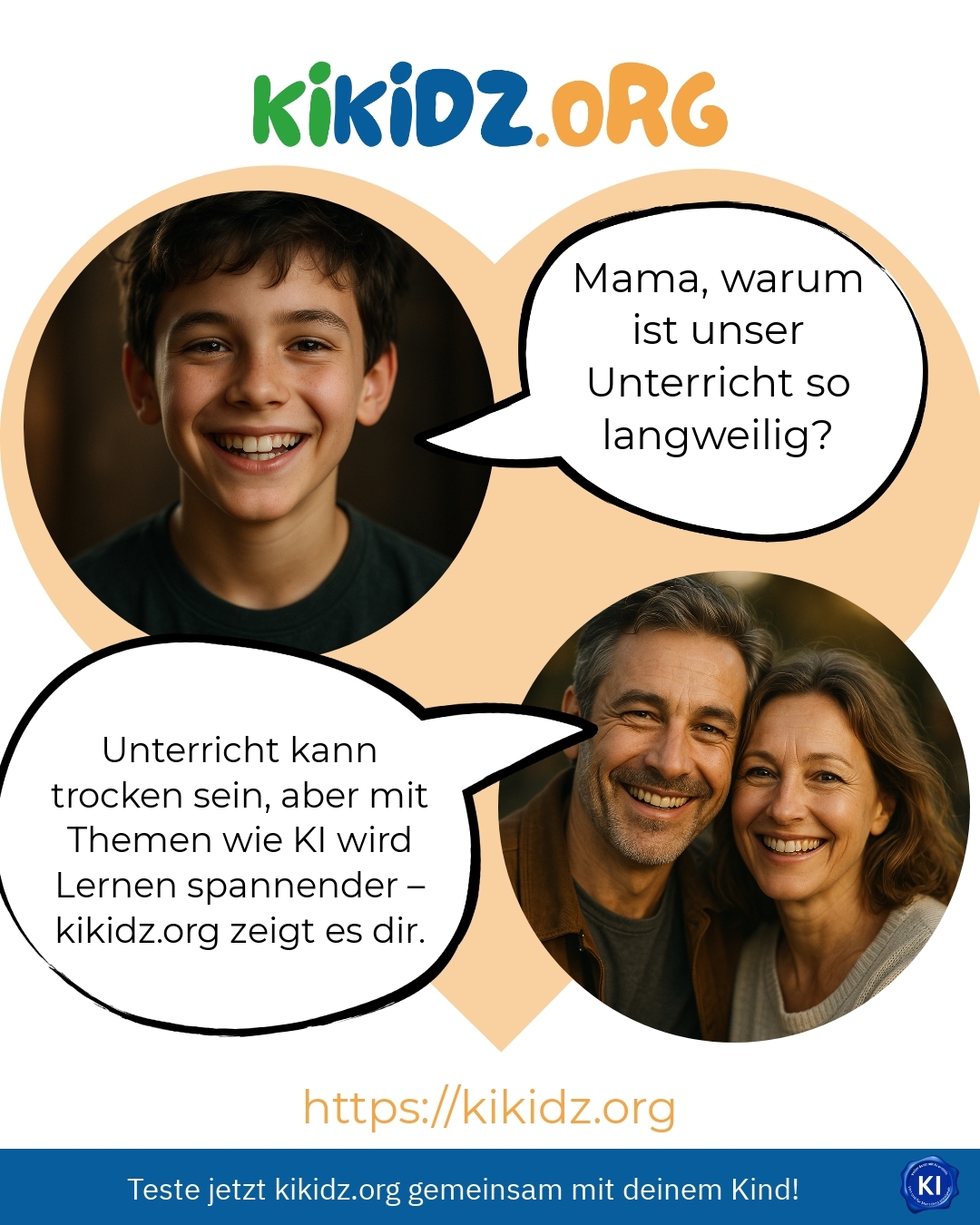
„Mum, why is our lesson so boring?“This question arises for many parents when their children return home from school tired and unmotivated. The causes for this are diverse and affect teaching methods as well as the personal experiences of the pupils. In the following, I would like to offer insights into why children often find lessons boring, and how parents can support them.
Mum, why is our lesson so boring?
Children experience boredom in class particularly when the learning material appears neither challenging nor relevant. They often feel unengaged by monotonous methods and rigid curricula. Many pupils report that traditional teacher-led lessons or pure blackboard and lecture situations are boring. Furthermore, boredom often arises equally from under-stimulation or over-stimulation. Children with special talents typically require more demanding tasks, while others feel overwhelmed by overly complex content. The lack of connection to real life also leads many to ask the question: „Mum, why is our lesson so boring?“[2][6][9]
Parents often say that their children want more practical relevance, variety and participation. For example, one mother emphasises: „My son can hardly motivate himself when it's just hours of copying.“ Another reports: „My daughter often says she doesn't understand the point of many tasks.“ And another father describes: „Learning is a burden because it's only about grades, not enthusiasm.“
How parents can recognise and support their children's boredom
Parents who hear the question „Mummy, why is our class so boring?“ should pay close attention to the following signals:
- Lack of willingness to make an effort despite having abilities
- Increased switching off or daydreaming in class
- Negative comments about school, such as „it's no use“
Practical support for parents arises from open conversations about learning content and interests. Clients often report being encouraged by parents to ask about their children's interests in order to involve them in discussions. This not only promotes understanding but also motivation.
For example: A mother engages with her child on projects related to their favourite subjects. A father supplements learning through shared books and discussions, linking classroom topics to everyday life. Other families specifically encourage initiative and independent problem-solving to spark more interest and creativity.
„Mum, why is our class so boring?“ – Practical solutions for everyday life
To ensure this question is asked less often, parents can work with teachers and children to develop strategies that make lessons more engaging for the children and boost their motivation.
It is important to deliver the curriculum in a way that is meaningful and practical. Parents can make the connection to everyday life, current issues, or their child's personal interests by discussing examples from lessons together. Furthermore, it helps if the school addresses individual learning needs more effectively. This can make participation in support courses or additional offers beneficial.
Parents report that incorporating playful elements like quizzes or project work increases enthusiasm for school. One mother explains: „My child thrives when learning if they can try out the topics practically.“ Another father reports: „Our daughter loves it when she can work together with others.“ And a third mother describes how changing learning methods in everyday life provides new impetus.
Because many children, especially in secondary school, experience lessons as results-oriented and stressful, the inclusion of positive experiences of success is essential. Feedback from parents and teachers that promotes learning supports self-confidence and creates the motivation to stick with challenging topics.
How the training at https://kikidz.org can help
The question, „Mum, why is our lesson so boring?“ highlights the need for training that supports children, parents, and teachers in delivering engaging and motivating lessons. The training offered by https://kikidz.org provides excellent inspiration and support in this regard. It imparts practical, creative, and interactive learning methods and actively involves parents. This makes learning not only more varied but also more effective.
Parents who have already participated report enthusiastically: „The course content of KiKiDz opens up new worlds for our children.“ „Finally, my son understands how exciting learning can be.“ „We feel well-supported and know how to meaningfully connect school and everyday life.“ These positive feedbacks show how valuable the training on questioning is.
My analysis
The question „Mum, why is our class so boring?“ is representative of many children who long for more variety, relevance, and motivation. Boredom usually arises from monotonous lessons, requirements that are too difficult or too easy, and a lack of connection to students' everyday lives. Parents can make a big difference by incorporating their children's interests, actively communicating with teachers, and offering practical support in their daily learning.
At the same time, training courses such as https://kikidz.org show that there are ways to make lessons exciting and child-friendly. For parents and teachers, this opens up new opportunities to reduce boredom and promote a joy for learning. This way, children can find answers to their question: „Mum, why is our lesson so boring?“ and experience school as a vibrant place of discovery.
Further links from the text above:
If the child doesn't feel like going to school
Motivation in lessons and under-challenge
When pupils are bored infinitely
Lessons are unbearably boring: What can I do?
For more information and if you have any questions, please contact Contact us or read more blog posts on the topic Children and Artificial Intelligence here. You can find the courses here: Children and Artificial Intelligence Courses










 Deutsch
  English (UK)