
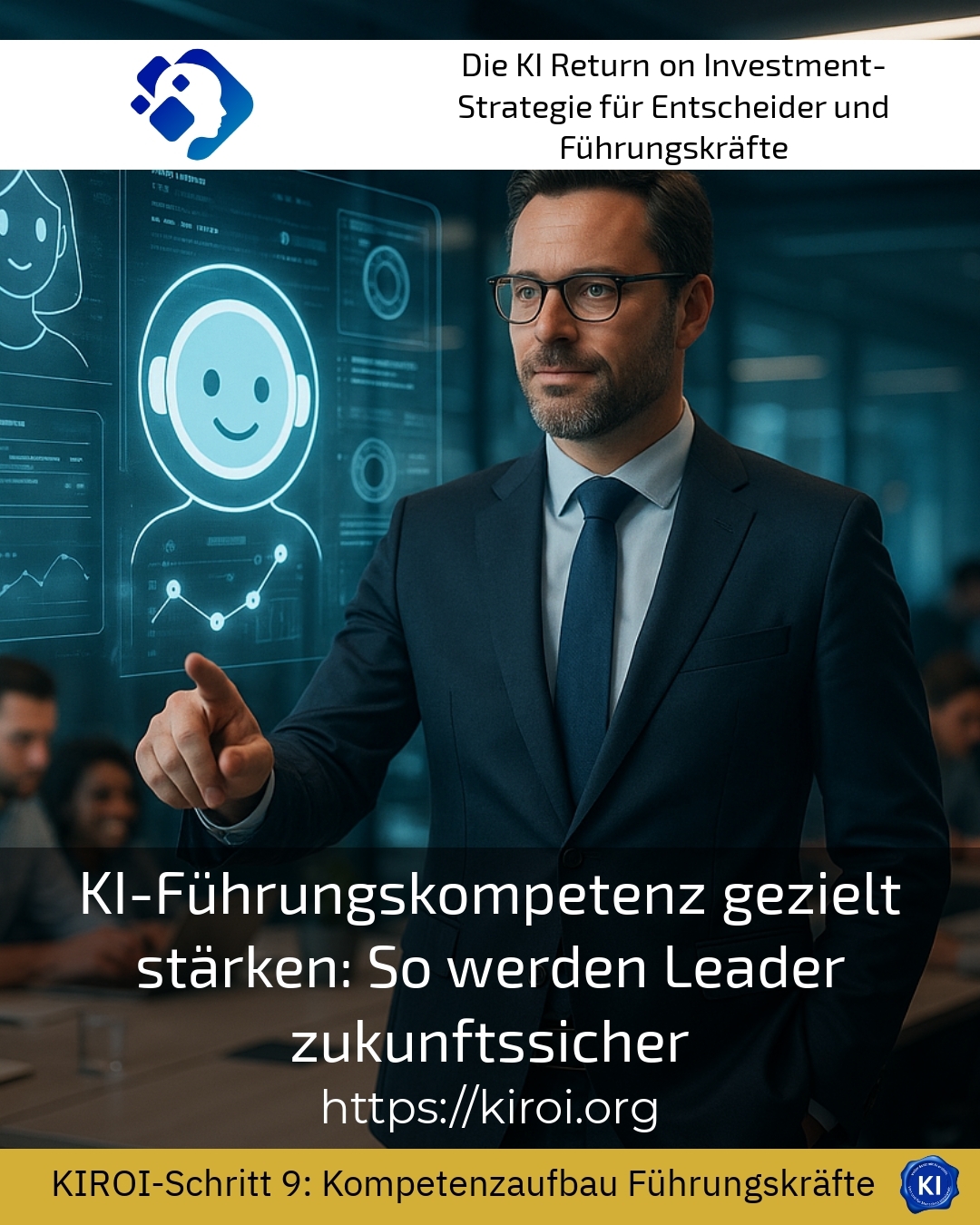
The working world is changing at a breathtaking pace. Leaders are facing entirely new challenges. Those who manage teams today will need to bring completely different competencies tomorrow. Strengthening AI leadership skills deliberately is no longer an option. It is a necessity for every leader who wants to remain relevant. But how can this change be achieved concretely? What skills do decision-makers really need? And why do so many transformation projects fail due to a lack of preparation? This article gives you practical insights and shows proven paths.
Why traditional leadership models are no longer sufficient
Traditional leadership approaches are often based on control and hierarchy. These models worked well in stable environments. Today, however, framework conditions change almost daily. Technological innovations permeate all areas of business. Employees expect more autonomy and a sense of purpose. At the same time, the pressure to make data-driven decisions is growing. Leaders frequently report feeling overwhelmed in this situation. They feel torn between conflicting demands. On the one hand, they are supposed to drive innovation. On the other hand, they have to keep the operational business running. This tension requires new ways of thinking and behaving. Transruption coaching supports precisely these kinds of complex projects. It helps leaders to develop new perspectives.
For example, a medium-sized engineering company was facing major changes. The management recognised the need for digital transformation. However, the second-tier managers strongly hesitated. They were worried that their expertise might be devalued. Another example shows a retail company with a traditional structure. There, young managers wanted to progress faster. However, the experienced managers blocked new ideas. In the third case, a logistics company struggled with a skills shortage. The managers suddenly had to manage remote teams. None of them had received training for this. These examples clearly illustrate the range of challenges.
Targeted strengthening of AI leadership skills through systematic development
Skills do not develop on their own. They require targeted guidance and continuous practice. Many managers underestimate the effort involved. They believe that a two-day seminar is sufficient. The reality, however, is quite different. Genuine skills development requires reflection and practical application. It also requires external feedback and critical self-reflection. This is precisely where professional support comes in. The AIROI model provides a structured framework for this. It combines strategic planning with operational implementation [1].
Let us first consider an insurance company as an example. Team leaders were supposed to introduce new tools there. However, they had never worked with them themselves. Their uncertainty rubbed off on the employees. Another example is provided by an advertising agency. The Creative Director was supposed to implement automated processes. He feared losing his creative work. This fear paralyzed the entire team for months. The third example comes from the healthcare sector. A clinic wanted to introduce digital patient records. The ward managers felt overwhelmed by the technology. They had no time for the necessary training.
Best practice with a AIROI customer
A traditional family-owned company from the manufacturing sector came to transruptions coaching with a specific concern. The executive board had made massive investments in new technologies. However, the hoped-for increases in productivity failed to materialise. Upon closer examination, a clear pattern emerged. The managers at production level did not understand the new systems. They were unable to convey a sense of purpose to their staff. The workforce reacted to the changes with passive resistance. In the coaching process, we first worked on the fundamentals. Together, we analysed the fears and reservations of the managers. Then we developed individual learning paths for each team leader. The combination of theory and practice was particularly important here. Each participant was able to apply what they had learned immediately. After six months, the atmosphere had changed significantly. The managers felt competent in handling the systems. They were able to answer questions from their teams with confidence. Productivity rose by measurable percentage points. This example clearly demonstrates the power of systematic guidance.
The role of emotional intelligence in digital transformation
Technical knowledge alone is not enough for modern leadership. Emotional intelligence is actually gaining in importance. The more processes are automated, the more important the human element becomes. Leaders must recognise and address the fears of their teams. They must build trust in uncertain times. This requires empathy and a genuine interest in people. At the same time, they need the ability for self-regulation. One's own stress must not be transferred to the team. Finding this balance is a real challenge [2].
A software company experienced precisely this area of tension very intensely. The head of development was technically brilliant and highly competent. However, he could not relate to the concerns of his team. Staff turnover rose to a worrying level. A similar pattern emerged at a bank. The branch managers were supposed to learn how to advise their customers digitally. However, many of them were hesitant about technology themselves. They were deeply ashamed of their perceived incompetence. The third example concerns an energy provider undergoing transformation. The managers suddenly had to learn to apply agile methods. In the process, they felt like beginners in their own field of expertise.
Practical ways to develop competence in everyday leadership
Theory without practice remains ineffective and forgotten. Therefore, competence development needs concrete opportunities for application. Leaders learn best through personal experience. They need safe spaces to experiment and fail. Mistakes must be able to be understood as learning opportunities. Transruptions coaching offers precisely such protected spaces. Here, leaders can try out new behaviours. They receive honest feedback without consequences for their position. This experience significantly accelerates the learning process [3].
A pharmaceutical company used this approach for its sales managers. They regularly practised difficult conversations with virtual customers, during which they discovered their own patterns and blind spots. A media company followed a similar path with success. The editorial managers learned to make data-based decisions, practising this first in simulations without real pressure. The third example shows a construction company undergoing digitalisation. The project managers had to learn to use new planning software and regularly shared their experiences. This peer-learning group significantly and measurably accelerated progress.
How leaders can purposefully strengthen their AI leadership skills
The path to becoming a future-proof leader begins with self-awareness. Where exactly do your skills stand at the moment? What gaps do you need to bridge to meet future demands? These questions require honest self-reflection and courage. Many leaders unconsciously shy away from this process. They fear having to admit their weaknesses in front of others. Yet it is precisely this openness that is the first step. The AIROI framework is extremely helpful in carrying out this self-assessment. It provides specific criteria for self-assessment [4].
An automotive supplier carried out such an analysis company-wide. The results greatly surprised the management board. Many managers strongly overestimated their digital competences. A telecommunications company had similar experiences during the analysis. The managers believed they were well prepared for change. However, reality revealed considerable needs for development. The third example is provided by a hotel chain with a digitalisation strategy. The hotel managers were supposed to introduce and use new booking systems. However, many of them still had fundamental knowledge gaps.
Best practice with a AIROI customer
An international management consultancy approached us with a specific request. The partners had noticed that their younger consultants were working differently. They were using new tools and methods as a matter of course in their daily work. The experienced partners increasingly felt left behind by this. They were no longer able to adequately lead and manage projects. In transruptions coaching, we jointly developed a reverse mentoring programme. Younger consultants became coaches for the experienced partners. At the same time, the partners passed on their strategic knowledge to the younger ones. This reciprocity created a new dynamic within the company. The partners gradually lost their reservations about new technologies. They learned to ask the right questions when things were unclear. After a year, the collaboration had fundamentally changed. Generational conflicts were noticeably reduced to a minimum. Clients noticed the improved quality of advice very positively. This project shows just how important cultural aspects are in skills development.
The importance of networks and continuous exchange
Leaders learn a great deal from other leaders through interaction. Looking beyond one's own horizons broadens perspectives significantly. Networks provide access to the experiences and best practices of others. They allow for an honest exchange without any competitive pressure among peers. Many clients report valuable insights from such circles. They gain new ideas for their own challenges from them. Transruptions coaching actively and purposefully promotes this kind of networking. It regularly brings people together who are dealing with similar issues [5].
A consumer goods manufacturer successfully established internal leadership circles for this. Once a month, managers met to exchange experiences. They discussed current challenges openly and honestly with each other. A financial services provider pursued a similar approach externally. The managers regularly attended industry events to network. They brought new impetus back into the company. The third example shows a medium-sized enterprise from the food industry. The managing director founded an entrepreneurs' circle in his region. The participants actively supported each other in transformation projects.
Overcoming resistance and fostering willingness to change
Change naturally creates resistance in almost all people. That is a normal psychological reaction to the uncertainty involved. Leaders must be able to understand and address this resistance. They must not ignore it or fight it directly. Instead, it requires understanding and patient communication about it. People want to know precisely why change is necessary. They need a vision that motivates them to keep going. And they require concrete assistance for the transition in the process.
An administrative authority experienced massive resistance during digitalisation. The caseworkers understandably feared for their jobs. The managers learned in coaching to address these fears openly. A retail group faced similar challenges during the transformation. The branch managers were to take on new tasks in the future. Many of them initially saw this only as an additional burden. The third example concerns an engineering consultancy with a long history. The project managers had to completely change their way of working for the future. They mourned the old methods and blocked new things.
My AIROI Analysis
Developing leadership skills for the digital future is no longer a one-off task. It is a continuous process that steadily requires attention and resources. My experience from numerous accompanying projects reveals clear patterns here. Leaders who actively engage with their development are ultimately more successful. They master transformations more confidently and bring their teams along better. This is not primarily about technical knowledge on its own. It is about the ability to deal calmly with uncertainty. It is also about the willingness to keep constantly learning new things. And it is about the competence to guide other people safely through change.
Transruption coaching offers precisely this guidance for leaders and teams. It begins by supporting the analysis of the current status. It then helps with the development of individual learning paths. And it continuously accompanies practical implementation in everyday leadership. Investing in targeted strengthening of AI leadership skills pays off multiple times over in the process. It significantly and measurably reduces friction losses in transformation projects. It noticeably increases the satisfaction of leaders and their teams. And it safeguards the long-term competitiveness of the entire company. Those who start now have gained a clear head start over others. The time for this development has never been better than today.
Further links from the text above:
[1] The AIROI model for strategic AI integration
[2] Harvard Business Review on Emotional Intelligence
[3] transruptions coaching for executives
[4] AIROI Masterclass for Skills Development
[5] McKinsey Insights on Leadership Development
For more information and if you have any questions, please contact Contact us or read more blog posts on the topic Artificial intelligence here.








 Deutsch
  English (UK)