
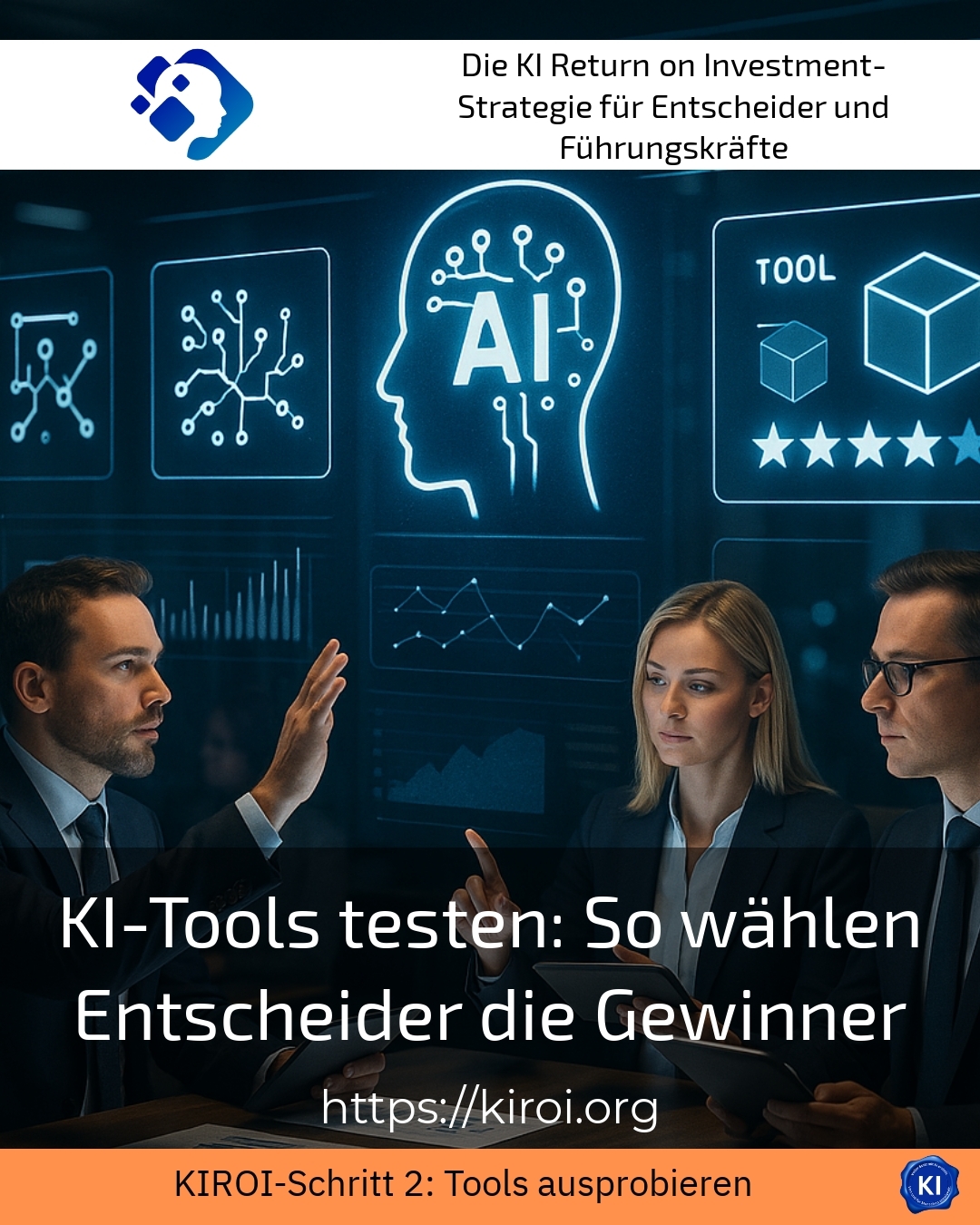
Digital transformation is fundamentally changing almost every industry, and choosing suitable intelligent systems presents business leaders with significant challenges. Those who today Testing AI tools wants to, is faced with a sheer endless variety of solutions, all of which promise to revolutionise business processes and drastically increase efficiency. But which of these promises withstand critical scrutiny, and how can decision-makers proceed systematically to actually identify the winners among the numerous offerings? These questions are increasingly occupying executive boards, managing directors and project managers in companies of all sizes. The following sections offer you sound guidance and tried-and-tested methods.
Why a systematic approach to testing AI tools has become indispensable
Investing in smart technologies ties up substantial financial and human resources. At the same time, the quality of the chosen solution significantly determines a company's future competitive advantage. Decision-makers often report that they were initially blinded by the marketing communication of various providers. Only after costly failed attempts did they recognise the necessity of structured evaluation processes. For example, a medium-sized manufacturing company initially invested in an automated quality control system that, in practice, failed to achieve the promised detection accuracy. The subsequent correction consumed additional budgets and delayed important production optimisations by several months.
A logistics company, in turn, implemented a route optimisation solution without first checking sufficiently whether the existing data infrastructure could provide the required quality for meaningful analyses. The result was sobering because the algorithmic recommendations were based on incomplete data sets. A financial services provider, on the other hand, proceeded more methodically and tested three competing fraud detection systems in parallel in a controlled environment. This approach enabled a direct comparison of detection rates and false positives.
Best practice with a AIROI customer
An internationally active trading company faced the task of automating its demand forecasts while integrating multiple sources of data. The management deliberately chose against making a quick, isolated decision and instead established a three-stage evaluation procedure. In the first step, five potential providers were invited to present their solutions in standardised presentations. Subsequently, three finalists were given access to anonymised historical sales data in order to demonstrate their forecasting capabilities under realistic conditions. The coaching support provided by transruptions through external experts helped to define objective evaluation criteria and to separate emotional preferences from fact-based judgements. The final system won through not on the lowest costs, but on the best integration into existing merchandise management processes. Implementation thus proceeded significantly more smoothly than in comparable projects in the past, and acceptance within the operational team was high from the very beginning.
Developing criteria: How to create a robust evaluation framework
Before decision-makers can even begin to compare different solutions, they need a clearly defined catalogue of criteria. This should encompass both technical and organisational aspects. The technical performance of a system can frequently be evaluated using measurable metrics. These include, for example, processing speed, recognition accuracy and scalability. Organisational criteria, on the other hand, relate to issues of implementation, training and long-term maintenance.
For example, a healthcare provider placed special emphasis on user-friendliness for reception staff when choosing an appointment optimisation system. The technically superior solution ultimately failed due to a lack of day-to-day acceptance. An energy supplier, in turn, prioritised integration capability with existing SCADA systems and sacrificed certain user interface convenience features in the process. Finally, an educational institution focused on compliance with strict data protection requirements, thereby ruling out several internationally hosted solutions from the outset.
The role of pilot projects in testing AI tools
Theoretical evaluations and manufacturer presentations can never replace practical testing. Therefore, experienced consultants regularly recommend carrying out time-limited pilot projects. These should take place in a controlled environment and define clear success criteria. For example, a pharmaceutical company initially tested a literature search system in just a single research department. The insights gained were subsequently incorporated into the decision regarding the company-wide rollout.
An insurance group, on the other hand, introduced two competing claims assessment solutions in parallel across different regional offices. The direct comparison under almost identical conditions provided valuable insights into the strengths and weaknesses of both systems. Finally, an automotive supplier used a pilot project to evaluate not only the technical suitability, but also the quality of the vendor's support. Response times to problems and the competence of the technical contact persons significantly influenced the final decision.
Best practice with a AIROI customer
A local authority was looking for a solution for the automated processing of standardised citizen enquiries and faced particular challenges regarding accessibility and linguistic diversity. The project team decided on a four-week pilot project in which volunteer citizens were given the opportunity to submit their concerns via the new system. The transruptions coaching support helped the administration to systematically collect and evaluate qualitative feedback. Particularly valuable was the insight that older citizens required significantly longer acclimatisation periods and preferred simplified dialogue management. These insights led to important adjustments prior to the final rollout that would have gone unnoticed without the pilot project. The result was a solution that was both technically convincing and accepted by the population.
Identify hidden costs and realistically calculate the total effort
The licence costs of a system often form only the tip of the financial iceberg. Experienced decision-makers know that hidden costs for integration, training and ongoing maintenance can significantly impact the total bill. For example, a telecommunications company underestimated the necessary adjustments to its data architecture and subsequently had to expend considerable funds on external consultants. Conversely, a retailer miscalculated the training costs for its sales staff and was confronted with unexpectedly long induction periods.
A construction company, on the other hand, included all foreseeable follow-up costs in its calculations from the outset and consciously opted for a more expensive supplier with a more comprehensive service package. In the long term, this decision proved to be economically sensible because there were no unplanned additional expenses. The careful analysis of the total cost of ownership should therefore be an integral part of every evaluation.
Employee involvement as a success factor when testing AI tools
Even the best technical solution is bound to fail if the employees affected reject it or do not understand it. Decision-makers should therefore involve those who will later work with the system on a daily basis at an early stage. For example, a hotel group actively involved its reservation team in the selection of a new booking platform. The staff tested various interfaces and provided valuable feedback on their practical suitability.
By contrast, one hospital made the decision on a new documentation system without sufficient involvement of the nursing staff and subsequently experienced considerable resistance during its introduction. An engineering firm, on the other hand, deliberately used the evaluation phase to identify potential multipliers and win them over as internal ambassadors for the subsequent implementation. This approach significantly accelerated acceptance throughout the entire organisation.
Long-term partnership instead of a one-off transaction
The selection of a system does not mark the end, but rather the beginning of a relationship with the provider. Decision-makers should therefore critically examine its long-term stability and development perspective. For example, a media company experienced how its chosen provider was acquired by a competitor a few months after contract signature and the product was discontinued. A mechanical engineering company, on the other hand, carefully examined the financial situation and innovation history of potential partners before making its decision.
Ultimately, one food manufacturer placed special emphasis on contractual guarantees regarding future updates and further developments. This forward-looking approach protected the company from unexpected additional investment when regulatory requirements changed.
Best practice with a AIROI customer
A medium-sized textile manufacturer faced the challenge of optimising its production planning while better anticipating demand fluctuations. The management team decided on a systematic selection process that took both technical and partnership aspects into account. In structured workshops with potential providers, the team assessed not only functionalities, but also cultural fit and communication quality. The transruptions coaching support helped to ask the right questions and identify hidden risks at an early stage. The chosen system ultimately won them over through a combination of technical performance and excellent support during the critical implementation phase. Subsequently, the partnership developed into a valuable collaboration that extended far beyond the initial use of the system and gave rise to joint innovation projects.
My AIROI Analysis
The systematic evaluation of intelligent systems has become not an optional management task, but a strategic necessity. My experience from numerous accompaniment projects shows that companies which proceed in a structured manner achieve significantly better results than those that are guided by initial impressions or marketing promises. The definition of clear evaluation criteria before the start of the selection process forms the indispensable foundation of every successful evaluation. Pilot projects provide insights that theoretical analyses can never replace, and should therefore be a fixed component of every major investment decision.
Of particular importance, it seems to me, is the early involvement of those employees who will later be working with the systems. Their practical expertise and their acceptance are key in determining the success or failure of an implementation. At the same time, decision-makers should not underestimate the choice of partner, as the relationship with the vendor shapes the entire service life of the system. Taking hidden costs and long-term development prospects into account protects against nasty surprises. Anyone who abides by these principles maximises their chances of actually identifying the winners among the numerous offers and realising sustainable competitive advantages. The investment in a structured selection process consistently pays off many times over.
Further links from the text above:
[1] Gartner Hype Cycle for Artificial Intelligence
[2] McKinsey State of AI Report
[3] Bitkom Artificial Intelligence Guide
For more information and if you have any questions, please contact Contact us or read more blog posts on the topic Artificial intelligence here.











 Deutsch
  English (UK)