
Why do companies lose millions of dollars every year even though their buildings are technically state-of-the-art?
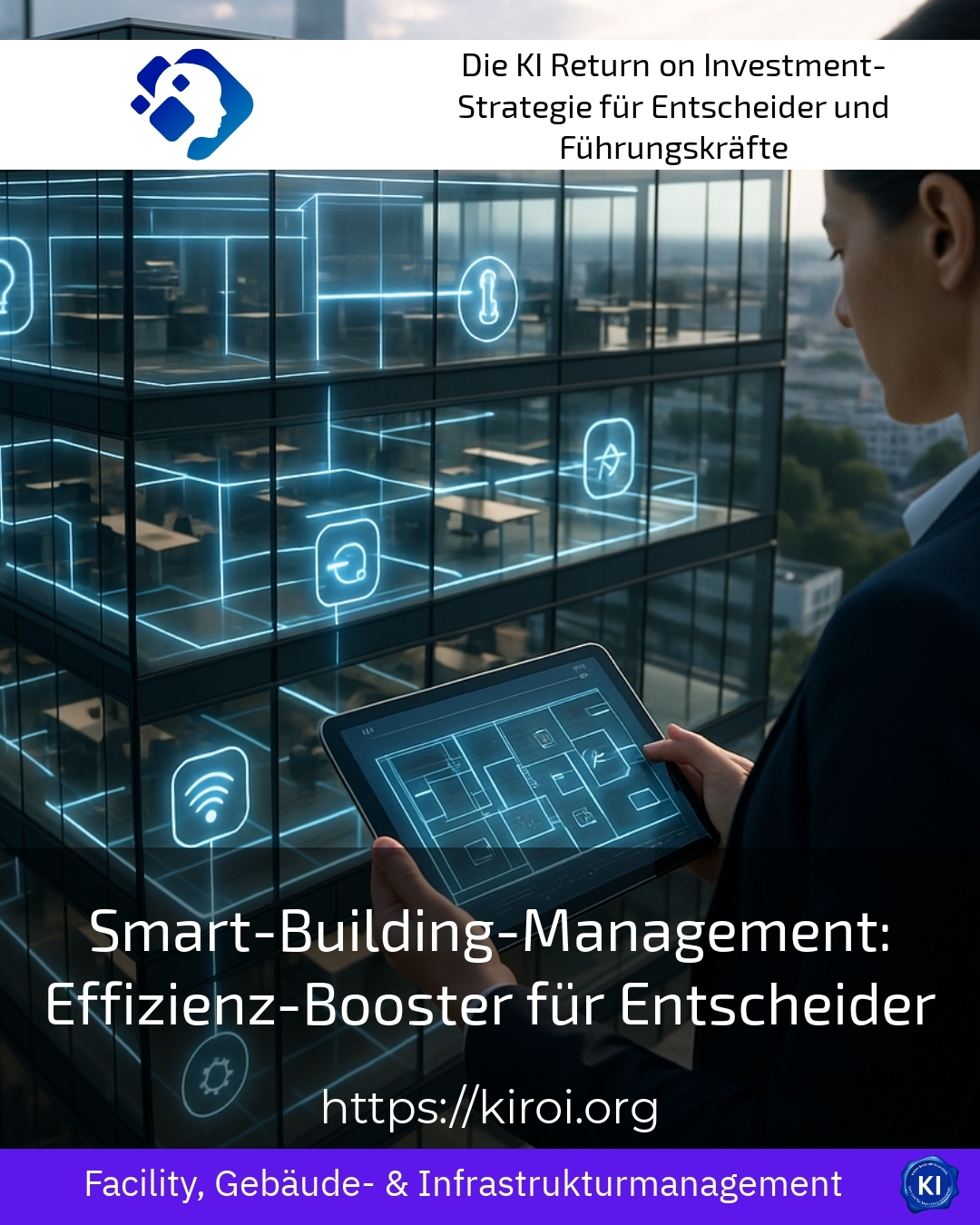
This question concerns executives and decision-makers in almost all industries, because the answer is often hidden in an area that has long been treated with indifference. Smart building management It is currently revolutionizing the way we think about real estate, energy consumption, and work environments. It is no longer just about automated light switches or programmable thermostats. Instead, we are talking about highly integrated systems that analyze data streams in real time and derive concrete recommendations for action. Decision-makers face the challenge of strategically deploying these technologies. Only then can they achieve sustainable competitive advantages.
Understand the fundamentals of smart building management
Modern building technology is based on the interaction of various sensors and actuators. These communicate with each other via standardized protocols. For example, a temperature sensor in a conference room continuously transmits measurement data to a central control unit. This unit processes the information and adjusts the air conditioning accordingly. At the same time, the system takes factors such as the outdoor temperature, sunlight exposure, and the current occupancy of the room into account. This creates a dynamic control system that continuously optimizes itself.
In the logistics industry, the benefits are particularly evident. Large warehouses require different climate zones for different product groups. An intelligent system automatically detects which areas are currently occupied. This reduces cooling in unused sections and thus saves significant energy costs. Similarly, the same applies in automotive production halls. The paint booths there must maintain precise temperatures and humidity levels. Deviations lead to quality defects and costly rework. A connected building system proactively prevents such problems.
These technologies also play a central role in healthcare. Hospitals must adhere to strict hygiene regulations. Operating rooms require constant air pressure and filter performance. Intelligent building technology monitors these parameters around the clock. It immediately alerts facility management if deviations occur. This minimizes risks to patients and staff.
Best practice with a AIROI customer
A medium-sized company in the food production sector approached us with a specific challenge. The energy costs for their cold storage facilities had continuously increased over the past few years, despite the production volume remaining almost constant. In the context of a transruptive coaching session, we analyzed the existing building infrastructure and identified significant optimization potential. The existing cooling system operated according to a rigid schedule that neither took into account actual occupancy nor the outdoor temperatures. We supported the implementation of a sensor-based management system that adjusted the cooling capacity in real time to the actual demand. Additionally, we integrated predictive models that linked weather forecasts and production schedules. The result exceeded expectations significantly: Energy costs fell by approximately twenty-three percent, while product quality could even be improved. Particularly noteworthy was the short amortization period of the investment of only fourteen months. This project illustrates how transruptive coaching supports companies in successfully mastering complex technological transformations.
Data-driven decisions in smart building management
The true strength of networked building systems lies in their ability to process vast amounts of data. Each sensor continuously generates measurement values. These are fed into central databases and analyzed there. Modern algorithms recognize patterns that would remain hidden to the human eye. For example, a sudden increase in electricity consumption in a specific section of the building can indicate a defective device. The system reports this anomaly before any major damage occurs.
In retail, companies are using this technology for completely new applications. Sensors capture the movement patterns of customers in business premises. This allows conclusions to be drawn about popular areas and dwell zones. The air conditioning system automatically adjusts to the current visitor frequency. On hot summer days with high customer traffic, the system cools more strongly. On quiet mornings, it reduces energy consumption accordingly. Similar approaches can be found in shopping centers and office complexes.
The financial sector is increasingly relying on data-based building control. On the one hand, bank branches must provide a pleasant customer experience. On the other hand, they are subject to strict security requirements. Intelligent systems coordinate access controls, surveillance cameras, and HVAC systems. They detect unusual activity and react automatically. Doors lock when an alarm is triggered. The ventilation system switches to a special safety mode. All these processes take place in fractions of a second.
Hotels and hospitality businesses also benefit from these developments. Guest rooms automatically adjust their settings to suit the preferences of visitors. The system remembers preferred room temperatures and lighting intensities. The next time a booking is made, this information is immediately available. Restaurants optimize their kitchen ventilation based on current cooking activity. Range hoods only operate at full power when cooking is actually taking place. During quiet times, energy consumption automatically reduces.
Strategic advantages are unlocked through smart building management
Decision-makers need to understand the strategic implications of these technologies. It’s not just about cost savings. Rather, they open up entirely new possibilities for workplace design. Employees work more productively in optimally-lit and ventilated spaces. Studies show that room temperature has a measurable impact on concentration levels. The same applies to air quality and carbon dioxide levels. Intelligent buildings automatically ensure optimal working conditions.
In the pharmaceutical industry, the requirements are particularly high. Cleanrooms must meet precisely defined conditions. Any deviation jeopardizes product quality. Connected systems monitor all relevant parameters continuously. They document all measurement values in full for regulatory purposes. During audits, all evidence can be accessed at the touch of a button. This saves time and significantly reduces the administrative workload.
The insurance industry is also beginning to take these developments into account [1]. Buildings with intelligent management systems have a lower risk of damage. Water damage is detected and contained earlier. Fire alarm systems operate more reliably thanks to better sensor networking. Some insurers are already offering more favorable premiums for properties equipped accordingly. This creates additional financial incentives for investments in modern building technology.
Best practice with a AIROI customer
An internationally operating logistics service provider faced a complex challenge in modernizing its distribution centers in several European countries. The existing systems had grown over many years and were based on different technical standards. Unified control and monitoring was practically impossible. As part of our transruptive coaching support, we developed a step-by-step migration strategy that did not disrupt ongoing operations. First, we implemented an overarching software platform that served as the communication interface between the various subsystems. This platform collected data from all locations and enabled a unified overview of the building condition for the first time. In the second phase, we replaced outdated sensors and actuators with modern components. The integration was carried out on a site-by-site basis over a period of eighteen months. Today, the company has a fully connected infrastructure with centralized control capabilities. Operating costs have decreased by approximately seventeen percent. At the same time, work safety has improved significantly through better monitoring of the environmental conditions in the warehouses. This project impressively demonstrates how professional guidance contributes to the success of complex transformation projects.
Mastering implementation challenges
The introduction of intelligent building systems brings specific challenges. Existing buildings often feature overgrown infrastructure. Different trades were installed at different times. The subsequent networking requires careful planning and technical expertise. Decision-makers should therefore involve expert knowledge early on. External support from experienced partners such as transruptions coaching can provide valuable insights here.
In the chemical industry, these challenges are particularly evident [2]. Explosion-proof areas require special sensors. Cable connections must meet certain safety standards. Integration into existing process control systems is technically demanding. Nevertheless, companies in this industry often report significant efficiency gains after successful implementation. The investment usually pays off within a few years.
Data protection and IT security also play a central role. Connected building systems generate sensitive information. Employee movement profiles must be protected from unauthorized access. Cyberattacks on critical infrastructure are increasing. Decision-makers must therefore implement robust security concepts. Regular audits and updates are essential. Collaboration with specialized IT security services is recommended.
Airports and transport infrastructure place particularly high demands [3]. Thousands of passengers move through the buildings daily. Air conditioning, lighting, and security systems must be perfectly coordinated. Failures can have serious consequences. Modern management systems offer crucial advantages through redundancy and real-time monitoring. They detect potential problems early and enable proactive maintenance.
Future perspectives for smart building management
Technological development is advancing continuously. Artificial intelligence and machine learning open up new possibilities. In the future, systems will become even better at predicting user needs. They learn from historical data and continuously improve their predictions. The integration with external data sources is increasing. Weather services, traffic information, and energy markets are integrated into the control logic.
In the telecommunications industry, innovative business models are emerging. Network operators offer building connectivity as a service. Sensors and actuators communicate via dedicated network infrastructures. This significantly improves reliability and latency times. New applications become possible that were previously technically not feasible. Robots for building cleaning navigate autonomously through interconnected spaces. Drones monitor outdoor facilities and roofs automatically.
Universities and research institutions are using connected building technology for innovative teaching concepts. Seminar rooms automatically adapt to the respective event type. Lecture halls optimize their acoustics based on the number of visitors. Laboratories monitor sensitive experiments around the clock and alert when deviations occur. These developments sustainably improve the quality of research and teaching.
My AIROI Analysis
Examining this field of study clearly shows that connected building technology is much more than an upgrade of existing infrastructure. It is, rather, a fundamental paradigm shift in the way we understand and design work and living spaces. Decision-makers who actively contribute to this change create sustainable competitive advantages for their organizations. The combination of energy efficiency, improved work environments, and data-based decision-making creates significant added value.
At the same time, companies should not underestimate the complexity of these transformation projects. Successful implementations require a clear strategic vision, technical expertise, and professional project management. The involvement of all relevant stakeholders is essential. Facility managers, IT departments, and the management must work together. External support from experienced partners can provide valuable assistance and help avoid common pitfalls.
Investments in modern building technology usually pay off within a manageable time frame. The ongoing savings in energy and maintenance costs add up significantly over the years. In addition, there are more difficult-to-quantify benefits such as higher employee satisfaction and better work results. Regulatory requirements in the field of sustainability will continue to increase in the future. Companies that invest in intelligent building technology today are well prepared for these developments. The time to act is now.
Further links from the text above:
[1] Overall Association of the German Insurance Industry – Smart Building and Insurance
[2] Association of the Chemical Industry – Digitization in the Chemical Industry
[3] Working Group of German Airports – Digitization at Airports
For more information and if you have any questions, please contact Contact us or read more blog posts on the topic Artificial intelligence here.









 Deutsch
  English (UK)