
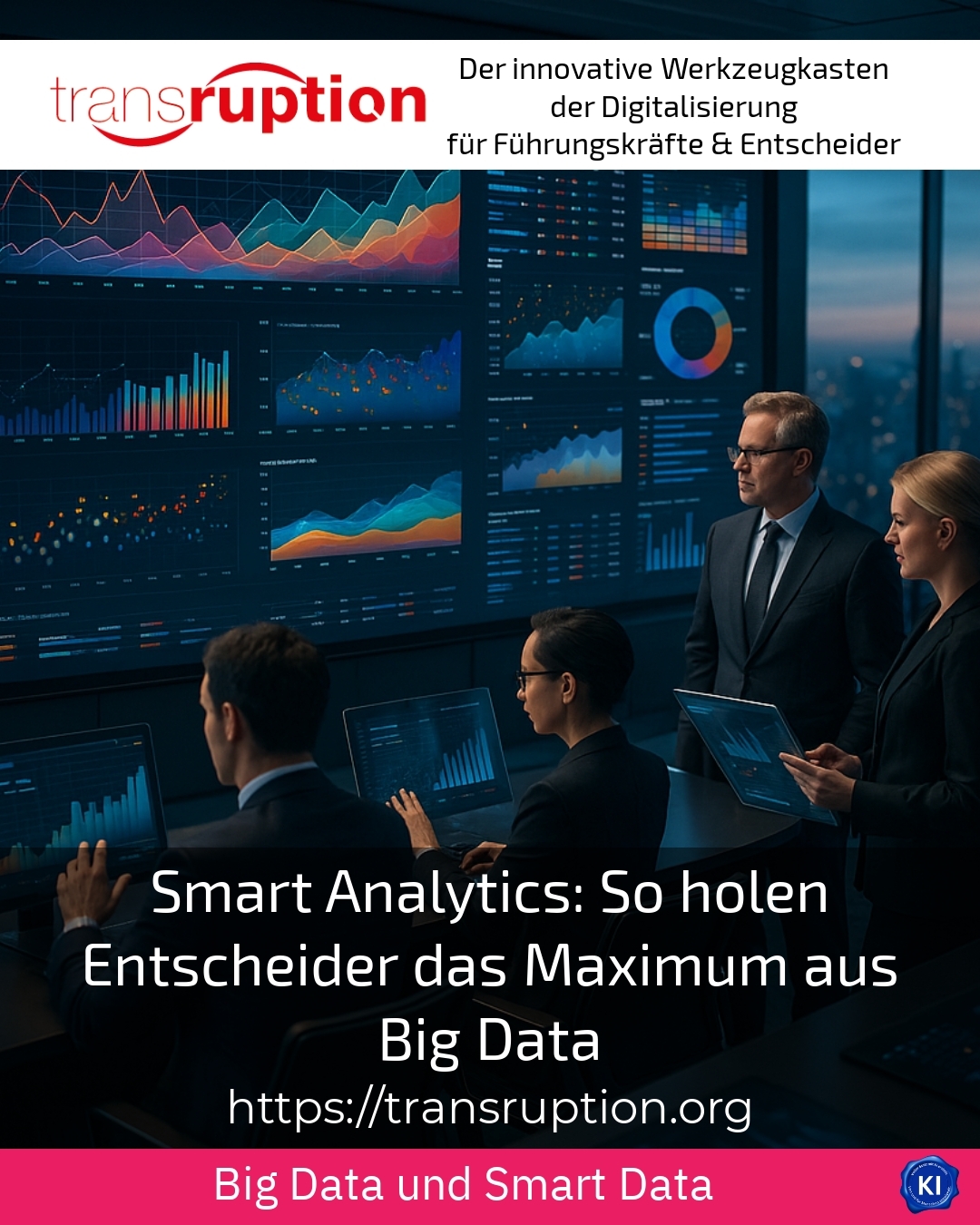
Today, decision-makers face the challenge of extracting real insights from vast amounts of data. Smart analytics is key to getting the most out of big data. Intelligent analytical methods can not only trace historical developments but also predict future trends. Companies across all sectors are using these technologies to optimise their processes and make informed decisions. Smart analytics helps to translate data into concrete recommendations for action.
Why Smart Analytics Is Important for Decision-Makers
Decision-makers often face the question of how to draw the right conclusions from a flood of information. Smart Analytics offers a clear answer here. It's no longer just about collecting data, but about analysing it strategically and transforming it into decision-making tools. This allows companies to react more quickly to changes and adapt their strategies.
Example from industry: A manufacturer uses Smart Analytics to reduce downtime on its machines. The analysis shows when maintenance work is most effective. This increases productivity and reduces costs.
Another example from the healthcare sector: Hospitals are using smart analytics to better predict staff and material requirements. This enables them to avoid bottlenecks and improve care.
In retail, smart analytics helps to understand customer behaviour. Companies recognise which products are particularly popular and adapt their offers accordingly.
Smart Analytics in Practice: Application Areas and Examples
Smart Analytics in Building Management
In building management, smart analytics are used to optimise energy consumption and room occupancy. Sensors provide data, which is analysed to identify saving potentials. This allows operators to make their properties more efficient and sustainable.
A property company is using smart analytics to monitor office space occupancy. The analysis reveals which areas are rarely used. As a result, these spaces are repurposed or rented out.
Another example: A hotel uses smart analytics to reduce energy consumption. The analysis shows when heating and lighting should best be switched on. This way, the hotel saves costs and protects the environment.
A third example: A hospital uses smart analytics to increase safety within the building. The analysis indicates where additional surveillance is necessary. This helps to prevent accidents and burglaries.
Smart Analytics in Marketing and Sales
In marketing and sales, smart analytics helps to better understand the target audience. Companies recognise which campaigns are successful and adapt their strategies accordingly. This increases efficiency and revenue.
An online shop uses smart analytics to analyse its customers' purchasing behaviour. The analysis reveals which products are often bought together. Targeted offers are then created based on this information.
Another example: An insurance company uses smart analytics to measure customer satisfaction. The analysis shows where improvements are needed. Targeted measures are then taken.
A third example: A telecommunications company uses smart analytics to assess the quality of its mobile network. The analysis shows where improvements are needed. Targeted measures are then taken.
Smart analytics and the role of artificial intelligence
Artificial intelligence plays a central role in smart analytics. It makes it possible to recognise complex data patterns and make predictions. This enables companies to act proactively and capitalise on opportunities.
An example from logistics: a haulage company uses smart analytics with AI to plan the best routes. The analysis takes traffic, weather and other factors into account. This makes deliveries faster and more reliable.
Another example: An energy supplier uses smart analytics with AI to predict electricity demand. The analysis takes into account weather, consumption, and other factors. This allows the supplier to plan generation more effectively.
A third example: a financial services provider uses smart analytics with AI to detect fraudulent cases. The analysis detects suspicious patterns and warns of risks.
My analysis
Smart analytics is an indispensable tool for decision-makers who want to get the most out of big data. It helps to translate data into concrete recommendations for action and make well-founded decisions. Companies in all sectors use these technologies to optimise their processes and strengthen their competitiveness. Smart analytics is not just a trend, but a forward-looking method for generating real added value from data.
Frequent questions from practice show that many companies require support in implementing and using Smart Analytics. Transruptions Coaching accompanies projects around Smart Analytics and supports them in finding the best solutions for their individual requirements. Clients often report that Smart Analytics provides them with new impetus for their strategy and allows them to design their processes more efficiently.
Further links from the text above:
Smart data: How companies make better decisions
What is smart data? Definition, application and advantages
Definition, examples and strategic advantages
Smart Analytics | Individual Solutions for Businesses
Smart Data: Definition, Application, and Difference to Big Data
Smart analytics: making numbers fun
Smart data: building intelligence through analytics
Introducing: Smart Analytics with Flexopus
Smart Data Analytics: Master KIROI Step 3 with
What is smart data and how does it work?
For more information and if you have any questions, please contact Contact us or read more blog posts on the topic TRANSRUPTION here.











 Deutsch
  English (UK)