
Privacy-friendly federated learning primarily belongs in the fields of artificial intelligence, big data and smart data, as well as cybercrime and cybersecurity. This is a modern method with which artificial intelligence (AI) can learn from many different data sources without these data needing to be collected in a central location.
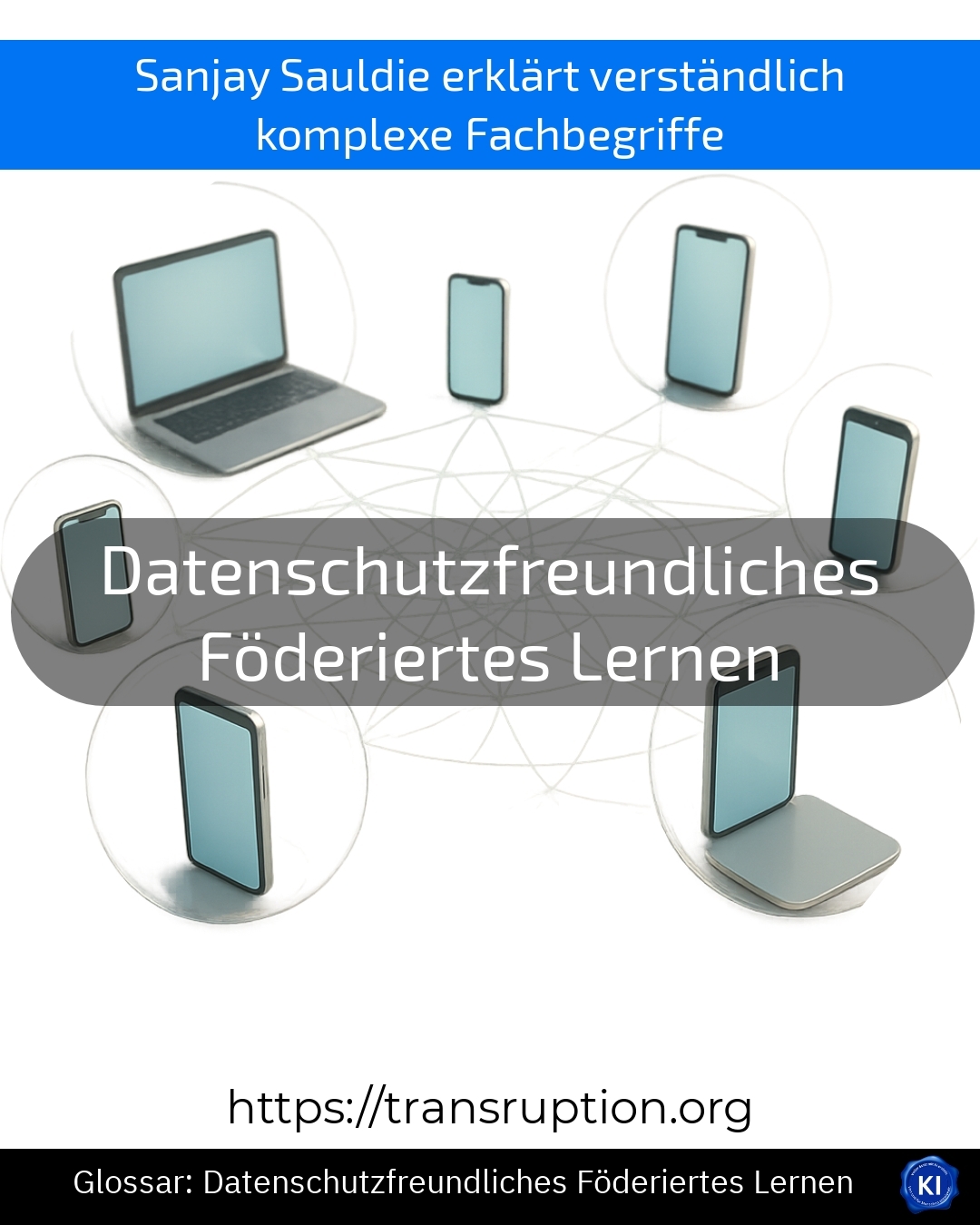
Instead of storing all data, as was previously done, in one large database, with data-protection-friendly federated learning, the information remains where it originates – for example, on users' smartphones or within individual companies. The AI learns from these different sources by exchanging secure interim results, known as updates. This way, sensitive data such as personal photos or health data doesn't end up on external servers in the first place and remains better protected.
A prime example: Many users of fitness trackers want to contribute their data to improve training apps, but also want to maintain their privacy. With privacy-friendly federated learning, artificial intelligence learns from the collected experience values on each individual tracker, but the actual data never leaves the device. This way, everyone ultimately benefits from better suggestions and tips without personal information being disclosed.











 Deutsch
  English (UK)