
„`html
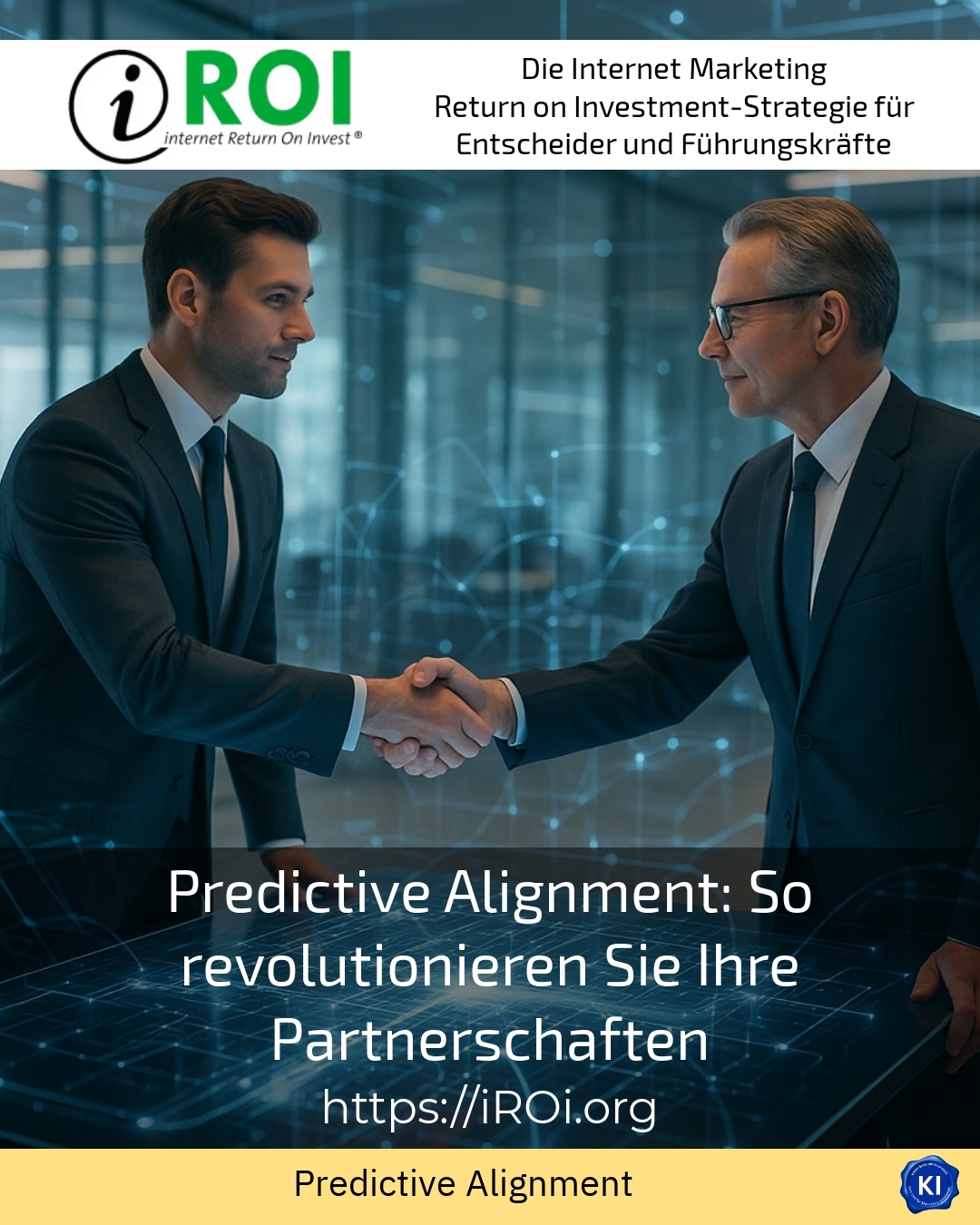
Predictive Alignment: The Key to Sustainable Partnerships
To collaborate successfully in the digital age, you need intelligent systems, shared goals, and a deep understanding of the other party's needs. Predictive Alignment is not a magic bullet, but a real opportunity: when companies intelligently combine data, experience, and technology, partnerships emerge that are based on shared values, transparency, and measurable benefits. For many of my clients, Predictive Alignment is thus becoming the decisive factor for sustainable growth.
How Predictive Alignment Works
Predictive Alignment means that companies systematically analyse how well goals, processes, and values fit together – and how this could develop in the future. By using artificial intelligence and machine learning, data from past projects, communication histories, and market trends are evaluated. This allows risks to be identified early and opportunities to be exploited strategically.
Instead of relying on gut feeling, companies are building on precise forecasts. The technology behind Predictive Alignment helps to identify critical success factors, such as the speed of revenue growth, project management activity, or flexibility in adaptations. Based on these insights, dynamic, continuously updated assessments are created that help to specifically steer and improve collaboration.
Developing stronger partnerships through predictive alignment
In the day-to-day operations of many companies, there's often a lack of transparency regarding how well strategic partnerships are truly functioning. Predictive Alignment sheds light on the matter: through regular analyses and clear key figures, it becomes visible where conflicts arise, where synergies lie, and where adjustments are necessary. This allows collaboration to be actively shaped and sustainably improved.
Typical issues that clients come to me with include a lack of clarity regarding goals, conflicts in collaboration, and dissatisfaction with the success of partnerships. They often report that they want projects to be completed faster and with less effort. Predictive Alignment provides impetus for greater efficiency and clarity here.
Real-world example: An internationally operating software provider uses Predictive Alignment to find suitable distribution partners. Instead of focusing on large volumes, the company specifically targets partners with high engagement, industry-specific expertise, and active sales – thereby sustainably increasing revenue.
Another example: a manufacturer of industrial solutions uses Predictive Alignment to analyse which partners contribute particularly innovative ideas. On this basis, the company develops targeted support programmes that reward creativity and initiative, and strengthen partnerships overall.
And another example: A marketing agency uses Predictive Alignment to shape collaboration with its clients on an equal footing. This allows both sides to recognise early on how expectations, goals and values change over time – and to adapt their strategies flexibly.
Predictive Alignment in Action: Best Practices
Predictive alignment is not a foregone conclusion, but rather a continuous process. Companies that implement it successfully combine technological tools with human expertise. They define clear goals, regularly measure progress, and use the insights gained to strategically develop partnerships.
iROI-Coaching supports you precisely with this: We help you establish Predictive Alignment within your company, select tools, and rethink collaboration with partners. Together, we develop individual solutions that fit your company culture and create real added value.
BEST PRACTICE with one customer (name hidden due to NDA contract) A global IT service provider aimed to improve the efficiency of its international collaborations and systematically implemented predictive alignment. Initially, all relevant partner data from past projects was analysed to identify strengths and weaknesses. Subsequently, we jointly developed a dynamic evaluation system that considers not only hard facts such as sales figures, but also soft factors like communication, innovation potential, and trust. Through regular analyses and workshops, collaboration was specifically optimised, leading to increased transparency, faster decision-making, and a measurable rise in customer satisfaction. Today, the company uses predictive alignment not only for partner selection but also for ongoing quality improvement of its projects.
More practical examples: A leading telecommunications provider uses Predictive Alignment to tap into new business areas. By analysing partner behaviour, market opportunities and customer reviews, the company succeeds in forging the right alliances, thus accelerating its entry into new markets.
The benefits are also evident in e-commerce: an online retailer uses predictive alignment to evaluate its partnerships with logistics service providers. This allows bottlenecks to be identified early, delivery times to be shortened, and customer loyalty to be strengthened.
A financial services start-up is using Predictive Alignment to find suitable cooperation partners for international expansion. This allows the company to strategically focus on partners with high market expertise and similar corporate values, thereby minimising the risks involved in market entry.
Successfully Implementing Predictive Alignment: 5 Practical Tips
1. Check data quality Predictive Alignment only provides reliable forecasts with current, complete, and clean data. Invest in a solid data foundation.
2. Define goals together: Clarity creates commitment. Set measurable goals and key figures together with your partners, which you regularly review.
3. Designing processes flexibly: Predictive alignment is a learning process. Be open to adjustments as circumstances, markets, or partner needs change.
4. Engaging people Technology does not replace the human element. Foster communication at all levels to avoid misunderstandings and build trust.
5. Utilise expertise Seek external support, for example through iROI coaching. External guidance helps to identify blind spots and gain new perspectives.
Predictive Alignment: Opportunities and Challenges
Predictive Alignment offers many advantages: companies can specifically manage partnerships, use resources efficiently, and identify risks early on. At the same time, challenges need to be overcome, such as data acquisition, acceptance of new tools, and integration into existing processes.
Companies often report feeling initial scepticism – both internally and from partners. Transparent communication, training, and continuous dialogue help to overcome reservations and unlock the full potential of Predictive Alignment.
iROI-Coaching supports you through all phases: from the initial analysis and the selection of suitable tools, to the sustainable implementation of Predictive Alignment in your day-to-day business operations. Together, we will create the foundation for strong, future-proof partnerships.
My analysis
Predictive Alignment is more than a trend – it's a crucial success factor for companies that value sustainable, data-driven partnerships. Those who already focus on intelligent forecasts, clear target setting, and open communication today create the conditions for long-term success. Predictive Alignment helps companies to minimise uncertainties, recognise opportunities, and actively shape partnerships. iROI-Coaching offers you the right guidance to fully exploit these potentials and elevate your collaboration to a new level.
Further links from the text above:
Predictive Partner Scoring Definition & Meaning [1]
Predictive Job Matching: Definition & Meaning [2]
What is Predictive Analytics? Definition & Examples [3]
For more information and if you have any questions, please contact Contact us or read more blog posts on the topic internet Return on Investment - Marketing here.
„`









 Deutsch
  English (UK)