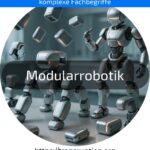
The term modular robotics is primarily found in the fields of automation, industry and Industry 4.0, as well as domestic robotics. It describes a new type of robot that is no longer made of a single fixed piece, but can be assembled from many small, often cube-shaped modules. These modules can be flexibly connected and plugged together to form different types of robots – entirely according to need.
The special thing about modular robotics is its versatility. The same modules can be combined again and again in new ways to perform a wide variety of tasks. This saves costs and makes the technology particularly sustainable and adaptable. In intelligent factories, for example, a modular robot can be stacking boxes in the morning and, after a quick reconfiguration, sorting complicated parts in the afternoon.
Imagine a group of building blocks that arrange themselves and reconfigure into different tools – that's exactly what modular robotics is. This flexibility makes production more efficient and allows companies to react quickly to new demands. Modular robotics is therefore an important building block on the path to the flexible, digital factory of the future.






 Deutsch
  English (UK)