
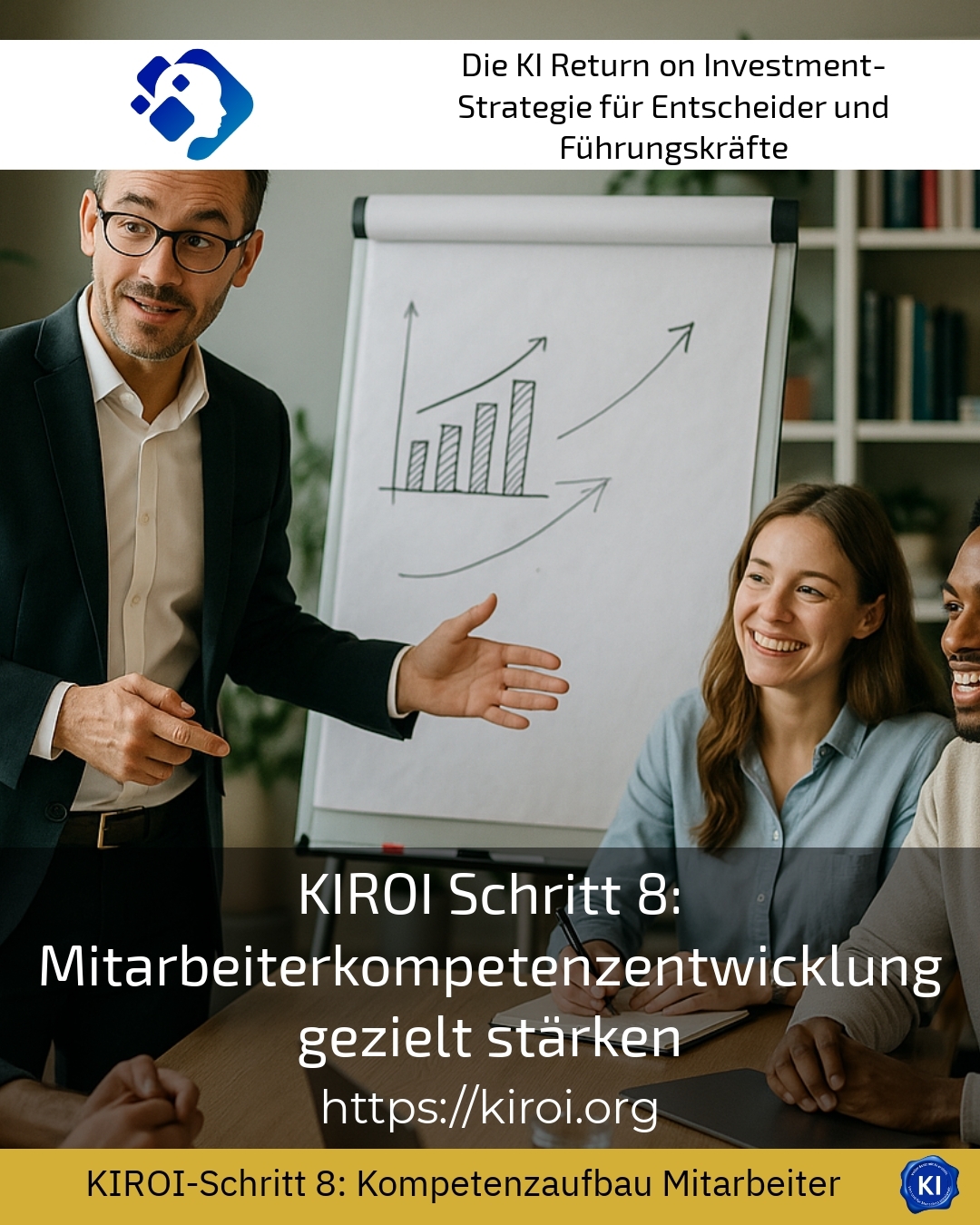
Targeted employee skill development helps companies systematically build their employees' capabilities and adapt them to the demands of the working world. The development of employee skills is not a one-off measure, but a continuous process that promotes individual strengths and sustainably secures the company's competitiveness.
The importance of structured employee competency development
In times of dynamic markets and increasing competitive pressure, effectively strengthening employee skills is a crucial success factor. Companies that focus on developing employee skills not only foster professional expertise but also social and methodological competencies. For example, in the IT industry, specific skills can be promoted through modules on agile working or technical workshops. In the manufacturing sector, on-the-job training is often used, where operational skills on new machinery are learned practically. In the service sector, coaching programmes are frequently employed to improve customer orientation and communication skills.
These practical measures help employees to better overcome challenges in their professional everyday lives and to realise their potential.
Methods for Targeted Strengthening of Employee Competence Development
The integration of a wide variety of learning methods is essential to optimally meet different learning needs and achieve sustainable learning success. The following three methods are particularly effective in this regard:
Learning by Doing – Practical Skills Development
In industrial companies, job rotation and project work foster the acquisition of new skills through direct involvement in real tasks. For instance, a logistics firm reports employees who have developed organisational skills by moving between different areas of responsibility. Another example is a service provider that uses on-the-job training to teach sales staff how to use new software.
Here, craft businesses also demonstrate best practice by imparting methodical and technical skills to young skilled workers directly on-site through practical plant supervision.
Coaching and mentoring as individual support
Tailored coaching programmes have been proven effective for financial sector executives to deepen personal and professional strengths. Personal feedback and guidance help overcome challenges and find new solutions. Similarly, large trading companies utilise mentoring programmes that connect experienced employees with newly hired colleagues, thereby fostering professional and social skills in a sustainable way.
BEST PRACTICE with one customer (name hidden due to NDA contract) A medium-sized mechanical engineering company implemented a mentoring programme for engineers. This allowed junior professionals to learn not only technical details but also methodical project planning directly from experienced experts. The result was significantly improved project execution and increased employee engagement.
Workshops and structured training for skills development
The targeted implementation of workshops is a classic method for systematically strengthening soft skills such as communication or conflict management. In consulting firms, moderation and presentation training are highly popular. In the healthcare sector, seminars on methodological competence are also used to optimise work organisation. Likewise, logistics companies rely on training on new technologies to support digital transformation. This creates a comprehensive skills profile that prepares individuals for current and future challenges.
Practical tips for supporting employee competency development
For employee competence development to be effective, clear planning and sustainable implementation are required. The following tips have proven effective in practice:
- Needs assessment: Clear competency profiles based on job descriptions help to precisely determine current and future training needs.
- Individual development plans: Employees should be actively involved in planning their training and development, so that motivation and goal orientation are strengthened.
- Continuous Feedback: Regular conversations between managers and employees ensure transparent progress reviews and adjustments.
- A mix of self-study and practice: Combinations of e-learning offerings and practical training are flexible and effective.
- Promoting exchange and networking: Peer learning, mastermind groups, or case study rounds facilitate knowledge transfer and strengthen social skills.
Companies in the finance and insurance sectors frequently report how structured skills development has improved teamwork and boosted efficiency. Businesses in mechanical engineering are also experiencing how technical and methodological skills are developed together, better preparing employees for Industry 4.0.
My analysis
The targeted development of employee competencies plays a central role in the sustainable performance of companies. The combination of practical learning formats, individual support, and systematic training strengthens not only specialist knowledge but also social and methodological skills. Successful programmes are characterised by individual support, continuous feedback, and the involvement of all stakeholders. Companies that strategically anchor employee competency development benefit from motivated employees and increased competitiveness.
Further links from the text above:
Competence Development: Definition + Successful Examples
11 employee development methods & benefits [2023]
Competence development and competence frameworks
Successful Skill Development: 9 Tips and 3 Strategies
Skills development: importance and methods
For more information and if you have any questions, please contact Contact us or read more blog posts on the topic Artificial intelligence here.








 Deutsch
  English (UK)