
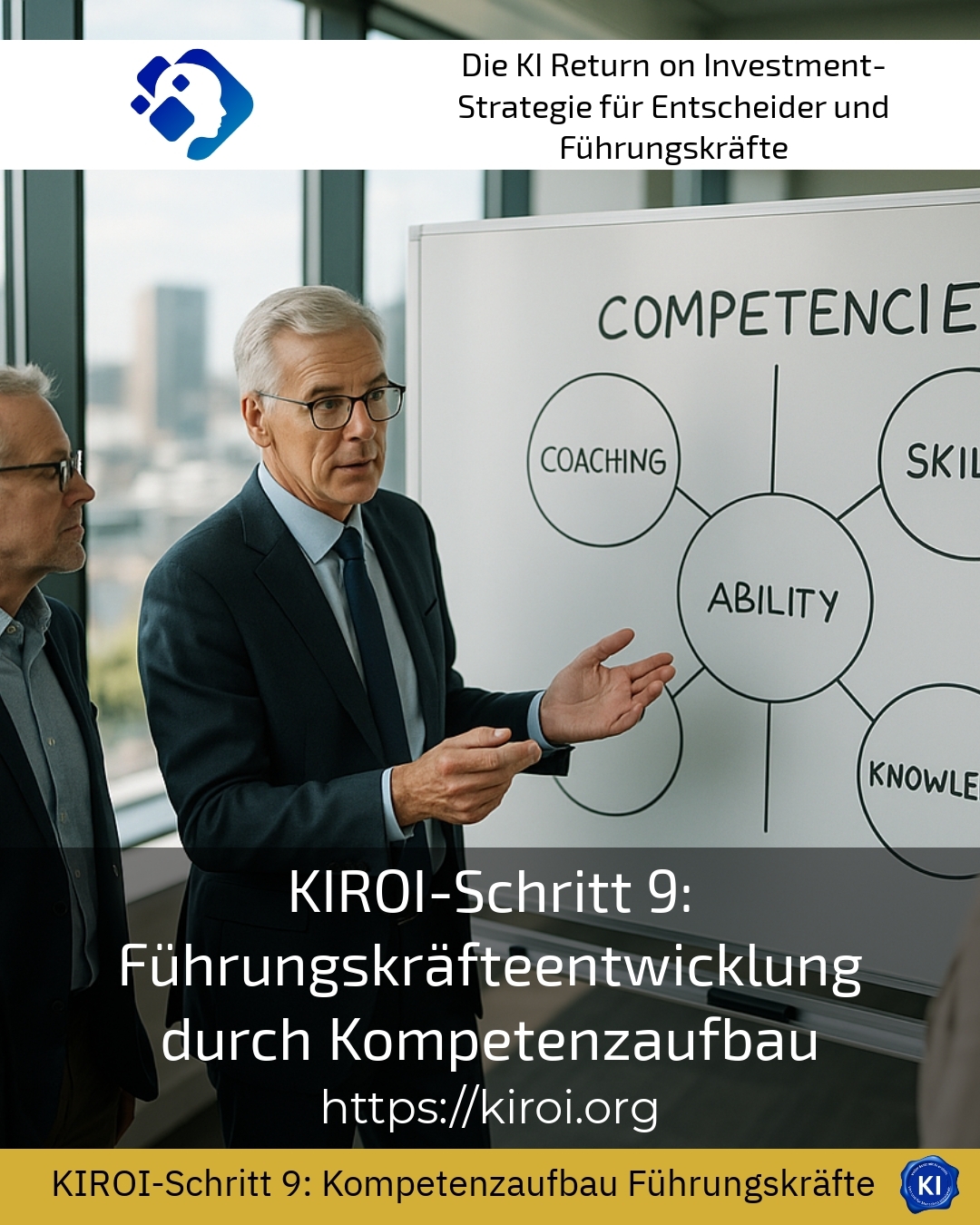
Targeted support and skills development play a central role in leadership development. Especially in times of dynamic markets and changing leadership behaviour, companies place great value on continuously supporting and developing their leaders. Leadership development is therefore not a one-off project, but an ongoing process that strengthens individual skills and opens up new perspectives.
Leadership development as competence building: fundamentals and significance
Sustainable leadership development focuses on the targeted expansion of professional and social competencies. It combines formal training offers with practical experience in projects or daily work. Medium-sized companies as well as international corporations therefore invest in tailor-made programmes to best prepare managers for challenges.
For instance, a manufacturing company uses seminars on „Conflict Management“ combined with systemic coaching to foster communication skills. In an IT company, learning on the job is also practiced to expand technical and methodological skills directly in the project environment. A financial services provider establishes mentoring programmes, whereby experienced managers specifically pass on their expertise to junior staff.
Diverse methods for developing leadership skills
Leadership development incorporates numerous established methods, which can be combined as building blocks according to need. Here are three practical examples:
- Coaching: In a small to medium-sized engineering company, managers are using systemic coaching to better understand team dynamics and make more confident leadership decisions.
- Job rotation: A multinational corporation is introducing rotation programmes to allow executives to experience different business units. This broadens their strategic understanding and strengthens their internal network.
- Simulations and role-playing In a pharmaceutical company, negotiation situations are practised realistically. This tangibly enhances participants' communication and conflict resolution skills.
The combination of these methods is often key to effective leadership development. It allows for targeted development of different competencies and flexible responses to various learning situations.
Practical example: Support through transruption coaching
Many executives approach us for transruption coaching on a variety of topics. For example, we support employees in change processes who want to sharpen their self-awareness or learn how to deal with resistance. In an anonymised case, a leader from the technology sector was closely supported on a complex project. We were able to provide impulses that significantly supported the development of their communication and conflict resolution skills.
BEST PRACTICE with one customer (name hidden due to NDA contract) In a medium-sized service company, individual coaching enabled the manager to successfully bring an inter-departmental project to market maturity. During the individual phases, skills such as clarity of goals, team coordination, and conflict resolution were systematically fostered and reflected upon, leading to a visible success within the company.
Tips for Effective Leadership Development Through Competence Building
For leadership development to have a lasting impact, it is recommended to consider the following points:
- Individual needs analysis Development should always start with the specific challenges and resources of the leader.
- Variety of methods A mix of coaching, mentoring, seminars, and practical assignments develops a variety of skills.
- Regular reflection Staff appraisals and feedback help to make learning progress visible and to adapt measures.
- Support from the organisation: Leaders need space and support to implement what they have learned.
This allows an internationally operating trading company, for example, to ensure that managers develop their full potential through continuous development discussions, while also keeping pace with changing requirements.
My analysis
Leadership development in terms of competency building supports companies in shaping high-performing leaders. It is a multi-layered, individual process that is effectively designed through a thoughtful combination of proven methods. Through coaching, mentoring, practical experience, and reflective elements, leaders are empowered to continuously improve their behaviour and decisions and meet growing demands.
Companies that strategically pursue executive development benefit from a stronger leadership culture, higher employee satisfaction, and improved economic success. In particular, personal support on projects – as offered by transruptions-Coaching – provides individual impetus and promotes sustainable development. This ensures that executive development remains a dynamic process that combines competence building and practical application.
Further links from the text above:
How is leadership development successful? – Methods, …
Coaching methods for everyday leadership
Leadership Development: Methods & Practical Tips
For more information and if you have any questions, please contact Contact us or read more blog posts on the topic Artificial intelligence here.








 Deutsch
  English (UK)