kiroi.org

KIROI - Artificial Intelligence Return on Invest
The AI strategy for decision-makers and managers

Business excellence for decision-makers & managers by and with Sanjay Sauldie

KIROI - Artificial Intelligence Return on Invest: The AI strategy for decision-makers and managers

KIROI - Artificial Intelligence Return on Invest: The AI strategy for decision-makers and managers

Start » KIROI Step 1: Knowledge Transfer as a Leadership Booster
25 October 2025

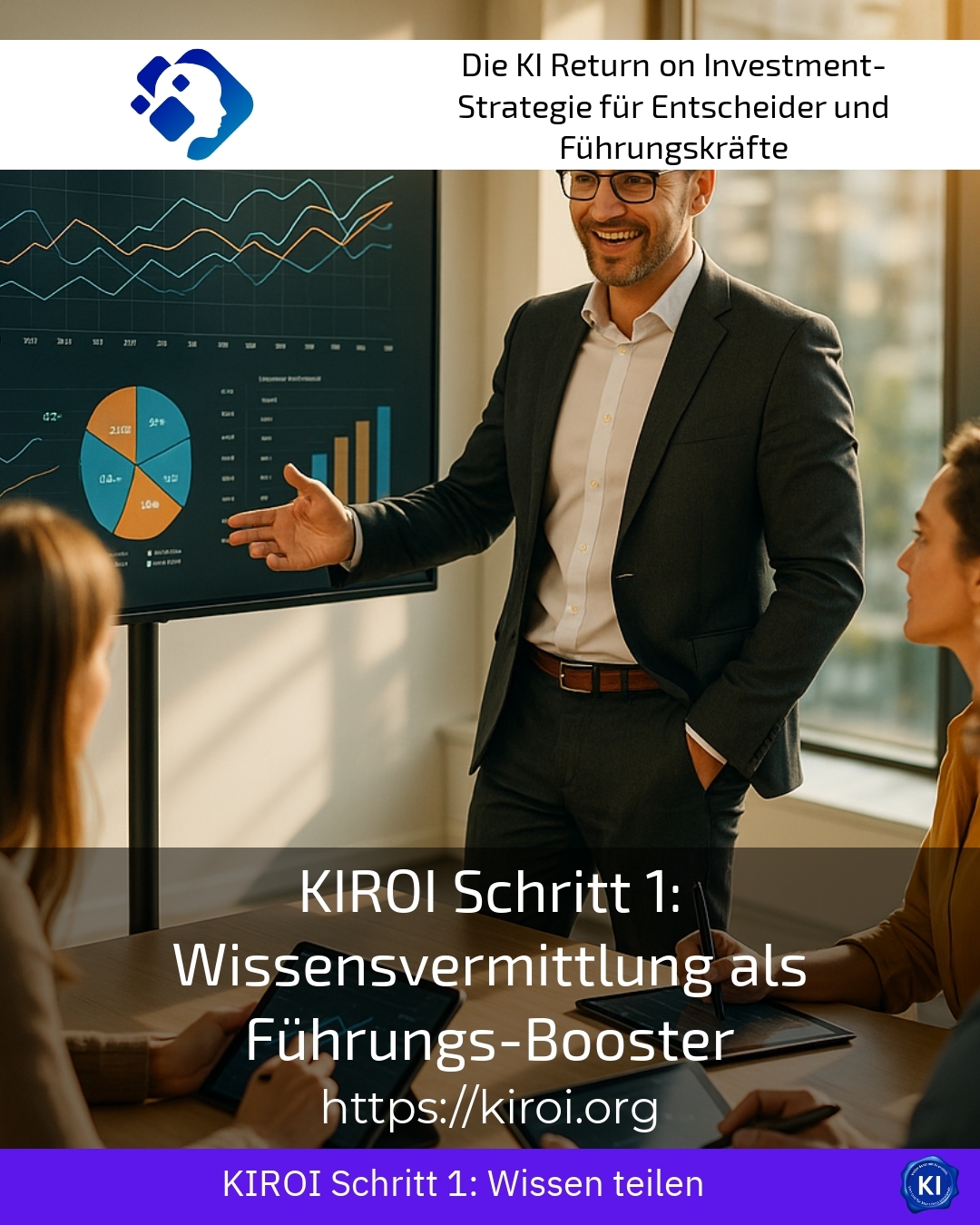
KIROI Step 1: Knowledge Transfer as a Leadership Booster

4.7
(999)

Targeted **knowledge transfer** is an essential factor in sustainably strengthening leadership skills. Especially in times of dynamic markets and complex company structures, structured knowledge transfer offers a clear advantage. This step in the **knowledge transfer** process supports leaders in effectively steering their teams and guiding development processes.

Knowledge transfer as a leadership booster: a key component

Leadership thrives on communication and the exchange of information. Effective **knowledge transfer** not only conveys facts, but also context and practical experience – this strengthens the capability of all those involved. In numerous industries, leaders report how targeted training sessions, workshops, and coaching units help to optimise internal processes and increase innovative strength.

An example from the manufacturing sector shows how the use of visual explanations and practical exercises integrates new employees more quickly while reducing error rates. In the IT industry, the wealth of experience of established developers can be passed on to juniors through mentoring programmes – this not only promotes knowledge retention but also strengthens team cohesion. In service companies, meanwhile, **knowledge transfer** is described as key to improving customer communication and process quality by specifically preparing employees for challenges.

Creating a culture of learning through knowledge transfer

Lived **knowledge transfer** is based on an open and supportive environment where learning is understood as a collaborative process. Leaders who foster this culture provide impetus for continuous professional development and utilise a diverse range of methods to address all learning needs. Whether through targeted instructional conversations, group work or e-learning modules – the variety of methods allows for individual access to knowledge.

In the automotive industry, you'll find modular training programmes, developed by experienced experts, which systematically impart new technology trends and safety regulations. Similarly, the healthcare sector uses interactive case studies and observerships to convey practical knowledge while simultaneously improving patient care. Last but not least, the retail sector demonstrates, through regularly conducted practical demonstrations, how employee training directly contributes to sales success.

BEST PRACTICE with one customer (name hidden due to NDA contract)

At a medium-sized engineering company, the internal communication structure was optimised through targeted transruption coaching. This allowed the technical expertise of individual employees to be utilised more effectively and made accessible to project teams. Management reported improved coordination and faster problem-solving since the introduction of the new knowledge transfer strategies.

Methods for effective knowledge transfer in everyday management

Practical implementation maintains effective **knowledge transfer** through the targeted use of proven methods. Three concepts are particularly important here:

  • Showing and explaining: Vivid demonstrations combine practice and theory. This way, knowledge is better understood and more sustainably embedded.
  • Interactive exercises and feedback rounds: These enable learners to immediately apply and reflect on what they have learned.
  • Mentoring and Coaching: Personal support fosters individual development and creates trusting learning relationships.

In manufacturing, for example, the four-step method improves the onboarding of new employees. Experienced colleagues demonstrate the process step by step, which continuously raises the quality of work. An international consulting firm relies on virtual workshops with interactive elements. This connects global teams and effectively transfers knowledge. In schools, however, teachers use storytelling to demonstrate how abstract content can be conveyed vividly, which strengthens understanding.

BEST PRACTICE with one customer (name hidden due to NDA contract)

A leading logistics company implemented a coaching concept for managers, which, with the help of digital learning platforms, enabled seamless knowledge transfer between central dispatchers and regional teams. This allowed managers to access operational knowledge more quickly and achieve numerous improvements in process control.

Knowledge transfer as a promising leadership booster

The demands on leaders are constantly increasing. This is precisely why targeted practical knowledge transfer can be seen as an effective booster. It helps to minimise uncertainties and promotes the targeted development of competencies. Through this transfer of explicit and implicit knowledge, potentials can be better utilised and innovation processes accelerated.

In the financial sector, executives use knowledge platforms to understand regulatory changes early and guide teams accordingly. In the IT sector, agile methods and daily stand-ups support knowledge flows and team transparency. In the creative industries, regular exchange formats revive collective knowledge and promote creative processes.

BEST PRACTICE with one customer (name hidden due to NDA contract)

A software company significantly increased inter-departmental networking through a company-wide learning program. This enabled managers to better access specialised expertise and deploy it effectively in project management.

My analysis

Overall, knowledge transfer emerges as a leadership booster with numerous positive effects. It not only enables the sustainable passing on of expertise but also promotes team development, innovation capability, and agility. Leaders who actively shape this process lay the foundation for a learning organisation and strengthen their role as catalysts. Clear, practical methods combined with a supportive learning culture are key to success.

Further links from the text above:

synartIQ – Knowledge transfer

StudySmarter – Knowledge transfer made simple

Haufe Academy – From Knowledge Management to Competitive Advantage

For more information and if you have any questions, please contact Contact us or read more blog posts on the topic Artificial intelligence return on investment here.
How useful was this post?

Click on a star to rate it!

Average rating 4.7 / 5. Vote count: 999

No votes so far! Be the first to rate this post.

Spread the love

transruption.org

The digital toolbox for
the digital winners of today and tomorrow

Business excellence for decision-makers & managers by and with Sanjay Sauldie

transruption
transruption

transruption: The digital toolbox for
the digital winners of today and tomorrow

Start » KIROI Step 1: Knowledge Transfer as a Leadership Booster
25 October 2025

KIROI Step 1: Knowledge Transfer as a Leadership Booster

4.7
(999)

Targeted **knowledge transfer** is an essential factor in sustainably strengthening leadership skills. Especially in times of dynamic markets and complex company structures, structured knowledge transfer offers a clear advantage. This step in the **knowledge transfer** process supports leaders in effectively steering their teams and guiding development processes.

Knowledge transfer as a leadership booster: a key component

Leadership thrives on communication and the exchange of information. Effective **knowledge transfer** not only conveys facts, but also context and practical experience – this strengthens the capability of all those involved. In numerous industries, leaders report how targeted training sessions, workshops, and coaching units help to optimise internal processes and increase innovative strength.

An example from the manufacturing sector shows how the use of visual explanations and practical exercises integrates new employees more quickly while reducing error rates. In the IT industry, the wealth of experience of established developers can be passed on to juniors through mentoring programmes – this not only promotes knowledge retention but also strengthens team cohesion. In service companies, meanwhile, **knowledge transfer** is described as key to improving customer communication and process quality by specifically preparing employees for challenges.

Creating a culture of learning through knowledge transfer

Lived **knowledge transfer** is based on an open and supportive environment where learning is understood as a collaborative process. Leaders who foster this culture provide impetus for continuous professional development and utilise a diverse range of methods to address all learning needs. Whether through targeted instructional conversations, group work or e-learning modules – the variety of methods allows for individual access to knowledge.

In the automotive industry, you'll find modular training programmes, developed by experienced experts, which systematically impart new technology trends and safety regulations. Similarly, the healthcare sector uses interactive case studies and observerships to convey practical knowledge while simultaneously improving patient care. Last but not least, the retail sector demonstrates, through regularly conducted practical demonstrations, how employee training directly contributes to sales success.

BEST PRACTICE with one customer (name hidden due to NDA contract)

At a medium-sized engineering company, the internal communication structure was optimised through targeted transruption coaching. This allowed the technical expertise of individual employees to be utilised more effectively and made accessible to project teams. Management reported improved coordination and faster problem-solving since the introduction of the new knowledge transfer strategies.

Methods for effective knowledge transfer in everyday management

Practical implementation maintains effective **knowledge transfer** through the targeted use of proven methods. Three concepts are particularly important here:

  • Showing and explaining: Vivid demonstrations combine practice and theory. This way, knowledge is better understood and more sustainably embedded.
  • Interactive exercises and feedback rounds: These enable learners to immediately apply and reflect on what they have learned.
  • Mentoring and Coaching: Personal support fosters individual development and creates trusting learning relationships.

In manufacturing, for example, the four-step method improves the onboarding of new employees. Experienced colleagues demonstrate the process step by step, which continuously raises the quality of work. An international consulting firm relies on virtual workshops with interactive elements. This connects global teams and effectively transfers knowledge. In schools, however, teachers use storytelling to demonstrate how abstract content can be conveyed vividly, which strengthens understanding.

BEST PRACTICE with one customer (name hidden due to NDA contract)

A leading logistics company implemented a coaching concept for managers, which, with the help of digital learning platforms, enabled seamless knowledge transfer between central dispatchers and regional teams. This allowed managers to access operational knowledge more quickly and achieve numerous improvements in process control.

Knowledge transfer as a promising leadership booster

The demands on leaders are constantly increasing. This is precisely why targeted practical knowledge transfer can be seen as an effective booster. It helps to minimise uncertainties and promotes the targeted development of competencies. Through this transfer of explicit and implicit knowledge, potentials can be better utilised and innovation processes accelerated.

In the financial sector, executives use knowledge platforms to understand regulatory changes early and guide teams accordingly. In the IT sector, agile methods and daily stand-ups support knowledge flows and team transparency. In the creative industries, regular exchange formats revive collective knowledge and promote creative processes.

BEST PRACTICE with one customer (name hidden due to NDA contract)

A software company significantly increased inter-departmental networking through a company-wide learning program. This enabled managers to better access specialised expertise and deploy it effectively in project management.

My analysis

Overall, knowledge transfer emerges as a leadership booster with numerous positive effects. It not only enables the sustainable passing on of expertise but also promotes team development, innovation capability, and agility. Leaders who actively shape this process lay the foundation for a learning organisation and strengthen their role as catalysts. Clear, practical methods combined with a supportive learning culture are key to success.

Further links from the text above:

synartIQ – Knowledge transfer

StudySmarter – Knowledge transfer made simple

Haufe Academy – From Knowledge Management to Competitive Advantage

For more information and if you have any questions, please contact Contact us or read more blog posts on the topic Artificial intelligence return on investment here.

How useful was this post?

Click on a star to rate it!

Average rating 4.7 / 5. Vote count: 999

No votes so far! Be the first to rate this post.

Spread the love

Other content worth reading:

KIROI Step 1: Knowledge Transfer as a Leadership Booster

written by:

Keywords:

#Coaching #compliance #Ethikrichtlinien 1TP5Leadership skills #InnovationDurchAchtsamkeit #LernendeOrganisation #Sustainability #Unternehmenskultur #Verantwortungsketten #Wissensvermittlung

Follow me on my channels:

Questions on the topic? Contact us now without obligation

Contact us

[wpforms id="331781" title="false"]

More articles worth reading

    Leave a comment