
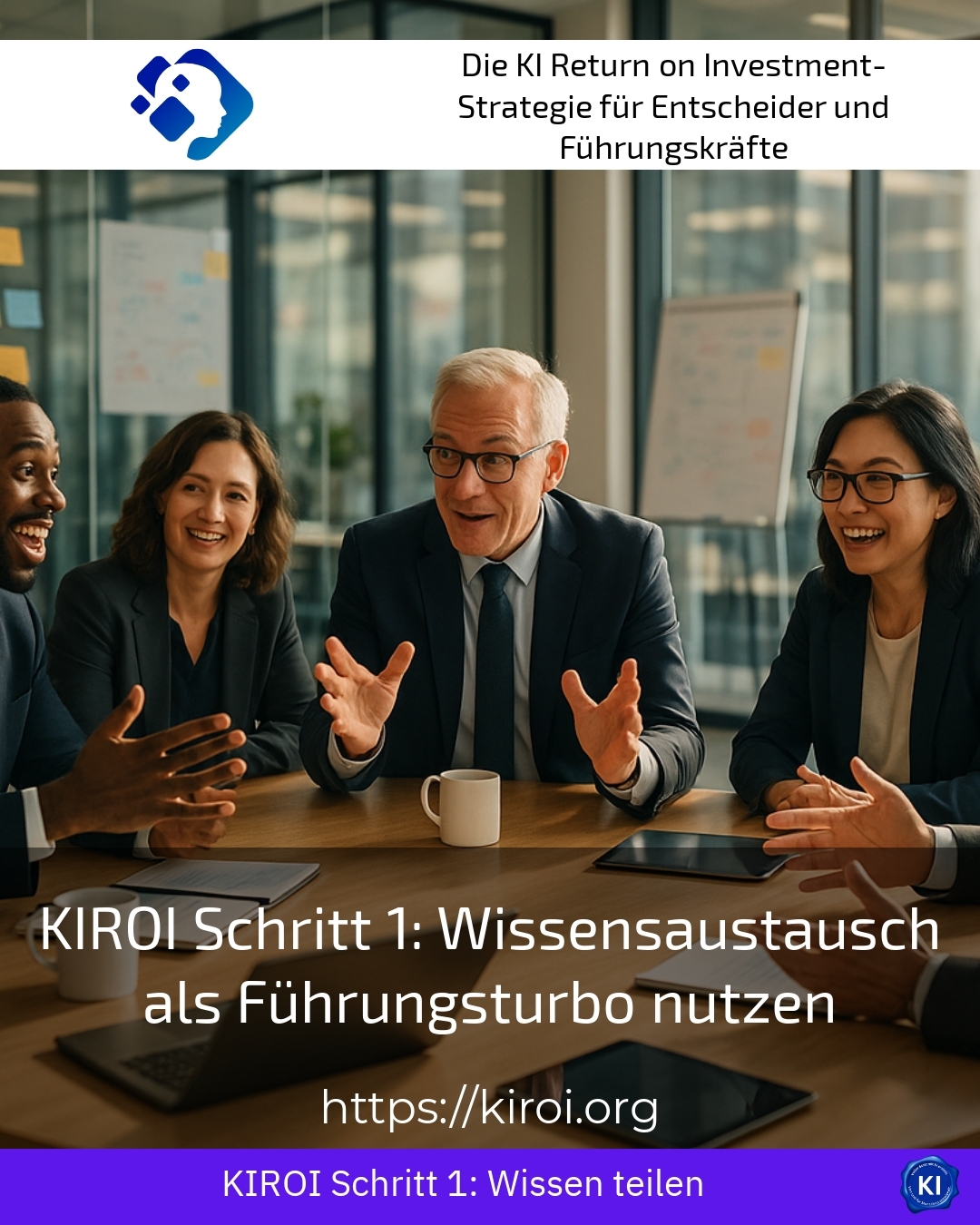
Targeted knowledge sharing is considered a powerful leadership accelerator. It supports managers in networking teams more effectively, fostering innovation, and sustainably improving processes. Especially in complex projects, a structured exchange of experiences and know-how helps to overcome challenges more quickly and to strengthen collaboration. This is not just about the mere flow of information, but about the conscious sharing of knowledge as a valuable asset.
Knowledge sharing as a driver of modern leadership
Leaders who act in a knowledge-oriented manner are considered role models for knowledge sharing. They create an open communication culture in which employees freely share their expertise. This not only promotes innovation but also mutual trust. A clear information culture, in which goals and expectations are communicated transparently, lays the foundation for this.
For example, regular feedback rounds or „lessons learned“ sessions after project completion can be used strategically. They give the team the opportunity to learn from successes and failures. Mentoring programmes, in which experienced colleagues pass on their knowledge to junior staff, also contribute significantly to actively shaping knowledge exchange.
BEST PRACTICE with a client (name withheld due to NDA): The combination of in-person exchange formats and digital tools was very successful here. Virtual coffee talks were held, where teams informally shared their knowledge. In parallel, a digital knowledge base was continuously expanded. This interplay significantly supported efficiency in problem-solving and strengthened team dynamics.
Technology and corporate culture in harmony
Good tools are an important aid, but without an appreciative corporate culture, their impact remains limited. Leaders must therefore promote the building of trust. Employees are more likely to share their knowledge if they do not have to fear disadvantages or loss of power. Transparent processes and open communication channels help to break down these barriers.
For example, a leader can specifically identify and close knowledge gaps with moderated feedback and handover discussions. Such discussions foster open dialogue and prevent misunderstandings that often arise in projects. At the same time, they increase mutual understanding and create space for continuous learning.
The targeted use of digital collaboration tools, such as collaboration platforms or knowledge management systems, also supports easy access to relevant knowledge. This reduces the effort required for searching and ensures that the right information is available at the right time.
Concrete examples of knowledge transfer in practice
In many industries, typical fields of application for knowledge exchange are emerging:
- In technology companies, agile teams use stand-up meetings to share experiences and solutions daily, accelerating project momentum.
- In healthcare, case discussions are held which promote the exchange of expert knowledge and contribute to improved patient care.
- In the manufacturing sector, control rooms establish regular shift handovers, during which important process information and experience are shared to avoid downtime.
BEST PRACTICE with a client (name omitted due to NDA): Moderated handover conversations were introduced when experts left the company. These structured conversations made it possible to transfer both documented knowledge and implicit experience. This resulted in reduced attendance times by new employees and faster driving of innovation.
Practical tips for successful knowledge sharing
To leverage knowledge sharing as a leader as a turbo, the following approaches are recommended:
- Foster a culture of openness and a blame-free environment where knowledge is shared without creating guilt.
- Utilise a wide range of formats: from informal discussions to structured workshops, which specifically enable the exchange of valuable expert knowledge.
- Use digital tools consciously, but pay attention to ease of use and team acceptance.
- As a leader, be a role model yourself in sharing knowledge and demonstrate its importance for collective success.
The use of mentoring or sponsorship can also effectively support young talent and contribute to building social networks. This creates a vibrant, lively exchange of knowledge that benefits the entire company.
My analysis
Knowledge sharing is far more than just a flow of information. It is a central leadership tool that connects teams and drives innovation. The combination of an appreciative corporate culture and suitable tools forms the foundation for successful exchange. Leaders actively support this process and create structures in which knowledge can be safely shared and further developed. This allows projects to be managed more effectively, risks to be minimised, and potential to be fully realised.
Further links from the text above:
AIROI Step 1: Knowledge Sharing as a Leader [2]
How leaders actively promote knowledge sharing [1]
Knowledge sharing in knowledge management [3]
Knowledge Transfer Definition, Methods & Examples [5]
Knowledge Sharing: The Ultimate Guide [6]
For more information and if you have any questions, please contact Contact us or read more blog posts on the topic Artificial intelligence here.








 Deutsch
  English (UK)