kiroi.org

KIROI - Artificial Intelligence Return on Invest
The AI strategy for decision-makers and managers

Business excellence for decision-makers & managers by and with Sanjay Sauldie

KIROI - Artificial Intelligence Return on Invest: The AI strategy for decision-makers and managers

KIROI - Artificial Intelligence Return on Invest: The AI strategy for decision-makers and managers

Start » Rethinking knowledge exchange: KIROI step 1 for decision-makers
30 August 2025

Rethinking knowledge exchange: KIROI step 1 for decision-makers

4.8
(1325)

Knowledge sharing as a dynamic process for sustainable organisations

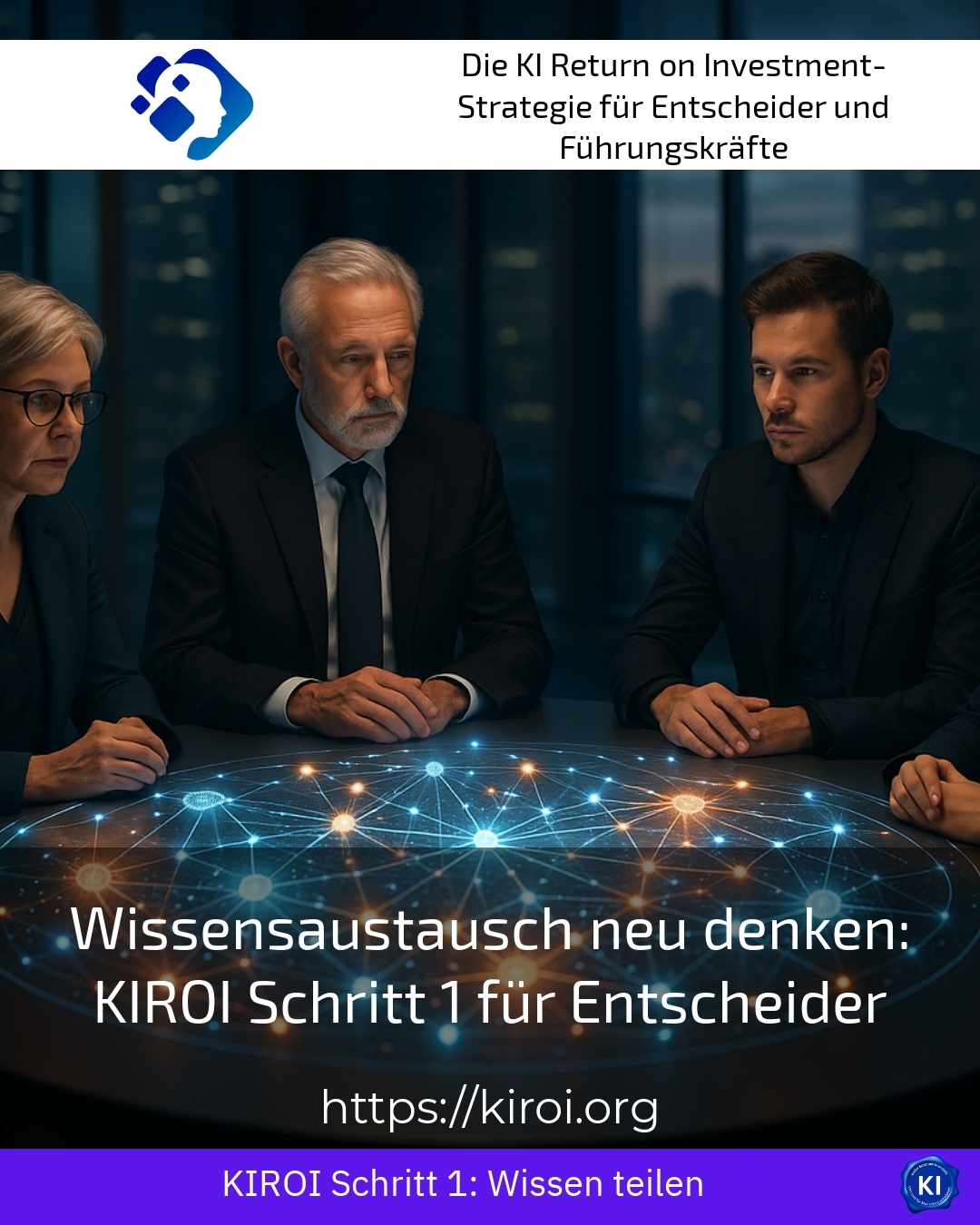
Knowledge sharing today is far more than simply passing on information. It's about creating a vibrant culture that inspires and empowers people to share knowledge actively and flexibly every day. Decision-makers are increasingly looking for ways to break down traditional structures and rethink knowledge sharing. Here, guidance that provides inspiration and encourages experimentation offers a groundbreaking approach that goes beyond simple technical solutions.

In industry, knowledge sharing is increasingly seen as key to mastering complex projects, for example. For instance, executives in the technology sector often report that the use of different formats – such as exchange platforms, informal meetings, and hybrid workshops – significantly improves collaboration. In manufacturing companies, it is important to design information flows so that employees can access relevant expert knowledge at any time. And in service companies, there is a desire to integrate knowledge sharing into daily work in a way that is flexible and sustainable.

Support as a central building block for sustainable knowledge exchange

The first step in a supported approach is not to confront decision-makers with ready-made solutions or rigid concepts. Instead, it's about encouraging them to reflect on and adapt existing structures through individually tailored impulses. This creates space for learning, experimentation, and further development – important prerequisites for a vibrant knowledge culture.

In practice, the interplay of digital tools and personal formats proves to be crucial. Technical managers often express a desire to systematically connect the expertise of their employees. One example of this is the introduction of digital collaboration platforms, supplemented by regular informal meetings that encourage personal exchange. This not only strengthens trust within the team but also makes knowledge more accessible to all involved.

Examples from different industries

In a technical company, for example, a framework was created that systematically promotes the exchange of expertise. Through a mix of different formats, employees were able to collaborate more effectively and overcome complex challenges together.

KIROI Best Practice at Company XYZ (name changed due to NDA agreement) Within a technical company, coaching led to the creation of a framework enabling employees to systematically share their expertise. A wide variety of formats, from informal meetings to digital platforms, were introduced. Networking improved significantly, and collegial support in complex projects was considerably strengthened at the same time. This increased flexibility in dealing with challenges, which is crucial in a dynamic industry.

In production, managers often face the challenge of sharing knowledge in a way that can be reliably accessed in day-to-day operations. This calls for company-specific formats that make knowledge exchange pragmatic while also creating scope for innovation. For example, a hybrid learning setting, combining in-person and online modules, can cater to the needs of different teams.

In the service sector, managers report that knowledge sharing must be achieved through flexible and situationally adapted formats. Hybrid workshops, expert panels, and digital learning modules are common tools here to make current knowledge accessible to employees and to strengthen collaboration.

Providing impetus rather than selling solutions

Rethinking knowledge transfer also means understanding it as a cultural and communicative process. Decision-makers frequently report that it's not about quick fixes. Instead, they are supported in finding suitable methods themselves, thereby establishing sustainable processes. External support can help to question ingrained patterns and to foster the courage for new collaboration.

This is how knowledge exchange becomes part of daily work, making organisations more resilient and agile – a crucial advantage in a fast-paced economic environment. A structured approach helps to make the exchange consistent and sustainable, without losing sight of the individual requirements of the respective organisation.

My analysis

The key to successful knowledge sharing lies in a holistic, guided process. A mere technical implementation is not enough. Instead, companies benefit from a culture that keeps knowledge alive and makes it flexibly accessible. Support helps to develop individual solutions that fit the organisation and are therefore permanently effective. Many managers confirm that through stimuli and supportive formats, they find new ways to meaningfully integrate knowledge sharing into their daily work.

Further links from the text above:

KIROI Step 1: Knowledge sharing as a success factor for leaders [1]

Rethinking knowledge transfer: Step 1 to success with KIROI [3]

For more information and if you have any questions, please contact Contact us on the topic or read more blog posts on the topic Artificial Intelligence Blog here.

How useful was this post?

Click on a star to rate it!

Average rating 4.8 / 5. Vote count: 1325

No votes so far! Be the first to rate this post.

Spread the love

transruption.org

The digital toolbox for
the digital winners of today and tomorrow

Business excellence for decision-makers & managers by and with Sanjay Sauldie

transruption
transruption

transruption: The digital toolbox for
the digital winners of today and tomorrow

Start » Rethinking knowledge exchange: KIROI step 1 for decision-makers
30 August 2025

Rethinking knowledge exchange: KIROI step 1 for decision-makers

4.8
(1325)

Knowledge sharing as a dynamic process for sustainable organisations

Knowledge sharing today is far more than simply passing on information. It's about creating a vibrant culture that inspires and empowers people to share knowledge actively and flexibly every day. Decision-makers are increasingly looking for ways to break down traditional structures and rethink knowledge sharing. Here, guidance that provides inspiration and encourages experimentation offers a groundbreaking approach that goes beyond simple technical solutions.

In industry, knowledge sharing is increasingly seen as key to mastering complex projects, for example. For instance, executives in the technology sector often report that the use of different formats – such as exchange platforms, informal meetings, and hybrid workshops – significantly improves collaboration. In manufacturing companies, it is important to design information flows so that employees can access relevant expert knowledge at any time. And in service companies, there is a desire to integrate knowledge sharing into daily work in a way that is flexible and sustainable.

Support as a central building block for sustainable knowledge exchange

The first step in a supported approach is not to confront decision-makers with ready-made solutions or rigid concepts. Instead, it's about encouraging them to reflect on and adapt existing structures through individually tailored impulses. This creates space for learning, experimentation, and further development – important prerequisites for a vibrant knowledge culture.

In practice, the interplay of digital tools and personal formats proves to be crucial. Technical managers often express a desire to systematically connect the expertise of their employees. One example of this is the introduction of digital collaboration platforms, supplemented by regular informal meetings that encourage personal exchange. This not only strengthens trust within the team but also makes knowledge more accessible to all involved.

Examples from different industries

In a technical company, for example, a framework was created that systematically promotes the exchange of expertise. Through a mix of different formats, employees were able to collaborate more effectively and overcome complex challenges together.

KIROI Best Practice at Company XYZ (name changed due to NDA agreement) Within a technical company, coaching led to the creation of a framework enabling employees to systematically share their expertise. A wide variety of formats, from informal meetings to digital platforms, were introduced. Networking improved significantly, and collegial support in complex projects was considerably strengthened at the same time. This increased flexibility in dealing with challenges, which is crucial in a dynamic industry.

In production, managers often face the challenge of sharing knowledge in a way that can be reliably accessed in day-to-day operations. This calls for company-specific formats that make knowledge exchange pragmatic while also creating scope for innovation. For example, a hybrid learning setting, combining in-person and online modules, can cater to the needs of different teams.

In the service sector, managers report that knowledge sharing must be achieved through flexible and situationally adapted formats. Hybrid workshops, expert panels, and digital learning modules are common tools here to make current knowledge accessible to employees and to strengthen collaboration.

Providing impetus rather than selling solutions

Rethinking knowledge transfer also means understanding it as a cultural and communicative process. Decision-makers frequently report that it's not about quick fixes. Instead, they are supported in finding suitable methods themselves, thereby establishing sustainable processes. External support can help to question ingrained patterns and to foster the courage for new collaboration.

This is how knowledge exchange becomes part of daily work, making organisations more resilient and agile – a crucial advantage in a fast-paced economic environment. A structured approach helps to make the exchange consistent and sustainable, without losing sight of the individual requirements of the respective organisation.

My analysis

The key to successful knowledge sharing lies in a holistic, guided process. A mere technical implementation is not enough. Instead, companies benefit from a culture that keeps knowledge alive and makes it flexibly accessible. Support helps to develop individual solutions that fit the organisation and are therefore permanently effective. Many managers confirm that through stimuli and supportive formats, they find new ways to meaningfully integrate knowledge sharing into their daily work.

Further links from the text above:

KIROI Step 1: Knowledge sharing as a success factor for leaders [1]

Rethinking knowledge transfer: Step 1 to success with KIROI [3]

For more information and if you have any questions, please contact Contact us on the topic or read more blog posts on the topic Artificial Intelligence Blog here.
How useful was this post?

Click on a star to rate it!

Average rating 4.8 / 5. Vote count: 1325

No votes so far! Be the first to rate this post.

Spread the love

Other content worth reading:

Rethinking knowledge exchange: KIROI step 1 for decision-makers

written by:

Keywords:

#Support #Sustainability #Organisationsentwicklung #Wissensaustausch #Knowledge culture

Follow me on my channels:

Questions on the topic? Contact us now without obligation

Contact us

[wpforms id="331781" title="false"]

More articles worth reading

    Leave a comment