
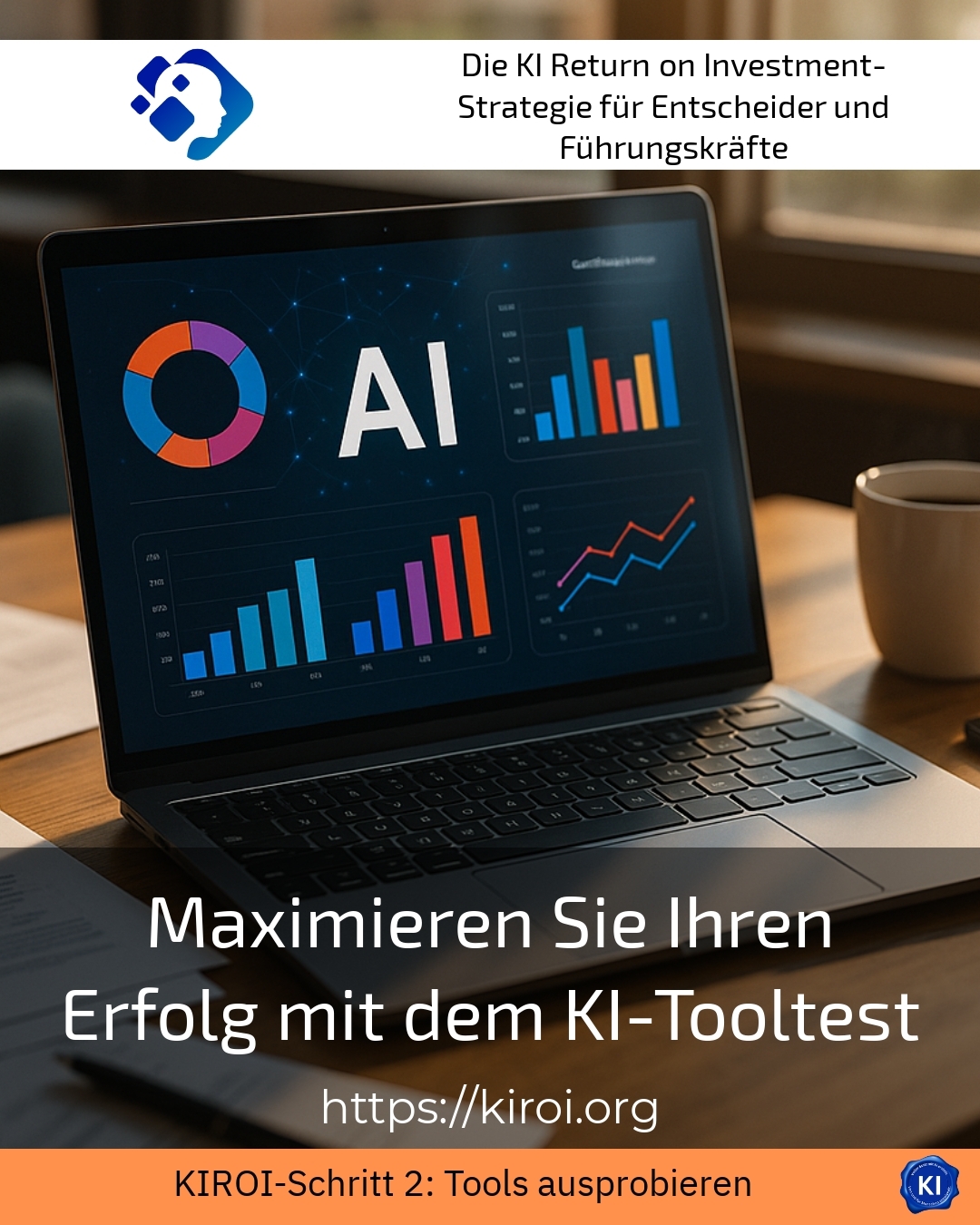
Imagine being able to double your team's productivity while simultaneously reducing costs. This is precisely what companies that adopt a systematic approach and the AI Tool Test use as a strategic instrument. Digital transformation is progressing relentlessly, and those who do not act today will lose out tomorrow. Clients often report that they were unsure before implementing intelligent systems. They didn't know which solution suited their requirements. A structured approach can provide valuable impetus here and pave the way to success.
Why systematic evaluation makes the difference
The market for intelligent software solutions is growing exponentially. New applications with promising features are appearing daily. This variety overwhelms many decision-makers in companies. Therefore, a methodical approach has become indispensable. The AI Tool Test provides a structured framework for informed decisions. This way you avoid costly purchasing errors and implementation problems. But how exactly does this process work in practice?
A medium-sized engineering company faced the challenge of modernising its quality control. The manual inspection of workpieces was time-consuming and labour-intensive. The team initially evaluated various image recognition systems based on set criteria. This systematic approach led to the selection of a suitable solution. The error rate subsequently decreased by a considerable percentage. At the same time, specialist staff could be deployed for more demanding tasks.
In the logistics sector, freight forwarders use intelligent systems for route optimisation. These applications analyse real-time traffic data and dynamically adjust delivery routes. A systematic comparison of different providers revealed significant differences in accuracy. Some solutions consider weather data, while others integrate historical traffic patterns. Choosing the right system helps companies reduce fuel costs.
Best practice with a AIROI customer
An internationally operating trading company approached our team with a complex question. Their existing customer service processes had become inefficient and costly. The company received several thousand enquiries daily across various channels simultaneously. Management desired automation that would still appear personal. As part of the transruption coaching, we intensively supported the project team over several months. First, we collaboratively defined clear evaluation criteria for selecting suitable systems. We then tested six different chatbot solutions under realistic conditions within the company. The results were carefully documented and discussed with the specialist departments. This revealed that the most expensive solution did not deliver the best performance. A mid-priced option impressed with excellent speech processing and straightforward integration. After implementation, staff reported a noticeable reduction in their daily workload. The average processing time per enquiry decreased significantly. Customers received faster responses and were more satisfied with the overall service.
Kriterien for a successful AI tool test in your company
The selection of appropriate evaluation criteria determines the success of the entire evaluation. Technical performance alone is not sufficient. Aspects such as user-friendliness and integrability into existing systems are equally important. Scalability also plays a central role in future-proof decisions. Companies should also critically examine the provider's support, as even the best software is of little use without competent assistance.
In healthcare, clinics are increasingly relying on intelligent diagnostic systems. These analyse medical images and support doctors in interpreting findings. One hospital tested various radiology assistants over a period of three months, with the team paying particular attention to the accuracy of the detection algorithms. They also evaluated processing speed under high-load conditions. The results positively surprised those responsible in several ways.
Financial service providers use algorithms for fraud detection in transactions. These systems analyse behavioural patterns and identify suspicious activities in real-time. A bank systematically compared five different solutions using defined test scenarios. The balance between detection rate and false alarms was particularly important. Too many false alarms upset legitimate customers and place a significant burden on customer service. The structured evaluation helped to find the optimal balance.
In human resources, intelligent systems support the recruitment process for many companies. They analyse application documents and create pre-selections for open positions. A personnel service provider thoroughly tested several matching algorithms with real application data. The quality of the suggestions varied greatly between the different providers. Some systems showed biases that could lead to discriminatory results. The careful test uncovered these problems early on.
Practical implementation of AI tool testing in everyday work
The practical implementation requires clear structures and defined responsibilities within the team. First, you should establish a project timeframe and allocate resources. Subsequently, you should jointly define measurable success criteria for the evaluation. Involving different departments significantly increases acceptance of the eventual decision. Because different perspectives lead to better outcomes, teamwork is crucial. This creates a comprehensive understanding of the requirements and possibilities.
An automotive supplier conducted a comprehensive comparison of predictive maintenance systems. These solutions forecast machine failures, enabling timely preventative maintenance. The company installed trial versions on selected production lines concurrently. Over several weeks, the team systematically collected data on prediction accuracy. The results showed significant differences in the reliability of the forecasts. Based on these findings, management made an informed investment decision.
Retailers are successfully using intelligent systems for demand forecasting. These analyse historical sales data and external factors such as weather or events. A supermarket operator thoroughly evaluated various forecasting tools for its fresh product range. Reducing food waste was a key objective of the project. At the same time, product availability for customers was to be improved. The structured comparison led to the selection of a solution with excellent performance.
Best practice with a AIROI customer
A leading company from the energy sector sought assistance in selecting an analytics platform. The existing data volumes from smart meters and sensors were continuously growing. Management clearly recognised the potential of this data for efficiency improvements. However, the internal expertise to evaluate different solution approaches was lacking. As part of our support, we first jointly developed a requirements profile. This took into account technical, economic, and data protection aspects in an equally balanced way. Subsequently, we identified seven relevant providers on the market for evaluation. Each provider was given the opportunity to present their solution in a live demo. Additionally, we conducted a proof-of-concept with real company data. We systematically documented the findings in a comprehensive evaluation report. The transruption coaching helped the team make the right decision. The implemented solution now effectively supports the optimisation of the energy grid. Load peaks are better predicted and can be specifically balanced.
Avoiding common mistakes when choosing tools
Unfortunately, many companies make technology decisions without adequate preparation. They are blinded by marketing promises or uncritically follow current trends. A systematic AI Tool Test effectively protects against such costly errors. Not every solution fits every company equally well. Individual requirements must be the focus of the evaluation. Only in this way can sustainable and economically sensible implementations be created.
A pharmaceutical company initially invested in an oversized document processing solution. The system offered numerous features that the company did not need at all. The complexity led to long training times and frustration among employees. A subsequent evaluation showed that a simpler solution would have been a better fit. This experience highlights the importance of a thorough needs analysis beforehand.
Insurers frequently use intelligent systems for claims processing and risk assessment. One insurer implemented a system without sufficient testing with real-world data. In practice, the solution then showed significant weaknesses with complex claims. The subsequent modifications incurred high costs and significantly delayed the planned rollout. A structured testing process would have identified these problems early on.
In the e-commerce sector, retailers use recommendation systems to increase turnover. These systems analyse customer behaviour and algorithmically suggest suitable products. An online retailer chose a system based on a single product demonstration. After implementation, it became apparent that the recommendations were of little relevance. The conversion rate improved negligibly despite significant investment in the system. A more comprehensive evaluation would have led to a better decision.
Ensuring long-term success through continuous evaluation
Choosing a tool just once is not enough for lasting success. Technology is developing rapidly and requirements are constantly changing. Therefore, regular review of the solutions used within the company is recommended. The AI Tool Test should be understood as a continuous process in the long term. This is how you remain competitive and consistently take advantage of new opportunities early on. Clients often report positive experiences with this approach.
A media company regularly and systematically reviews its content management systems for currentness. New functionalities for automated text creation are thoroughly and continuously evaluated. This proactive stance secures the company competitive advantages in the dynamic market. Competitors who act less nimbly are increasingly falling behind in the competition.
Telecommunications providers are successfully using intelligent systems for network optimisation. Technology is developing particularly rapidly in this area. One provider established an annual review process for all deployed tools. This allows the company to identify outdated solutions and areas for improvement in a timely manner. Continuous evaluation has become an integral part of the IT strategy.
My AIROI Analysis
The findings from numerous projects clearly show that a structured approach is crucial. Companies that evaluate systematically make better decisions and save resources in the long run. Transruption coaching offers valuable support in complex selection processes. The combination of a methodical framework and individual adaptation often leads to optimal results.
Particularly striking is the importance of involving all relevant stakeholders in the process. Technical experts, specialist departments and management must pull together consistently. Only then will solutions be created that are actually accepted and used in everyday work. The human component is unfortunately often underestimated in technology decisions.
The analysis also shows that flexibility and adaptability are key success factors. Markets change, technologies evolve, and requirements are constantly shifting. Whoever makes the right choice today must be prepared to re-evaluate tomorrow. Transruption coaching supports companies in developing this agility sustainably. This transforms digital transformation into an opportunity rather than a threat.
In conclusion, it can be stated that the success of technology investments is fundamentally predictable. With the right methodology, competent guidance, and the will for continuous improvement, companies achieve their goals. The examples described from various industries impressively demonstrate this finding. The future belongs to those who consistently set the right course today.
Further links from the text above:
[1] Gartner IT Research and Analysis
[2] McKinsey AI Insights and Studies
[3] Bitkom Digital Transformation
[4] Forbes Artificial Intelligence Coverage
For more information and if you have any questions, please contact Contact us or read more blog posts on the topic Artificial intelligence here.









 Deutsch
  English (UK)