
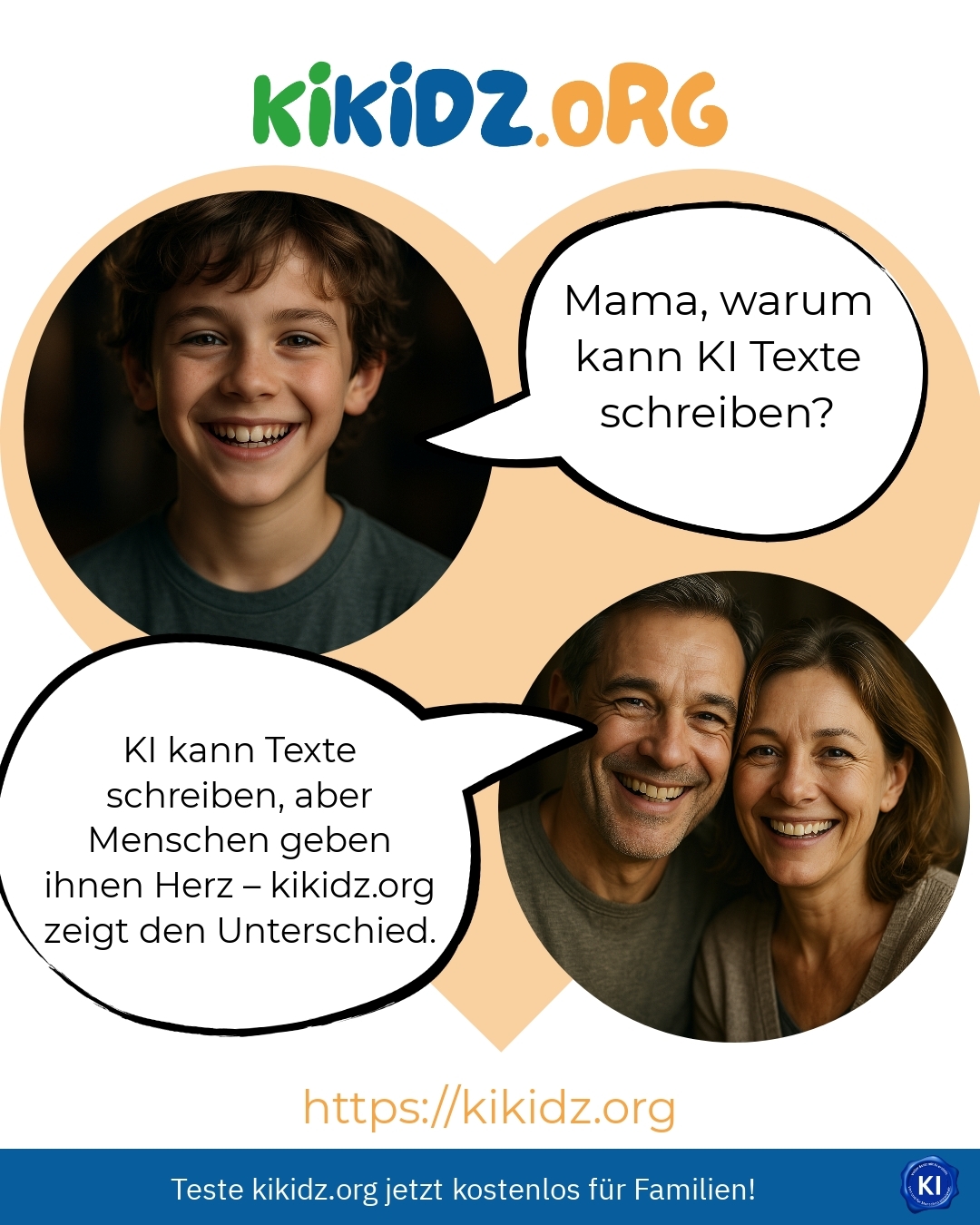
When children ask: „Mummy, why can AI write texts?“, a deep interest in the ability of computers to understand and generate human language is revealed. This question touches the heart of Artificial Intelligence (AI) and machine learning, which enable computer programs to automatically create texts.
Foundations of AI text generation
AI text creation is based on advanced algorithms and technologies such as Natural Language Processing (NLP) and machine learning. These techniques enable computers to analyse and generate language by recognising and utilising patterns in large text collections[1][2]. A central tool in this process is language models, which have learned to understand the context of words in a sentence and to form new, meaningful sentences[1].
An example of AI text generation is chatbots, which can respond to user requests. If a child asks, „Mummy, why can AI write texts?“, an answer could be that AI systems like chatbots are trained through machine learning to generate human-like texts[1].
Mum, why can AI write texts? – The Role of NLP and Machine Learning
NLP is the heart of AI text generation, as it enables computers to understand and process human language. Through techniques such as tokenisation and sentiment analysis, AI systems can not only analyse texts but also grasp the emotions and contexts behind them[2]. Machine learning allows for the creation of models that learn from extensive datasets, forming the basis for automated text production[2].
Parents can explain to their children that AI systems like GPT-3 or GPT-4 analyse huge amounts of text data to recognise patterns and generate new text. These models are so powerful that they can even write creative texts [3][4].
Practical applications and challenges
AI text generation is used in many areas, from creating blog posts to automated reports. It can save time and increase productivity by generating large amounts of content in a short period[5]. However, there are also challenges, such as the bias of training data and the need for editorial post-processing to ensure the quality and relevance of the generated texts[7].
When children ask, „Mum, why can AI write texts?“, parents can also point out the challenges associated with AI text generation. They can explain that while AI systems can write very convincing texts, they do not create new facts or ideas[4].
Tips for Parents: How to Explain AI Text Generation
Parents can help their children better understand AI text generation by using simple examples. For instance, they can explain that AI systems like chatbots can answer questions because they've learnt how people speak and write. Another tip is to involve children in creating prompts to see how AI systems respond to different requests[6].
Some parents report encouraging their children to experiment with AI tools themselves to develop a deeper understanding of the technology.
BEST PRACTICE for parents and teachers is to actively involve children in the process of AI text generation. For example, they can jointly formulate a prompt and see how the AI reacts to it. This not only promotes understanding of the technology but also the children's creativity and critical thinking.
My analysis
The question „Mum, why can AI write texts?“ expresses an interest in the ability of computers to understand and generate human language. By understanding the fundamentals of AI text generation, parents can help their children to better understand this technology and recognise its capabilities and limitations. The best training for AI text generation offers Kikidz, which helps parents and teachers prepare children for the challenges of the digital world.
Further links from the text above:
For more information on AI copywriting and machine learning:
Text generation: definition & AI
For more information and if you have any questions, please contact Contact us or read more blog posts on the topic Children and Artificial Intelligence here. You can find the courses here: Children and Artificial Intelligence Courses










 Deutsch
  English (UK)