
Why do companies suddenly fail in the market despite technological superiority, while competitors with supposedly weaker solutions win over customers?
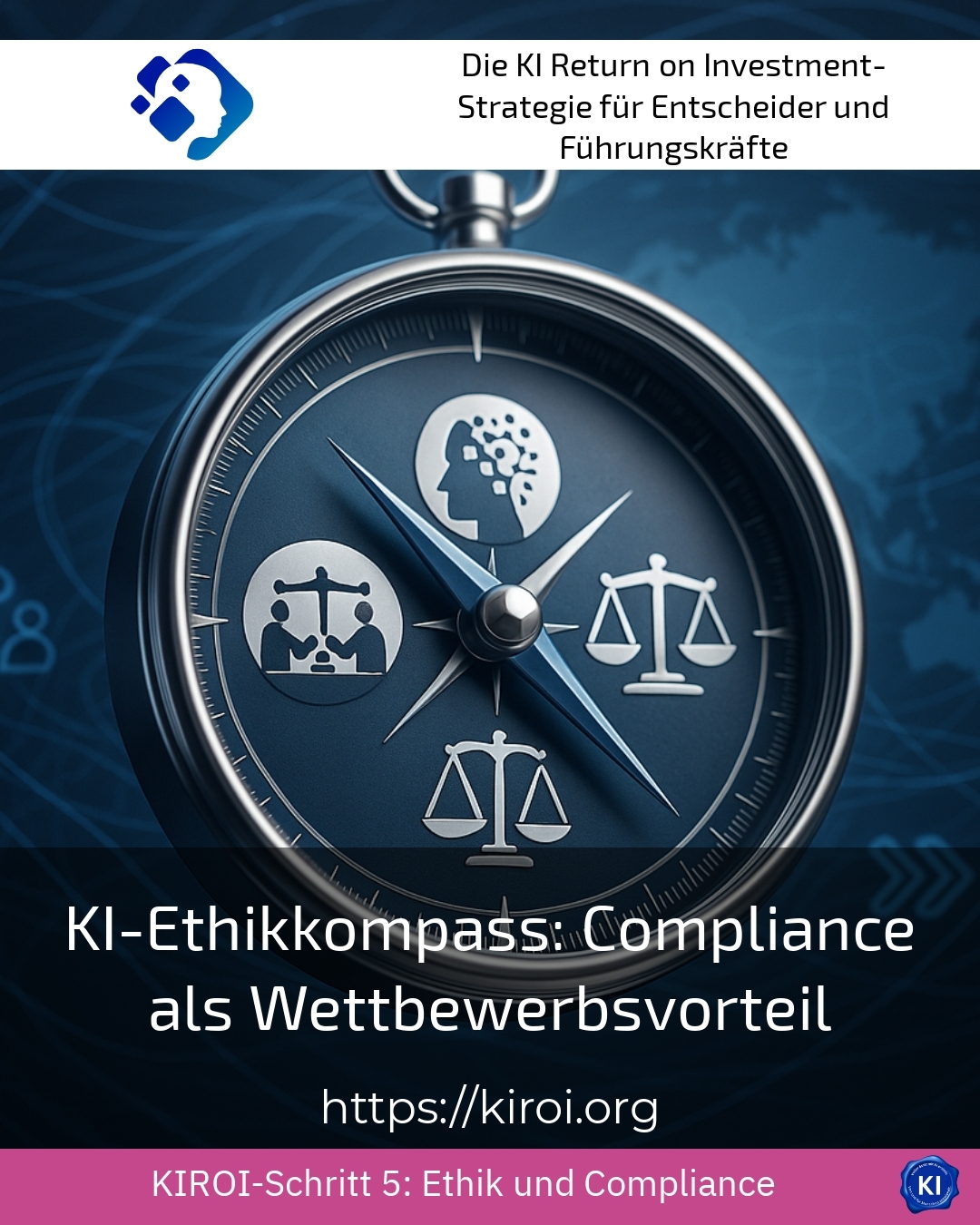
The answer often lies not in the technology itself, but in the way organisations design, implement and communicate their algorithmic systems. The AI Ethics Compass: Compliance as a Competitive Advantage is increasingly evolving into the decisive differentiator in saturated markets, because customers, business partners and regulators now pay more attention than ever to the responsible use of technology. This development affects almost all sectors of the economy, fundamentally changes business relationships and forces managers to rethink. Companies that recognise this shift early on position themselves successfully for the years ahead. They build trust with critical target groups while simultaneously reducing operational risk. The strategic focus on ethical standards thus transforms the entire corporate culture sustainably.
The strategic dimension of responsible technology application
Responsible technology use has long since ceased to be limited to avoiding violations of the law or working through regulatory checklists, but instead encompasses a holistic approach that takes into account all touchpoints between algorithmic systems and humans [1]. Companies in the financial sector, for example, use automated decision-making systems for lending, insurance assessments and investment recommendations, which exposes them to a particularly high degree of public scrutiny. A major insurance company recently had to overhaul its entire claims settlement process after complaints about non-transparent rejections increased. Banks are now investing substantial sums in the explainability of their scoring models because supervisory authorities are demanding comprehensible decision-making processes. Investment companies, too, are increasingly placing importance on verifiable criteria in algorithmic portfolio management. These developments clearly show that the AI Ethics Compass: Compliance as a Competitive Advantage has already become a reality in the financial sector.
In healthcare, the importance of ethical technology application manifests itself even more clearly, because decisions here can directly affect the physical and psychological integrity of people. Diagnostic systems that evaluate X-rays or laboratory values must meet the highest standards of transparency so that doctors and patients can understand the recommendations. Hospitals are increasingly relying on certified applications that have been independently audited. Pharmaceutical companies document their research algorithms in detail to simplify subsequent approval processes. Telemedicine providers invest in data protection measures that go far beyond statutory minimum requirements. These investments pay off in the long term because trust forms the basis of every doctor-patient relationship.
Best practice with a AIROI customer
A mid-sized company in the medical technology sector was faced with the challenge of marketing its diagnostic support systems internationally, with different countries imposing varying regulatory requirements. As part of our collaboration, we initially developed a comprehensive ethics catalogue that took all relevant stakeholders into account while also serving as the basis for marketing materials. The company deliberately chose a transparent communication approach, giving potential customers detailed insights into how the algorithms worked. Although this procedure initially required significant resources for documentation and training, it paid off measurably within a few months. The conversion rate at product demonstrations increased by more than forty percent because buyers developed trust in the solution more quickly. In addition, the duration of negotiations with hospital managements was considerably reduced, as many critical questions had already been answered proactively. The transruptions coaching supported the internal team in sustainably embedding this new communication culture and developing it further on an ongoing basis.
AI Ethics Compass: Compliance as a competitive advantage in an industrial context
The manufacturing industry is currently undergoing a fundamental transformation in which algorithmic systems are increasingly making critical decisions in real time, raising questions of accountability and traceability. Car manufacturers are implementing automated quality control systems designed to detect defects before vehicles leave the plant. Chemical companies use predictive analytics to optimise production processes while simultaneously minimising safety risks. Mechanical engineering firms are integrating self-learning components into their products that can adapt to different operating conditions. Logistics companies coordinate complex supply chains using algorithms that take millions of variables into account. In all these areas, ethical design determines acceptance and long-term market success.
Particularly in the field of occupational safety, it becomes clear how responsible technology application can generate concrete competitive advantages [2]. A construction company introduced a site monitoring system designed to detect and report potential hazard situations. The workforce initially reacted skeptically, fearing permanent surveillance. However, through transparent communication and clear regulations on data usage, it was possible to build trust. The number of accidents fell significantly, while employee satisfaction increased. Insurance companies subsequently reduced premiums considerably. This example impressively illustrates how ethical principles can generate economic benefits.
Energy companies face unique challenges because their algorithmic decisions can directly influence the security of public energy supply. Network operators rely on intelligent systems designed to predict peak loads and distribute capacities accordingly. Wind farm operators optimise the alignment of their turbines using algorithms that process real-time weather data. Energy traders use automated systems for stock market trading, which raises regulatory questions. These companies benefit significantly from a well-considered ethical framework because regulatory authorities and consumers are watching particularly closely.
Regulatory developments as a driver of strategic realignment
The regulatory landscape is changing rapidly worldwide, with different jurisdictions pursuing various approaches, which presents particular challenges for internationally oriented companies [3]. European regulations emphasise transparency and individual rights. Asian markets partially focus more on innovation and economic promotion. North American regulators often rely on industry-specific requirements. These differences require flexible compliance structures that can adapt to various demands. Companies that establish robust ethical frameworks early on are better prepared for upcoming regulations.
Best practice with a AIROI customer
An internationally active retail group sought support in harmonising its algorithmic personalisation systems across various national markets, with differing legal frameworks creating significant complexity. Together, we developed a modular ethics framework that combined a binding core standard with country-specific customisation options. The system was based on the principle of the strictest requirement as a minimum standard, supplemented by regional additional modules for specific requirements of individual markets. This architecture enabled the company to enter new markets more quickly because the fundamental compliance work had already been done and only local adjustments were required. Customers in particularly regulated markets reacted positively to the transparent communication of data protection practices, which was reflected in higher opt-in rates for personalised offers. The transruptions coaching supported the internal team in communicating these complex relationships comprehensibly and involving the various stakeholders. The investment paid for itself within eighteen months through avoided fines and increased customer retention.
The practical implementation of ethical principles in daily business life
The implementation of ethical principles requires more than declarations of intent and glossy brochures; rather, it demands concrete processes, clear responsibilities, and measurable metrics that are regularly reviewed. Personnel service providers are increasingly using algorithmic systems for the preliminary selection of applications, meaning they must pay particular attention to freedom from discrimination. Retailers employ dynamic pricing systems based on demand forecasts that raise questions of fairness. Media companies curate content using algorithms, which implies responsibility for societal impacts. Telecommunications providers optimise network utilisation in an automated manner and must ensure net neutrality. All of these use cases require well-conceived ethical guardrails.
In the field of customer service, the benefits of ethical technology application are particularly clear, because this is where direct interactions between algorithmic systems and humans take place. Chatbots assist service teams in handling frequent queries. Predictive models identify customers with an increased risk of churn. Recommendation systems suggest matching products or services. All of these applications carry the risk of unintended disadvantage to individual customer groups. Companies that carry out regular audits and communicate results transparently build lasting trust. Clients frequently report that this transparency leads to higher customer loyalty.
The AI Ethics Compass: Compliance as a Competitive Advantage only achieves its full effect when all levels of the company understand the underlying values and put them into practice in their daily work [4]. Leaders must incorporate ethical considerations into strategic decisions. Development teams need clear guidelines and training on responsible design. Sales staff should be able to communicate ethical benefits to customers. Customer service must know how to explain algorithmic decisions. This comprehensive involvement of all areas is what distinguishes successful implementations from superficial lip service.
The AI Ethics Compass: Compliance as a Competitive Advantage in Communication
Communicating ethical standards requires tact, because exaggerated self-presentation is quickly perceived as greenwashing, while overly restrained communication makes the efforts made invisible. Insurance companies are increasingly publishing transparency reports on their algorithmic decision-making processes. Banks are inviting people to public dialogues on the future of automated financial advice. Retailers are proactively explaining to customers how recommendation algorithms work. These communication measures help to build trust and differentiate oneself positively. Authenticity and consistency are decisive success factors in this regard.
Best practice with a AIROI customer
A software company developing public sector solutions faced the task of certifying its products for particularly sensitive areas of application while simultaneously building trust with critical stakeholders. The project began with a comprehensive analysis of all algorithmic components regarding potential ethical risks, involving external experts to avoid blind spots. Based on this analysis, we jointly developed a catalogue of measures that encompassed both technical adjustments and process improvements, while defining clear responsibilities. The establishment of an interdisciplinary ethics advisory board proved particularly valuable; it meets regularly and serves as a point of contact for critical questions, which is perceived positively both internally and externally. transruptions coaching supported the moderation of this committee and helped to establish constructive discussion cultures capable of productively addressing controversial topics. The certification processes ran significantly more smoothly than in previous projects because many potential objections had already been addressed in advance. In several cases, public sector clients explicitly referred to the exemplary documentation as the decisive factor in awarding the contract.
My AIROI Analysis
The strategic importance of ethical technology application will continue to increase in the coming years because societal expectations, regulatory requirements and market dynamics are jointly working in this direction. Companies that invest now secure sustainable advantages over competitors who are forced to act reactively when regulations are tightened or reputational damage occurs. Experience from numerous consulting projects shows that early investments in ethics structures regularly yield positive returns. These returns manifest themselves in various forms. Shorter sales cycles are created through faster-built trust. Lower compliance costs result from proactive rather than reactive design. Higher employee satisfaction follows from clear ethical guidelines. Better relationships with regulatory authorities develop through transparent communication.
The AIROI framework offers a structured approach to systematically addressing these complex challenges, whilst taking into account both short-term compliance requirements and long-term strategic objectives [5]. Integrating ethical considerations into all phases of technology development and application requires additional resources initially, but generates significant efficiency gains in the long term. Companies that successfully undergo this transformation often report positive side effects such as improved interdisciplinary collaboration and increased capacity for innovation. Support from experienced partners can provide impetus and help to avoid typical pitfalls. Ultimately, consistent implementation determines success, with continuous improvement being more important than initial perfection. The path to responsible technology use is not a sprint, but a marathon in which perseverance and consistency are rewarded.
Further links from the text above:
[1] European approach to Artificial Intelligence – EU digital strategy
[2] Digitalisation of the world of work – Federal Ministry of Labour and Social Affairs
[3] Federal Commissioner for Data Protection and Freedom of Information
[4] Platform Learning Systems – Germany's Platform for Artificial Intelligence
[5] AIROI Master Plan – Strategic AI Implementation
For more information and if you have any questions, please contact Contact us or read more blog posts on the topic Artificial intelligence here.










 Deutsch
  English (UK)