
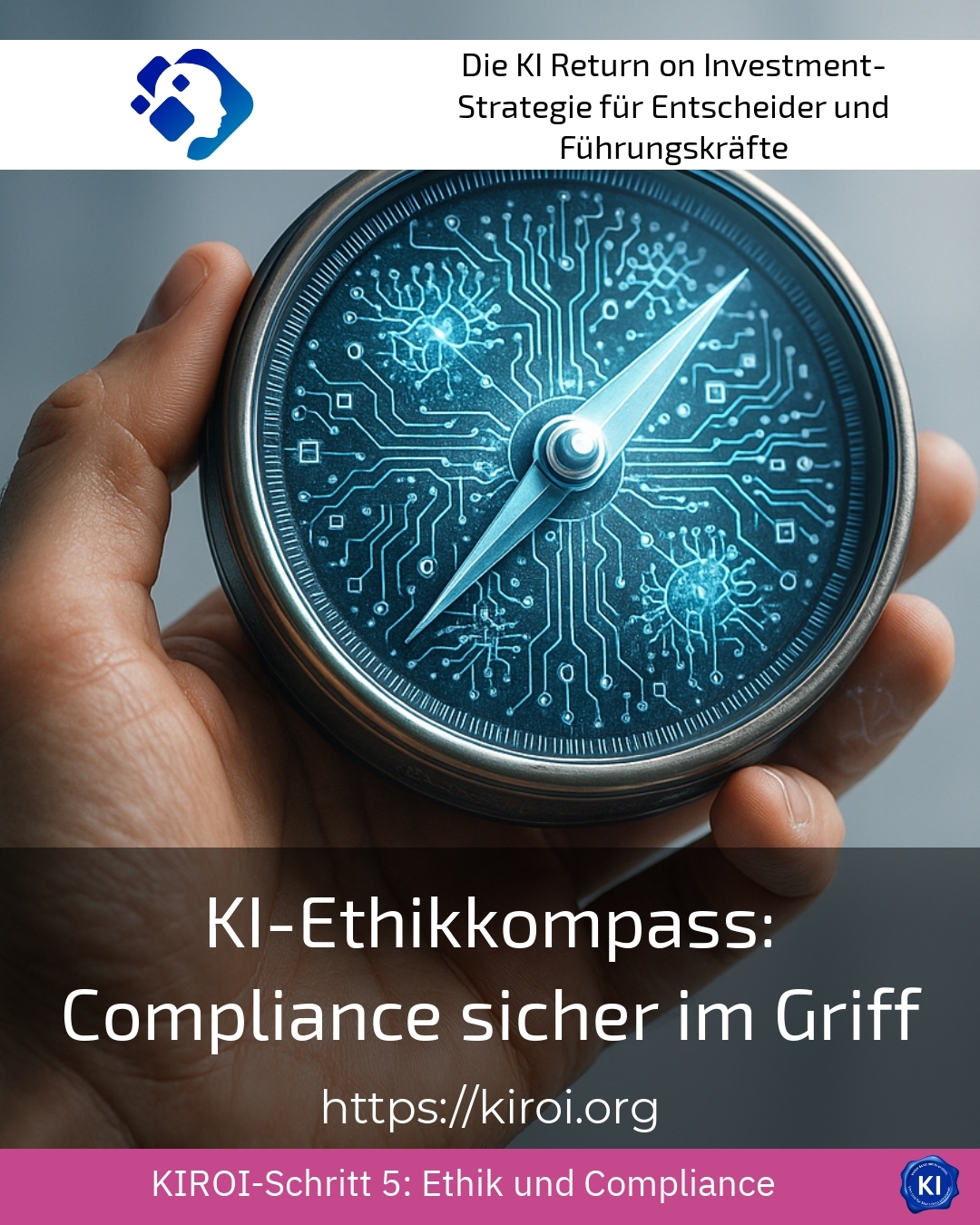
Imagine navigating a complex labyrinth of regulations, laws, and ethical requirements – and suddenly a reliable signpost appears, not only showing you the right direction but also identifying potential pitfalls early on. It is precisely this role that today's AI Ethics Compass: Keeping Compliance Securely Under Control For businesses, having [this] no longer merely means ticking off checklists, but rather the integration of intelligent systems that support ethical decisions and proactively address regulatory requirements. In a world where technological innovations are advancing rapidly and societal expectations for responsible conduct are rising simultaneously, the connection between machine intelligence and moral guidance is becoming the decisive competitive factor.
The fundamental importance of ethical guardrails in the digital age
Companies today face a paradoxical challenge. On the one hand, algorithmic systems enable efficiency gains and process optimisation on a scale that seemed unthinkable just a few years ago. On the other hand, public pressure to use these technologies transparently and responsibly is growing. A financial institution making automated credit decisions must be able to prove that no discriminatory factors are included in the assessment [1]. A healthcare provider using intelligent systems for diagnostic support bears responsibility for understandable and fair recommendations. A human resources service provider, in turn, must ensure that application analyses do not reproduce unconscious biases.
The AI Ethics Compass: Keeping Compliance Securely Under Control Maintaining this therefore requires a systematic approach. This begins with identifying sensitive decision-making processes and extends from the implementation of control mechanisms to continuous monitoring and adjustment. Clients often report that they are initially overwhelmed by the complexity of this task. However, with the right guidance and a structured approach, even demanding regulatory requirements can be met.
Real-world examples: how different industries implement ethical standards
In the insurance sector, companies use algorithmic systems for risk assessment and premium calculation. It is crucial here that these calculations do not take protected characteristics such as gender or ethnicity into account. Transruption coaching can support companies in analysing their existing processes and identifying potential vulnerabilities. In the retail sector, many companies rely on personalised recommendation systems, which are intended to improve the shopping experience – but here too, it is important to maintain the boundary between helpful personalisation and invasive surveillance [2]. In the logistics industry, intelligent systems optimise supply chains and route planning, ensuring fairness towards employees and transparency in decision-making criteria.
Best practice with a AIROI customer
A medium-sized company in the financial sector approached us because it wanted its automated credit decision-making processes to be reviewed for ethical compliance. The existing system had collected data over several years and recognised patterns that led to quick decisions – however, without the underlying criteria being fully transparent. As part of our transruption coaching, we first accompanied the company in a comprehensive inventory of all relevant algorithms and datasets. In doing so, we identified several variables that indirectly correlated with protected characteristics and could therefore have potentially discriminatory effects. Together, we developed an action plan that included both technical adjustments and organisational changes. The company implemented a multi-stage review process that carries out a fairness analysis before every automated decision. In addition, we established an internal committee that regularly checks random samples and can intervene if irregularities are detected. After six months, the company was able to demonstrate that rejection rates were balanced across different customer groups and that no systematic disadvantages were occurring anymore. This improvement not only strengthened its regulatory position but also significantly increased customer trust.
Regulatory Frameworks and their Practical Implementation
European legislation has made significant progress in regulating intelligent systems in recent years. The AI Act defines various risk categories and sets specific requirements for high-risk applications [3]. Companies must document which data they use, how their models were trained, and what measures they are taking to avoid discrimination. These requirements present considerable challenges for many organisations, but also offer an opportunity to fundamentally improve processes.
For example, a telecommunications company uses intelligent systems for fraud detection, and must consider both data protection requirements and fairness criteria. An energy provider that creates consumption forecasts faces the task of making these predictions transparent and understandable. An automotive manufacturer, in turn, must anticipate and document ethical dilemmas in the development of autonomous driving functions, and how these situations are handled algorithmically.
The AI Ethics Compass: Mastering Compliance with Structured Processes
The successful integration of ethical guidelines into technological processes requires a holistic approach. Firstly, it is important to raise awareness of the relevance of the topic at all hierarchical levels. Leaders must understand that ethical compliance is not only a regulatory requirement but can also offer a real competitive advantage. Employees in technical roles need concrete tools and guidelines to integrate ethical aspects into their daily work.
For example, a pharmaceutical company using intelligent systems to analyse clinical trials must ensure that the results are not influenced by biased datasets. A media company making algorithmic recommendations for news articles bears responsibility for the societal impact of this personalisation [4]. Finally, an educational provider must ensure that all learners are given fair opportunities when using adaptive learning systems.
Best practice with a AIROI customer
An international trading group sought support in the ethical review of its personnel selection systems. The company had already been using automated pre-selection of applications for several years but had increasingly developed concerns regarding potential unconscious discrimination patterns. As part of our support, we initially conducted a retrospective analysis of hiring decisions and compared them with algorithmic recommendations. In doing so, we found that certain phrasings in CVs were systematically rated better than others – irrespective of the applicants’ actual qualifications. This finding led to a fundamental revision of the criteria and weightings used. We supported the company in developing an anonymised pre-selection process that relies exclusively on objective qualification characteristics. In addition, we implemented a regular audit system that monitors the distribution of ratings across different demographic groups and automatically triggers an alert in the event of statistically significant deviations. Through these measures, the company not only strengthened its compliance position but also recorded an increase in employee satisfaction and a reduction in turnover in the initial years of employment.
Technical and organisational measures to ensure ethical standards
The practical implementation of ethical requirements necessitates both technical and organisational measures. At a technical level, these include methods for detecting and correcting bias in training data, implementing explainability components, and establishing monitoring systems. Organisationally, clear responsibilities, training programmes, and escalation processes are required.
For instance, a property company utilising intelligent systems for property valuation must ensure that historical discrimination patterns are not reproduced. A travel company creating personalised offers faces the challenge of ensuring transparent pricing [5]. Finally, a catering business using demand forecasts for its order quantities should consider the impact on suppliers and employees.
The role of transruption coaching in ethical transformation projects
External guidance can provide valuable impetus for complex transformation projects. transruptions-coaching positions itself as a partner for companies that aim not only to achieve technical compliance but also to establish a sustainable ethical culture. The focus is not on ready-made solutions, but on the joint development of tailor-made approaches.
For example, a chemical company used our support to develop ethical standards for the use of intelligent systems in process optimisation. A textile company sought assistance in transparently designing its supply chain monitoring. A sports equipment manufacturer, in turn, wanted to ensure that its personalised marketing systems did not employ manipulative techniques.
Future Developments and Recommendations
Regulatory requirements will continue to increase in the coming years. Companies that invest early in ethical structures will position themselves advantageously for this development. AI Ethics Compass: Keeping Compliance Securely Under Control Having it will become a differentiating factor in the competition for customers and talent.
A construction company using intelligent systems for project planning should be considering the ethical implications today. A cultural organisation using algorithmic recommendations for its programming bears responsibility for cultural diversity. Finally, a transport provider must also take social aspects into account when optimising its fleets.
My AIROI Analysis
Integrating ethical guardrails into technological systems presents one of the most significant challenges of our time. From my experience in numerous consulting projects, I can confirm that companies that proactively address this issue not only minimise regulatory risks but also achieve considerable competitive advantages. The key lies in a holistic approach that considers technical, organisational, and cultural aspects equally. I often observe that companies initially shy away from the complexity – but with the right guidance and a structured approach, even demanding requirements can be met. It seems particularly important to me to recognise that ethical compliance is not a one-off project but requires a continuous process of review and adaptation. The regulatory framework is evolving dynamically, and companies must be able to react agilely accordingly. At the same time, current developments also offer significant opportunities: those who invest in ethical structures early on build trust with customers, employees, and business partners. The combination of technological innovation and moral responsibility is becoming the decisive success factor in an increasingly digitised economy.
Further links from the text above:
[1] BaFin – Information on the AI Act in the Financial Sector
[2] Consumer Advice Centre – Artificial Intelligence and Consumer Protection
[3] EU Commission – Regulatory Framework for AI
[4] AlgorithmWatch – Independent monitoring of algorithmic systems
[5] BMWK – Artificial Intelligence Dossier
For more information and if you have any questions, please contact Contact us or read more blog posts on the topic Artificial intelligence here.









 Deutsch
  English (UK)