
The term Information Bottleneck Principle originates from the fields of Artificial Intelligence, Big Data and Smart Data, as well as Digital Transformation. This principle helps to filter out the truly important information from a large volume of data.
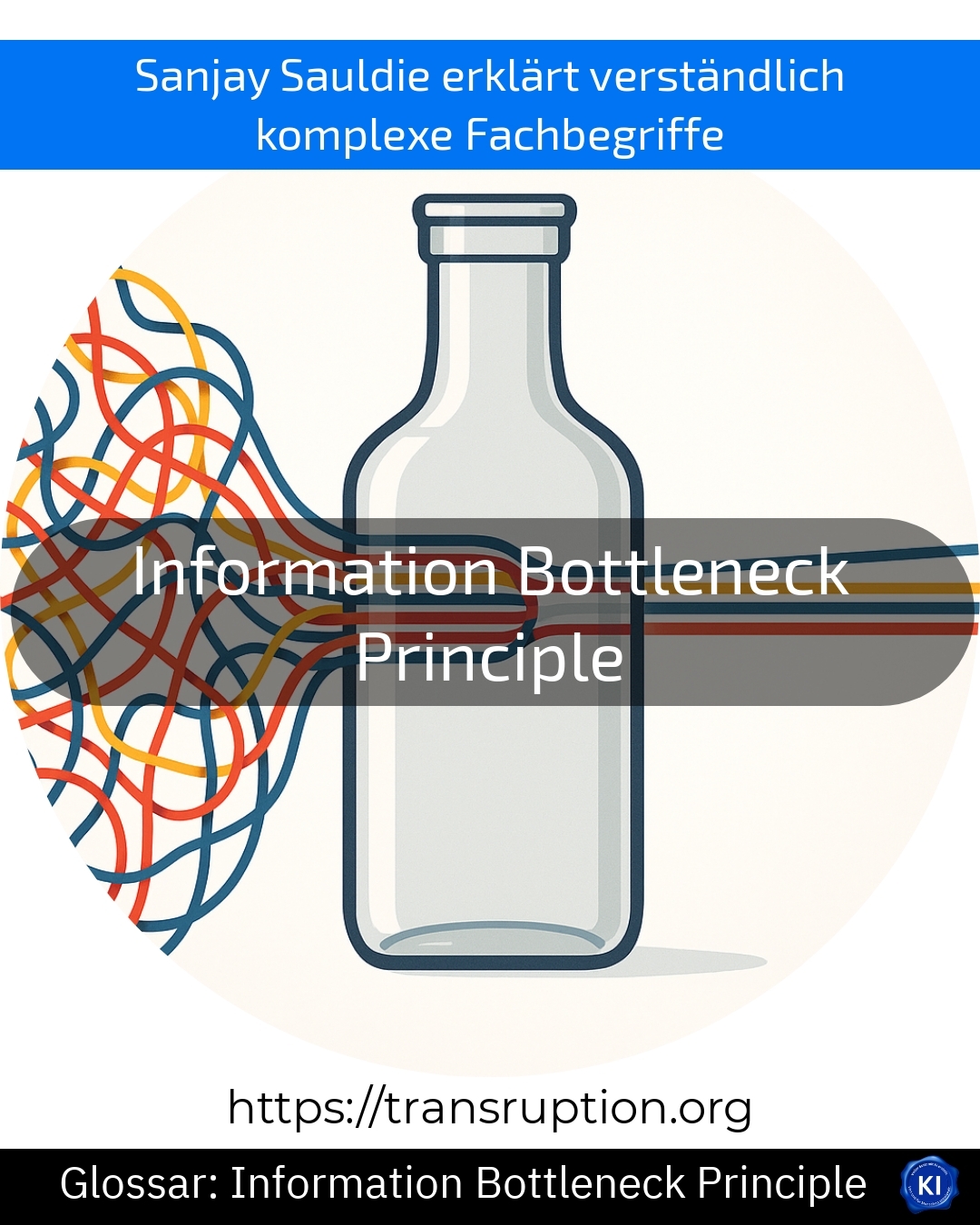
Imagine you have a huge pile of documents, but you only need the pages relevant to your current task. The Information Bottleneck Principle works similarly: in the world of data, it searches for the most important information and ignores everything that isn't needed. The goal is to ensure that only the relevant data is used, allowing systems like artificial intelligence to learn faster and more effectively.
A vivid example: An AI is supposed to distinguish between photos of dogs and cats. Instead of analysing every detail of the images, the system focuses on essential elements such as ear shape or whiskers. This allows it to work much faster and with less computational effort by simply ignoring unimportant parts of the image.
The Information Bottleneck Principle ensures that digital systems extract the most meaningful features from large amounts of data and can be used more efficiently. This saves resources and improves performance.











 Deutsch
  English (UK)