
The significance of tool testing for successful AI projects
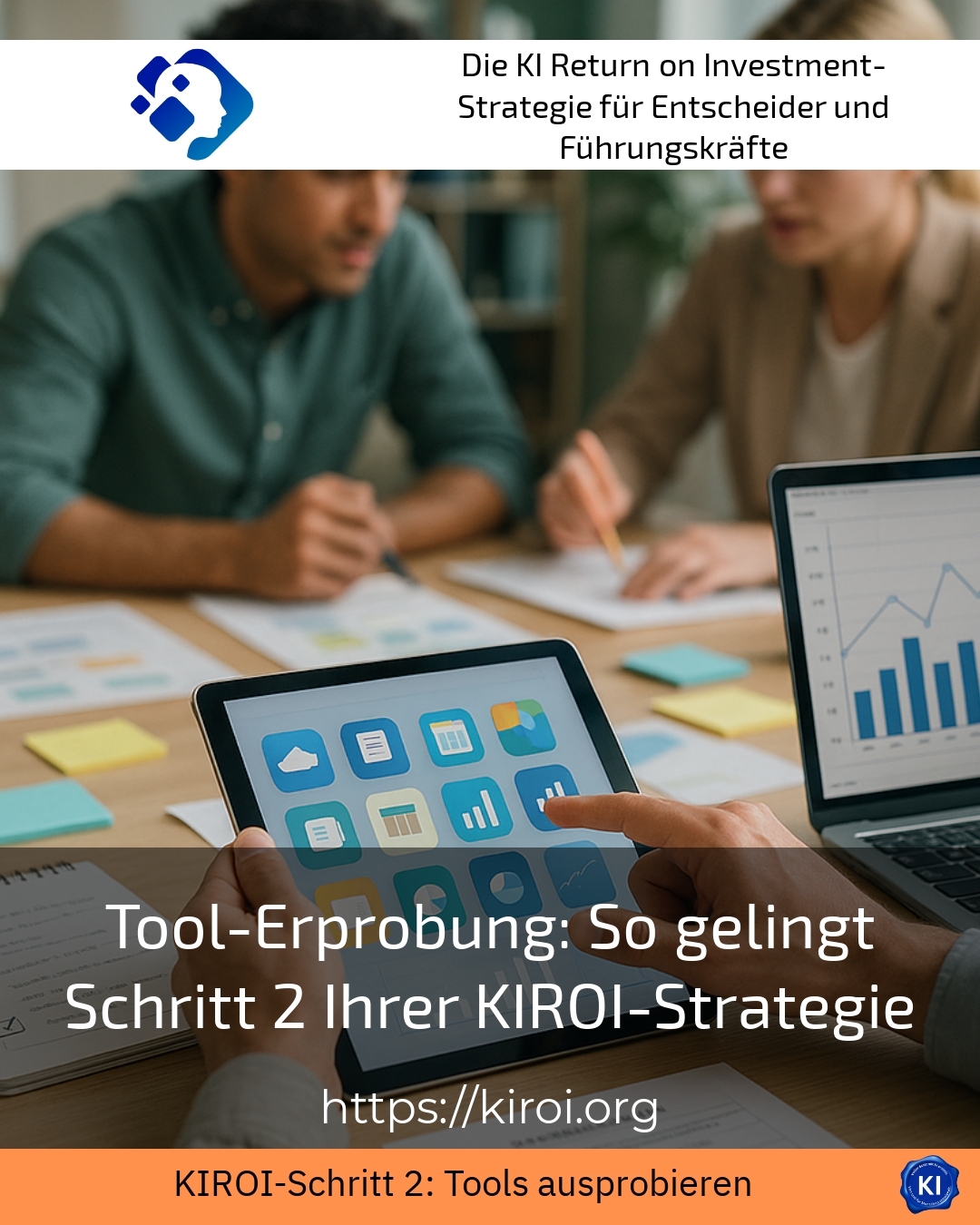
Tool piloting is a central step in the meaningful and sustainable integration of artificial intelligence within a company. Many organisations face the challenge of selecting and testing suitable tools from the vast array of AI applications. In practice, we find that clients often seek support in finding the right balance between technical maturity and concrete benefits for their work processes. A structured and well-supported process for tool piloting yields valuable insights and lays the foundation for successful implementations.
Step by step to effective tool testing
First, it's important to clearly define the requirements. Companies should choose specific everyday use cases as the basis for testing the tools. This allows not only for the evaluation of functionalities, but also for their integration into ongoing processes. With this approach, potential weaknesses can be identified early and users can be involved, which promotes the acceptance of the solutions. Many report that active participation and feedback during tool trials significantly increase the team's proficiency.
The criteria for selecting tools go beyond mere technical features. Flexibility in customisation, data security, and scalability play a significant role. User-friendliness and reliable support are no less important. Some companies can specifically improve their marketing and sales processes through tools for keyword research and competitor monitoring. Others rely on chatbots or analysis tools that process customer enquiries faster and provide data-based insights.
Practical examples from various industries
AIROI BEST PRACTICE at company XYZ (name changed due to NDA contract) After intensive tool testing, a healthcare service provider implemented a combination of a chatbot and an analysis tool to automate initial communication with patients and simultaneously generate valuable data for further process optimisations. The accompanying support helped to introduce the tools gradually and train staff comprehensively.
AIROI BEST PRACTICE at ABC (name changed due to NDA contract) A software provider used various keyword research tools to improve the visibility of its informational pages. The coaching enabled a precise analysis of competitors and a targeted alignment of content along the customer journey. This allowed relevant search terms to be identified and the content to be strategically adapted.
AIROI Best Practices at Company LMN (Name changed due to NDA) A regional craft business discovered local keywords with low competition through targeted tool testing. The combination of search volume and competition data led to effective content planning, which significantly improved regional visibility and saved processed marketing budget.
What role does accompaniment play in tool testing?
In many cases, experience and a strategic outlook prove to be important factors for success. Our support provides impetus and imparts a systematic approach, stretching from selection and the testing phase through to a critical comparison of results. This ensures that the tools are not only technically suitable but can also be pragmatically integrated into daily work routines. Clients often report how important it is to involve staff early on to overcome inhibitions and ease the transition to new tools. Tool testing thus becomes a genuine learning field that connects teams and builds new competencies.
Important Tips for Successful Tool Testing
Firstly, the focus should be on real-world use cases to identify genuine added value. Secondly, it is advisable to encourage the involvement of various departments, as collaboration between IT, marketing, and other areas creates additional innovation potential. Thirdly, clear documentation of findings is helpful to support future decisions based on market and user feedback. And finally, patience is required: testing the tools takes time and openness to iterative improvements. This creates a solid foundation that goes far beyond a mere technical assessment.
My analysis
Tool evaluation is one of the most important stages in the AIROI strategy. It not only makes it possible to identify suitable technologies, but also to bring the team on board and create the organisational prerequisites. Companies that implement this step consciously and methodically benefit from greater security in AI integration and higher acceptance in operation. AIROI Coaching offers a supported space to discover and implement individually tailored solutions.
Further links from the text above:
[1] Tool testing: How to successfully complete step 2 for AI integration
[2] Step 2 of the AIROI Strategy: Practical Examples for „Explore..."
[3] AIROI Step 2: Targeted Testing of Keyword Research Tool – SAULDIE
[6] AIROI - Step 2: Tool Testing – How Leaders Find the Best AI...
For more information and if you have any questions, please contact Contact us on or read further blog posts on the topic Artificial Intelligence Blog here.










 Deutsch
  English (UK)