kiroi.org

KIROI - Artificial Intelligence Return on Invest
The AI strategy for decision-makers and managers

Business excellence for decision-makers & managers by and with Sanjay Sauldie

KIROI - Artificial Intelligence Return on Invest: The AI strategy for decision-makers and managers

KIROI - Artificial Intelligence Return on Invest: The AI strategy for decision-makers and managers

Start » Unleashing Ideas Management: KIROI Step 7 for Your Business
13 November 2024

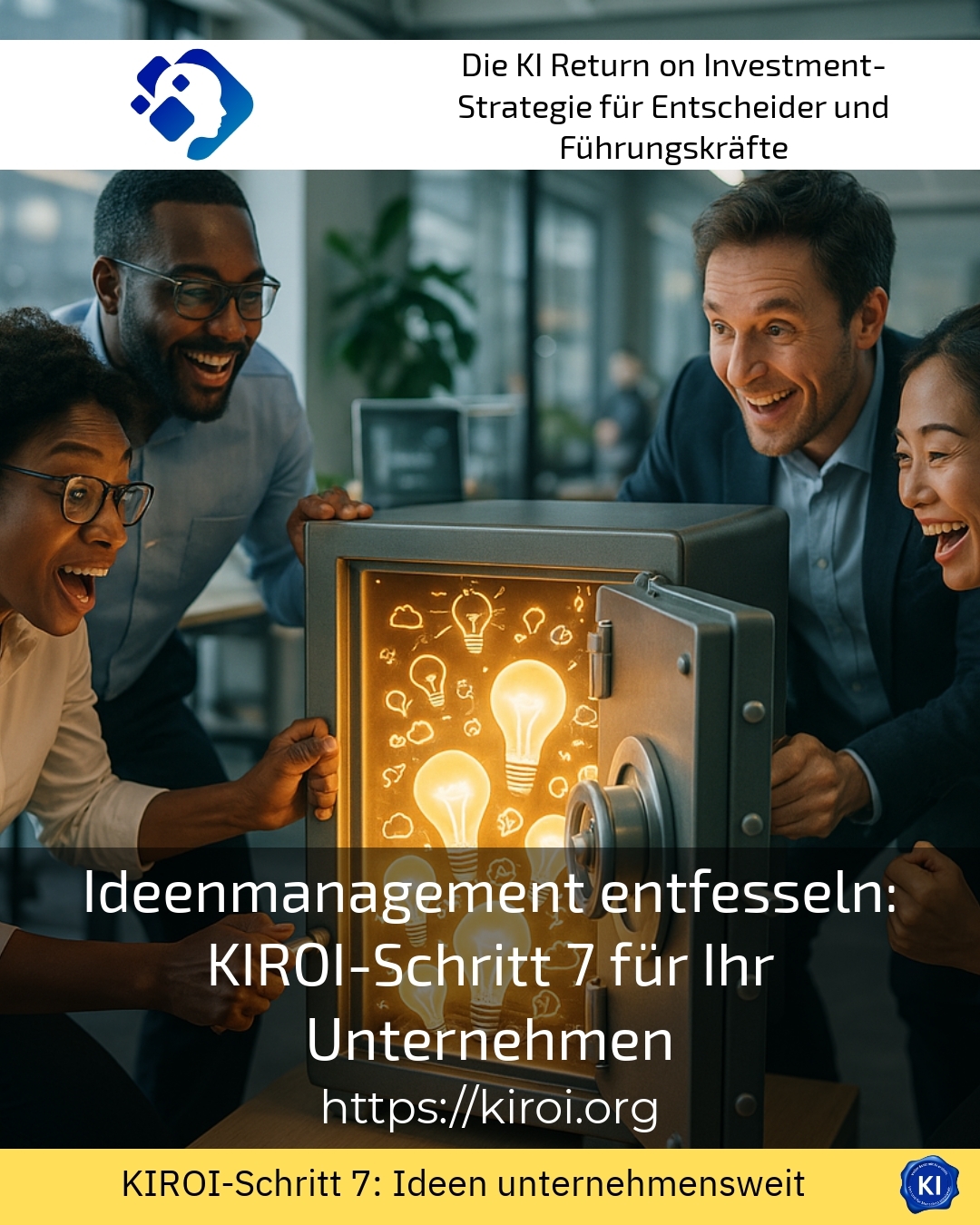
Unleashing Ideas Management: KIROI Step 7 for Your Business

4.8
(1678)

In today's competitive environment, a well-thought-out idea management system is essential for targeted promotion of innovation and securing sustainable competitive advantages. The KIROI Step 7 provides a practical framework precisely for this purpose, viewing idea management not as an isolated task, but as a continuous, company-wide, overarching process. This approach thus supports companies in systematically unlocking creative potential and successfully implementing ideas.

Idea management as a driver for sustainable innovation

Ideas management means far more than just collecting suggestions. It is a structured process that encompasses the recording, evaluation, implementation, and support of ideas. The KIROI step 7, in particular, clearly demonstrates the importance of holistic integration within the company. Effective ideas management links interdepartmental collaboration with digital tools and targeted support in order to identify and remove obstacles early on.

In the automotive industry, for example, many companies use digital platforms where employees can upload their own suggestions. These are reviewed and prioritised by an interdisciplinary team. This creates agile innovation cycles that improve products faster and better meet market requirements.

The interplay of ideas management and coaching is also crucial in mechanical engineering. Moderated workshops are regularly held there, in which employees from development, production, and sales collaboratively work out new approaches to solutions. Structured documentation and tracking help ensure that ideas are not lost in daily business but are consistently implemented.

In the service sector, many organisations rely on the KIROI step 7 to make innovation processes transparent. This allows ideas to grow through regular exchange between teams and be used across departments. This fosters a culture of openness and mutual appreciation – essential prerequisites for vibrant idea management.

Practical tips for implementing idea management

A successful start to idea management begins with clear objectives. Companies should therefore use the SMART method to define measurable and achievable targets. This keeps the process focused and the results measurable.

Furthermore, the formation of cross-departmental teams that bring diverse perspectives is recommended. This fosters creative synergies and ensures that ideas are considered holistically.

The use of digital platforms significantly simplifies the capture and tracking of ideas. Tools like Jira Product Discovery or specialised idea management systems combine transparency with ease of use.

In addition, regular feedback and exchange formats, such as moderated workshops, are crucial. They ensure a lively exchange and help to break down blockades. External coaches can support this process to provide new impetus and keep the innovation engine running.

In the healthcare sector, for example, a hospital was able to double the number of improvement suggestions submitted by introducing moderated feedback sessions. This not only improved operational processes but also increased employee engagement.

A medium-sized manufacturing company also reported how they restructured the idea management process through targeted coaching and were thus able to significantly reduce costly production errors. This sustainably strengthened trust and motivation within the team.

BEST PRACTICE with a client (name withheld due to NDA): At a leading technology company, KIROI-compliant idea management has led to employees being systematically involved in innovation projects going forward. Through digital tools and regular feedback loops, participation in the process increased significantly. The company reports a higher implementation rate of creative suggestions and a strengthened innovation culture.

Ideas management as a strategic element in the company

In line with KIROI Step 7, idea management is understood as a central pillar of corporate innovation. This requires creating a culture that not only welcomes creative impulses but actively encourages and supports them. Clear responsibilities ensure the structured management of ideas from submission to realisation.

Especially in the IT sector, companies are demonstrating how a vibrant innovation process emerges through transparent documentation and exchange formats. Here, ideas quickly connect across departments and can rapidly be incorporated into new products or services.

In retail, however, ideas management is used to rapidly improve customer experiences. Employees are encouraged to derive suggestions for improvement directly from customer feedback and incorporate them into the process. This practice ensures a customer-centric development of offerings.

Numerous examples can also be found in the education sector, showing how ideas management serves as a driver for innovative teaching methods and organisational development. Schools and universities are implementing digital platforms to pool ideas from teaching staff and students and develop them further collaboratively.

My analysis

The modern concept of idea management, as implemented in KIROI Step 7, supports companies in unleashing their innovative power across the entire organisation. The focus on transparent guidance and sustainable involvement of all stakeholders has a positive impact on corporate culture and implementation success. Through the use of digital tools, regular feedback cycles, and accompanying coaching, idea management is transformed from a static suggestion scheme into a dynamic innovation engine. The examples from various industries impressively show how idea management specifically supports companies in recognising opportunities, utilising potential, and remaining competitive in the long term.

Further links from the text above:

REFA Lexicon: Ideas Management
Ideas management
Idea Management: Definition, Procedures and Tips
Rethinking Idea Management – KIROI Step 7
Ideas Management – Tools and Best Practices
What is idea management? Definition & Process

For more information and if you have any questions, please contact Contact us or read more blog posts on the topic Artificial intelligence here.

How useful was this post?

Click on a star to rate it!

Average rating 4.8 / 5. Vote count: 1678

No votes so far! Be the first to rate this post.

Spread the love

transruption.org

The digital toolbox for
the digital winners of today and tomorrow

Business excellence for decision-makers & managers by and with Sanjay Sauldie

transruption
transruption

transruption: The digital toolbox for
the digital winners of today and tomorrow

Start » Unleashing Ideas Management: KIROI Step 7 for Your Business
13 November 2024

Unleashing Ideas Management: KIROI Step 7 for Your Business

4.8
(1678)

In today's competitive environment, a well-thought-out idea management system is essential for targeted promotion of innovation and securing sustainable competitive advantages. The KIROI Step 7 provides a practical framework precisely for this purpose, viewing idea management not as an isolated task, but as a continuous, company-wide, overarching process. This approach thus supports companies in systematically unlocking creative potential and successfully implementing ideas.

Idea management as a driver for sustainable innovation

Ideas management means far more than just collecting suggestions. It is a structured process that encompasses the recording, evaluation, implementation, and support of ideas. The KIROI step 7, in particular, clearly demonstrates the importance of holistic integration within the company. Effective ideas management links interdepartmental collaboration with digital tools and targeted support in order to identify and remove obstacles early on.

In the automotive industry, for example, many companies use digital platforms where employees can upload their own suggestions. These are reviewed and prioritised by an interdisciplinary team. This creates agile innovation cycles that improve products faster and better meet market requirements.

The interplay of ideas management and coaching is also crucial in mechanical engineering. Moderated workshops are regularly held there, in which employees from development, production, and sales collaboratively work out new approaches to solutions. Structured documentation and tracking help ensure that ideas are not lost in daily business but are consistently implemented.

In the service sector, many organisations rely on the KIROI step 7 to make innovation processes transparent. This allows ideas to grow through regular exchange between teams and be used across departments. This fosters a culture of openness and mutual appreciation – essential prerequisites for vibrant idea management.

Practical tips for implementing idea management

A successful start to idea management begins with clear objectives. Companies should therefore use the SMART method to define measurable and achievable targets. This keeps the process focused and the results measurable.

Furthermore, the formation of cross-departmental teams that bring diverse perspectives is recommended. This fosters creative synergies and ensures that ideas are considered holistically.

The use of digital platforms significantly simplifies the capture and tracking of ideas. Tools like Jira Product Discovery or specialised idea management systems combine transparency with ease of use.

In addition, regular feedback and exchange formats, such as moderated workshops, are crucial. They ensure a lively exchange and help to break down blockades. External coaches can support this process to provide new impetus and keep the innovation engine running.

In the healthcare sector, for example, a hospital was able to double the number of improvement suggestions submitted by introducing moderated feedback sessions. This not only improved operational processes but also increased employee engagement.

A medium-sized manufacturing company also reported how they restructured the idea management process through targeted coaching and were thus able to significantly reduce costly production errors. This sustainably strengthened trust and motivation within the team.

BEST PRACTICE with a client (name withheld due to NDA): At a leading technology company, KIROI-compliant idea management has led to employees being systematically involved in innovation projects going forward. Through digital tools and regular feedback loops, participation in the process increased significantly. The company reports a higher implementation rate of creative suggestions and a strengthened innovation culture.

Ideas management as a strategic element in the company

In line with KIROI Step 7, idea management is understood as a central pillar of corporate innovation. This requires creating a culture that not only welcomes creative impulses but actively encourages and supports them. Clear responsibilities ensure the structured management of ideas from submission to realisation.

Especially in the IT sector, companies are demonstrating how a vibrant innovation process emerges through transparent documentation and exchange formats. Here, ideas quickly connect across departments and can rapidly be incorporated into new products or services.

In retail, however, ideas management is used to rapidly improve customer experiences. Employees are encouraged to derive suggestions for improvement directly from customer feedback and incorporate them into the process. This practice ensures a customer-centric development of offerings.

Numerous examples can also be found in the education sector, showing how ideas management serves as a driver for innovative teaching methods and organisational development. Schools and universities are implementing digital platforms to pool ideas from teaching staff and students and develop them further collaboratively.

My analysis

The modern concept of idea management, as implemented in KIROI Step 7, supports companies in unleashing their innovative power across the entire organisation. The focus on transparent guidance and sustainable involvement of all stakeholders has a positive impact on corporate culture and implementation success. Through the use of digital tools, regular feedback cycles, and accompanying coaching, idea management is transformed from a static suggestion scheme into a dynamic innovation engine. The examples from various industries impressively show how idea management specifically supports companies in recognising opportunities, utilising potential, and remaining competitive in the long term.

Further links from the text above:

REFA Lexicon: Ideas Management
Ideas management
Idea Management: Definition, Procedures and Tips
Rethinking Idea Management – KIROI Step 7
Ideas Management – Tools and Best Practices
What is idea management? Definition & Process

For more information and if you have any questions, please contact Contact us or read more blog posts on the topic Artificial intelligence here.

How useful was this post?

Click on a star to rate it!

Average rating 4.8 / 5. Vote count: 1678

No votes so far! Be the first to rate this post.

Spread the love

Other content worth reading:

Unleashing Ideas Management: KIROI Step 7 for Your Business

written by:

Keywords:

#3Printing #Additive manufacturing #Cost savings #Sustainability #Innovation #Big Data #compliance #Datenintelligenz #DigitalTools #Ethikrichtlinien #Ideenmanagement #InnovationDurchAchtsamkeit #yellow #artificial intelligence #Sustainability #SmartData #Unternehmenskultur #Verantwortungsketten

Follow me on my channels:

Questions on the topic? Contact us now without obligation

Contact us

[wpforms id="331781" title="false"]

More articles worth reading

    Leave a comment