
Have you ever wondered why some organizations fail when introducing intelligent systems, while others flourish and far outpace their competitors?
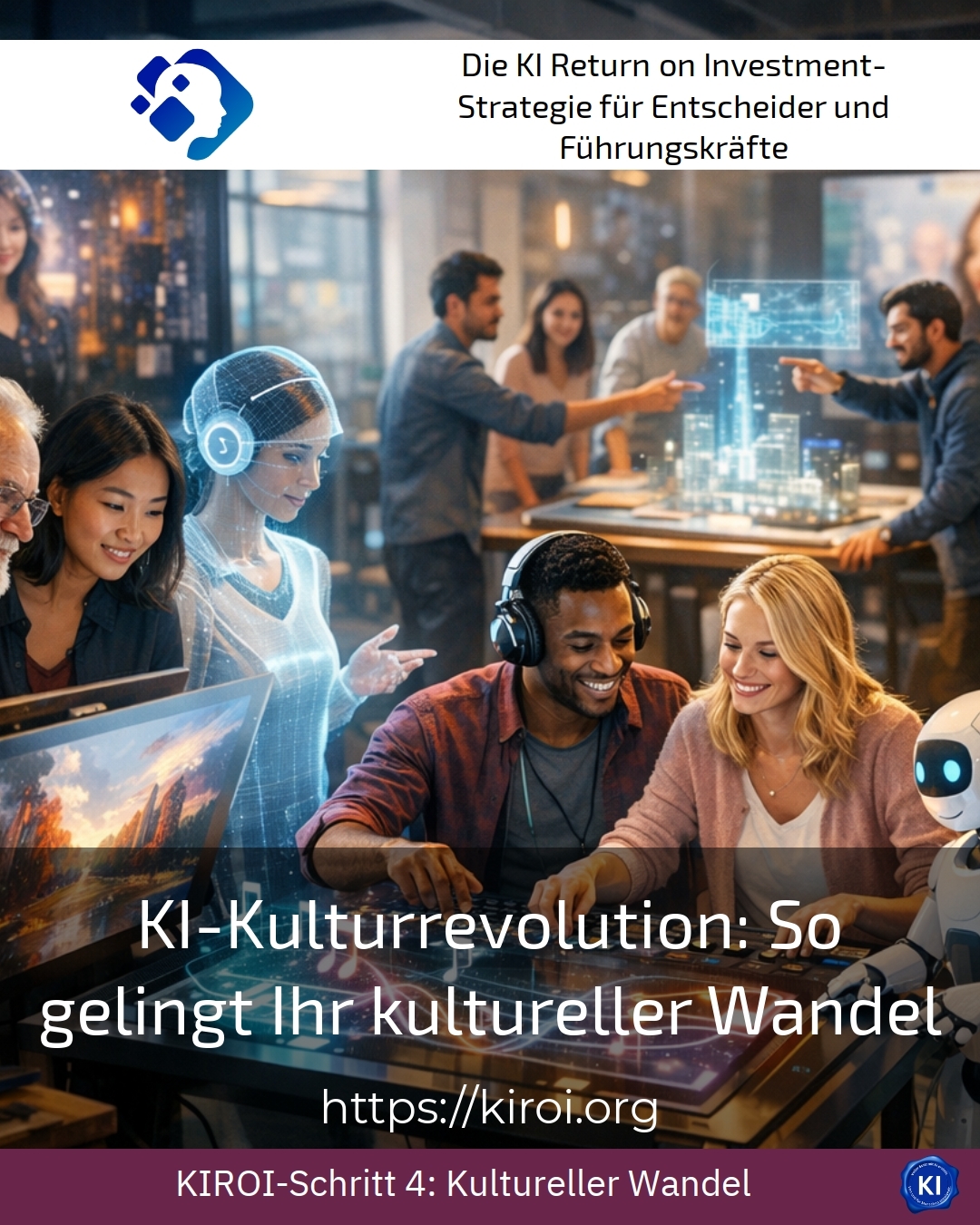
The answer rarely lies in the technology itself, but rather in the way people deal with change and how leaders accompany the change. AI Culture Revolution It presents companies with completely new challenges because it not only changes processes but also fundamentally transforms mindsets, work routines, and interpersonal dynamics. In this comprehensive article, you will learn what concrete steps are necessary to lead your organization successfully through this profound transformation, and why the human component is more crucial than any sophisticated technology.
Why the AI cultural revolution requires more than just technology
Many leaders underestimate the emotional and psychological impact that intelligent systems have on their workforce. Employees often report uncertainty and anxiety. They fear for their professional future. These concerns are understandable and deserve attention. A successful transformation therefore begins with honest communication. Leaders must create spaces for open dialogue [1].
This is particularly evident in the manufacturing industry. Production workers see automated quality control as a threat. They wonder if their experience still counts. At the same time, new roles are emerging in process optimization. The challenge lies in bringing both sides together. For example, a mechanical engineering company introduced weekly discussion rounds where concerns could be openly addressed, and found that acceptance of new systems increased significantly as a result.
In retail, sales advisors experience similar tensions. Personalized recommendation systems fundamentally change their work routine. Some perceive this as a limitation of their competence. Others see the opportunity to advise customers even better. The difference often lies in the guidance provided by management. A large retail company relied on mentoring programs that brought together experienced employees with technology-savvy colleagues, allowing both parties to learn from each other and the acceptance grew noticeably.
Best practice with a AIROI customer
A medium-sized company in the logistics industry approached our transruptive coaching because the implementation of an intelligent route planning system faced massive resistance. The experienced dispatchers felt devalued by the technology and actively blocked its use. In intensive workshops, we worked together to identify that the real fear was not of the technology itself, but of the feeling that decades of expertise could suddenly become useless. We developed a concept in which the dispatchers were involved as experts in system optimization and were able to actively contribute their experience. This repositioning changed the entire dynamics within the team and led to the same employees who had previously resisted the change becoming the most dedicated ambassadors of the new system. The implementation time was thereby significantly shortened, and the route efficiency exceeded the original expectations significantly.
Leaders as pioneers of the AI cultural revolution
The role of the leadership level is changing fundamentally. Managers become companions and facilitators. They must provide security in uncertain times. At the same time, they themselves need support and guidance. Often, leaders report experiencing overwork. They are tasked with driving change while simultaneously ensuring day-to-day operations [2].
In the financial sector, team leaders face particular challenges. Automated analysis systems are taking on tasks that were once carried out by specialists. The remaining activities require entirely different competencies. Management must reorient and develop their teams. A bank therefore implemented a comprehensive leadership development program specifically tailored to supporting transformation processes, achieving remarkable results in employee satisfaction.
In healthcare, the importance of sensitive leadership is particularly evident. Nurses often approach diagnostic assistance systems with skepticism. They fear that human care will be pushed into the background. Station managers play a key role here as intermediaries. One hospital developed a concept in which experienced nurses were allowed to actively participate in the new systems, which led to significantly higher acceptance and demonstrably improved the quality of patient care.
We are also seeing similar developments in the insurance industry. Claims handlers initially see automated claims processing as a threat. Executives need to identify the new opportunities that arise. Complex cases still require human expertise. The trick is to communicate and live within this balance. One insurance group relied on transparent career paths that showed how roles can evolve, giving employees a clear perspective.
Trust as the foundation of the AI cultural revolution
Without trust, any transformation fails. Employees must be able to trust that their leaders will treat them honestly. They need certainty regarding their professional future. At the same time, they need to learn to trust new systems. This process takes time and patient guidance [3].
In the pharmaceutical industry, trust plays a central role. Researchers work with sensitive data and complex analytical methods. New systems for drug development require a rethinking of established processes. Therefore, a pharmaceutical company introduced transparency workshops where it was explained how the new systems work and what decisions they make, which significantly increased understanding and acceptance among the researchers.
Best practice with a AIROI customer
An international automotive supplier came to us with the challenge that their engineers were boycotting the introduction of an intelligent design system. The highly skilled professionals saw their creative work threatened by algorithmic suggestions. As part of our transruptive coaching process, we first analyzed the underlying concerns and found that it was less about the technology itself than the fear of standardization and the loss of individuality. Together, we developed a new approach in which the system was positioned as a source of inspiration rather than a requirement. The engineers were given the freedom to accept, reject, or develop suggestions, and their decisions were documented to continuously improve the system. This integration as an expert fundamentally changed the perception and led to the emergence of innovative solutions that neither humans nor machines could have developed on their own.
Practical steps for sustainable cultural change
Successful transformation rarely follows a linear path. It requires flexibility and adaptability. Organizations must be prepared to adapt plans. Setbacks are part of the process and offer opportunities for learning. The key is the willingness to continuously reflect [4].
In the media sector, newsrooms are undergoing massive changes. Automated text generation is fundamentally changing journalistic workflows. Editors must develop new skills and redefine their role. A publishing house therefore carried out a pilot project in which a small team initially gathered experience and then gradually passed it on to other departments, resulting in the organic dissemination of knowledge and acceptance.
In the energy sector, technicians face similar challenges. Predictive maintenance systems fundamentally change established routines. Experienced professionals must learn to trust algorithms. One energy provider relied on tandem work, where technicians and data analysts work together and learn from each other, resulting in increased mutual understanding and respect.
The food industry provides further interesting examples. Quality inspectors increasingly work with image recognition systems. Their expertise remains valuable for complex assessments. The challenge lies in the sensible division of tasks. A food manufacturer developed a competence model that clearly defined which tasks people take on and which systems, leading to greater clarity and less uncertainty among employees.
Communication as a Key Competence in Transition
Effective communication determines success or failure. It must be honest, regular, and understandable. Employees deserve transparency about goals and their impact. At the same time, they need space to ask questions and raise concerns. Leaders must listen and take them seriously [5].
In the banking sector, regular communication has proven particularly effective. Weekly updates provide information on progress and challenges. Employees can provide feedback and suggest improvements. One regional bank introduced digital call centers where management was available to answer questions, which significantly strengthened trust in the transformation process and significantly increased employee engagement.
Best practice with a AIROI customer
A traditional family business in the textile industry sought support because the workforce resisted the introduction of an intelligent production planning system. The employees, many of whom had been with the company for decades, perceived the change as a disregard for their experience and commitment. In the transruptive coaching process, we identified a fundamental communication gap, because the management had never sufficiently explained the strategic reasons for the introduction. Together we developed a communication strategy that honored the company’s history while also demonstrating why the change was necessary to continue that history. Particularly effective was the involvement of long-time employees as storytellers, who recounted previous successful changes in the company and thereby showed that change is part of the company’s tradition. This narrative context fundamentally changed perceptions and led to widespread support for the transformation.
My AIROI Analysis
Guiding numerous organizations through their cultural transformation has shown me that technological success is inextricably linked to human development. Companies that focus exclusively on technical implementation and neglect the emotional dimension often encounter resistance that could have been avoided. AI Culture Revolution demands a new type of leadership from leaders that combines empathy with determination and involves employees as active agents of change.
What is particularly striking is that successful transformations are almost always characterized by a culture of appreciation. Organizations that involve their employees as experts and actively utilize their experience achieve better results than those that dictate change from the top. AI Culture Revolution offers the opportunity to make work more human when we approach it correctly. Routine tasks can be automated, while people focus on what makes them unique.
My analysis also shows that patience is an underestimated resource. Cultural change takes time, and organizations that set unrealistic timelines create unnecessary pressure that amplifies resistance. A supportive attitude that understands setbacks as learning opportunities and honors progress creates the psychological foundation for sustainable change. The human side of change AI Culture Revolution deserves at least as much attention as the technical implementation.
Further links from the text above:
[1] McKinsey Insights on Artificial Intelligence and Transformation
[2] Harvard Business Review on leadership in digital transformation
[3] Gartner Research on AI implementation
[4] BCG Perspectives on cultural change in organizations
[5] MIT Sloan Management Review on AI and Change Management
For more information and if you have any questions, please contact Contact us or read more blog posts on the topic Artificial intelligence here.







 Deutsch
 English (UK)