
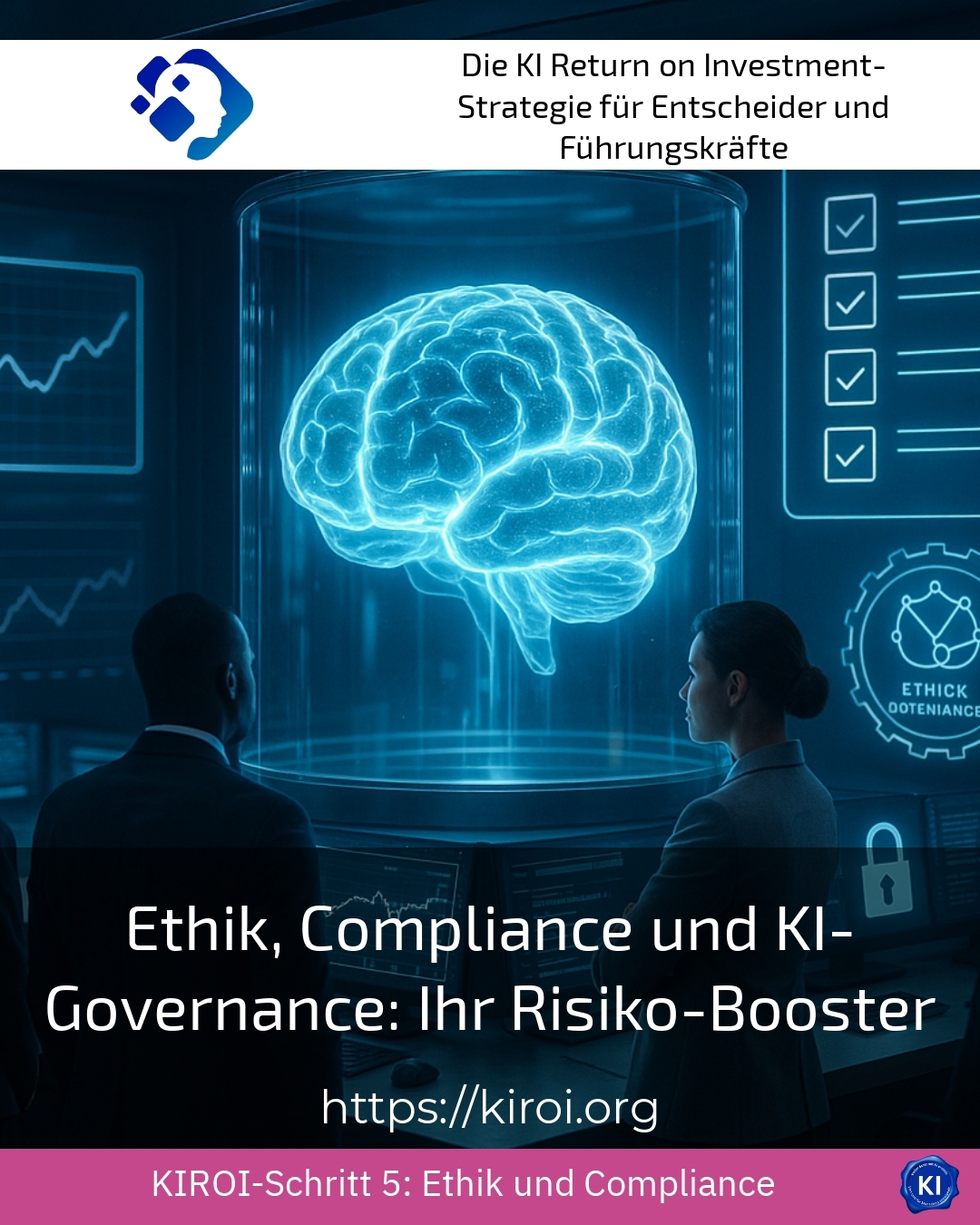
Imagine your company is suddenly caught in the crossfire of public criticism. An algorithm has made discriminatory decisions and no one can explain how. This is exactly where Ethics, Compliance and AI Governance: Your Risk Booster to the deciding factor that determines reputation and economic success. In a world where intelligent systems increasingly make autonomous decisions, technical competence alone is no longer sufficient to safely navigate organisations through turbulent waters. The combination of moral principles, legal conformity and structured governance of automated processes forms the foundation for sustainable growth.
Why responsible technology leadership is becoming indispensable
Digital transformation is fundamentally changing business models. Automated decision-making processes now permeate almost every area of a company. From personnel selection and credit allocation to medical diagnostics, algorithmic systems influence the lives of millions of people every day. This development holds enormous potential. At the same time, however, entirely new categories of risk are emerging that overwhelm traditional management approaches.
For example, a leading telecommunications provider implemented a customer churn prediction system. The algorithm reliably identified customers intending to cancel their contracts. However, it systematically favoured certain demographic groups in retention offers. A large logistics company used intelligent route optimisation for its delivery fleet. The system maximised efficiency but neglected driver health and safety regulations. An international hotel chain relied on dynamic pricing through machine learning. The software significantly increased revenue. However, opaque price fluctuations led to considerable customer dissatisfaction and complaints to consumer protection organisations.
These examples illustrate that technical excellence alone is not enough. Organisations need comprehensive frameworks that combine technological innovation with social responsibility. The topic Ethics, Compliance and AI Governance: Your Risk Booster gains strategic importance at the highest management level.
The Three Pillars of Sustainable Technology Responsibility
Successful companies recognise that value creation and value orientation are not opposites. Instead, both dimensions reinforce each other. Moral principles form the normative foundation for entrepreneurial action. They define which goals may legitimately be pursued and which boundaries should not be crossed. Legal compliance translates societal expectations into binding guidelines for action. It creates legal certainty and protects against sanctions. Finally, the structured control of automated systems ensures that both dimensions are taken into account in operational practice.
A medium-sized mechanical engineering company integrated these three elements exemplarily. It first developed a code of conduct for the use of learning systems. Subsequently, it checked existing processes for regulatory requirements. Finally, it established a committee for the continuous monitoring of algorithmic decisions. An insurance company proceeded in a similarly systematic way. It defined fairness criteria for automated risk assessments. Then, it adapted its procedures to the General Data Protection Regulation. In parallel, it implemented technical mechanisms for the explainability of premium decisions. An energy supplier used the approach for its smart grid infrastructure. It established ethical guidelines for load balancing decisions. It ensured compliance with supply security regulations. It created transparent documentation processes for algorithmic control decisions.
Ethics, Compliance and AI Governance: Your Practical Implementation Risk Booster
The theoretical foundations sound convincing. But how is concrete implementation achieved in everyday business life? Managers often report uncertainty in practical application. They wonder where to begin and what priorities to set. This is precisely where professional support comes in and provides valuable impetus for the transformation process.
Best practice with a AIROI customer
An international trading company approached our transruption coaching team with a complex issue. The organisation had made massive investments in automated inventory management systems and was now facing significant challenges in responsibly governing these technologies. Management reported increasing tensions between different departments due to unclear responsibilities for algorithmic decisions. Employees felt bypassed by the new systems and expressed concerns regarding the traceability of automated ordering processes. As part of the support provided by transruption coaching, we collaboratively developed a multi-level governance framework with those responsible, which considered both technical and organisational aspects. We assisted in establishing an interdisciplinary steering committee comprising IT experts, legal professionals, purchasing agents, and works councils. This committee now meets monthly to review critical system decisions and can intervene with corrective action if necessary. The organisation reports significantly improved acceptance of the new technologies and a noticeably strengthened culture of trust between humans and machines. Particularly noteworthy is the successful integration of transparency mechanisms that make every automated ordering decision traceable for affected employees.
Understanding and meeting regulatory requirements
The European legislator has recognised the importance of responsible technology use [1]. New regulations are creating binding frameworks for the deployment of learning systems. Companies must actively engage with these requirements to avoid competitive disadvantages and sanctions. The complexity of the legal landscape presents significant challenges for many organisations.
A financial services provider had to fundamentally revise its credit scoring algorithms. The new transparency obligations required comprehensive explanation mechanisms for rejection decisions. A medical technology manufacturer adapted its diagnostic software to stricter documentation requirements. Every decision recommendation must now be fully traceable and logged. A recruitment agency completely revised its automated pre-selection processes. Anti-discrimination regulations required new audit mechanisms and regular audits of the algorithms used.
These examples show that regulatory compliance is not a one-off project. It requires continuous attention and regular adjustments to evolving legal frameworks.
Risk management through proactive control
Responsible technology leadership not only reduces legal risks. It also creates operational advantages and sustainably strengthens competitive positioning. Organisations that invest early in structured governance mechanisms report improved decision quality and higher employee satisfaction. Furthermore, transparent technology use significantly strengthens the trust of external stakeholders.
An automotive supplier used its governance framework as a differentiator from competitors. The demonstrably responsible management of its production systems convinced sophisticated OEM customers. A pharmaceutical company accelerated the development of new active ingredients through clear responsibility structures. The transparent decision-making processes of its research algorithms significantly eased approval procedures. A retailer improved its customer relationships through comprehensible personalisation algorithms. Consumers appreciated the ability to understand recommendation logic and adjust it if necessary.
Ethics, Compliance and AI Governance: Your Risk Booster as a Competitive Advantage
Forward-thinking companies recognise the strategic potential of responsible technology leadership [2]. They view relevant investments not as a cost factor, but as a value driver. The integration of ethical principles, legal compliance, and structured governance builds trust with all stakeholders. This trust forms the foundation for long-term economic success.
A technology startup successfully positioned itself with institutional investors through exemplary governance structures. The transparent documentation of its algorithms convinced sceptical financiers. A long-established family business strengthened its employer brand through participatory technology adoption. Involving the workforce in governance processes fostered acceptance and a willingness to innovate in equal measure. A consulting firm developed independent advisory services focused on the responsible use of technology. The growing demand for relevant expertise opened up new revenue streams.
Best practice with a AIROI customer
A medium-sized private bank approached us with specific questions regarding the responsible use of automated investment advisory systems. Management recognised that the increasing digitisation of wealth management presented new demands for transparency and fairness. Customers increasingly expressed a desire for comprehensible investment recommendations and fair fee structures, regardless of investment volume. The transruption coaching supported the organisation in developing a comprehensive framework for fair algorithmic advice. Together, we defined principles to ensure that automated recommendations always serve the best interests of the clients. We assisted with the implementation of control mechanisms that identify and make transparent system-related conflicts of interest. The bank established regular monitoring that continuously reviews the quality of algorithmic recommendations and highlights potential areas for improvement. The development of customer-friendly explanation formats, which communicate complex algorithmic logic comprehensibly, proved to be particularly valuable. The organisation reports increased customer satisfaction and a noticeably improved basis of trust between advisors, customers, and technological systems.
Organisational anchoring and cultural change
Technical solutions alone do not guarantee sustainable responsibility [3]. Successful transformation requires profound cultural changes and the active involvement of all organisational levels. Leaders play a central role model function in this, significantly shaping the lived corporate culture through their behaviour.
An industrial group trained its entire management level in responsible technology use. The awareness created a shared understanding of new challenges and courses of action. A service company systematically integrated ethical aspects into its innovation processes. Every new technology project now undergoes a structured impact assessment before implementation. A retail company established an ombudsman's office for algorithmic decisions. Employees and customers can confidentially report concerns and complaints there.
My AIROI Analysis
The systematic examination of numerous transformation projects reveals clear patterns of successful implementation of responsible technology governance. Organisations that invest early in structured frameworks are significantly better positioned for future challenges than reactive competitors. The integration of moral principles, legal compliance, and systematic governance requires a holistic approach that addresses technical, organisational, and cultural dimensions equally.
Organisations that recognise responsible technology leadership as a core strategic competence and invest accordingly in its development prove particularly successful. The establishment of interdisciplinary steering committees, regular review of algorithmic decision quality, and transparent communication towards all stakeholders are central success factors. Furthermore, early involvement of affected employee groups significantly increases the acceptance of new technologies and enables innovative impulses from operational practice.
Regulatory development will further strengthen the importance of responsible technology governance. Organisations should therefore act proactively and not wait for external pressures. Investing in Ethics, Compliance and AI Governance: Your Risk Booster pays off many times over through reduced risks, increased reputation, and improved innovative capacity. Professional support from experienced partners such as the transruption coaching team can significantly accelerate this transformation process and help to avoid typical sources of error.
Further links from the text above:
[1] European Commission: Regulatory Framework for Artificial Intelligence
[2] World Economic Forum: Artificial Intelligence Governance
[3] Bitkom: Artificial Intelligence in the Economy
For more information and if you have any questions, please contact Contact us or read more blog posts on the topic Artificial intelligence here.








 Deutsch
  English (UK)