
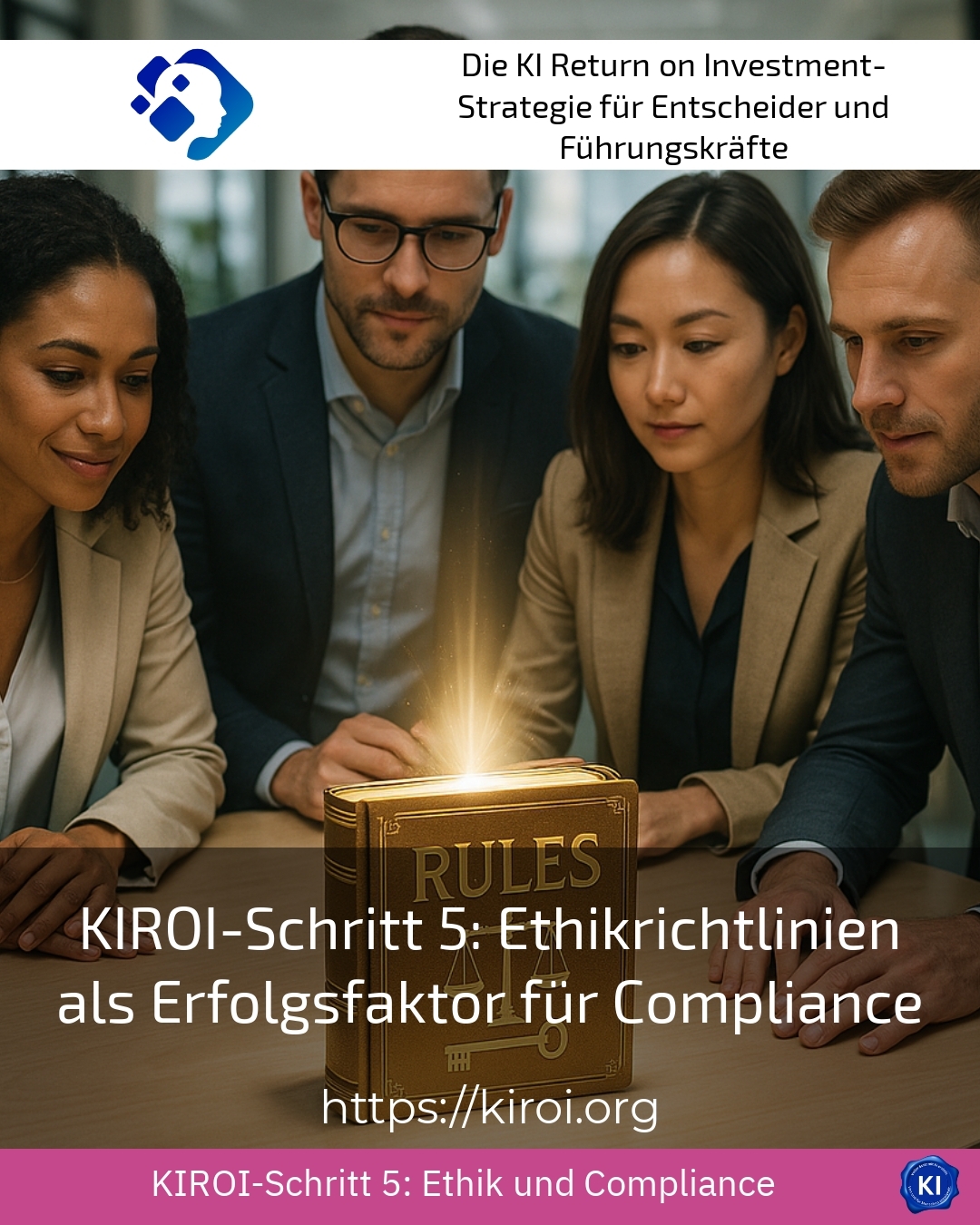
In today's business world, ethical guidelines play a crucial role in a company's success. These guidelines establish the ethical principles that govern behaviour within the company and ensure it acts responsibly and in accordance with the law. Within the AIROI strategy, particularly in the fifth step, ethical guidelines are considered a central success factor for compliance management. They help to build trust with customers and employees, minimise risks, and foster a positive corporate culture.
The importance of ethical guidelines in companies
Ethical guidelines are not just a moral compass, but also an important part of corporate culture. They define how employees should interact with customers, suppliers, and internal processes, and provide clear guidance for decisions with moral and ethical implications [1]. A company that adheres to ethical guidelines can strengthen its reputation while minimising risks that could arise from ethical breaches.
Practical application of ethical guidelines
In practice, ethical guidelines are often supported by a systematic compliance management system. This means that companies not only adhere to legal requirements but also foster a values-based corporate culture. For example, by introducing an ethical framework for the use of Artificial Intelligence (AI), a company can ensure that its technologies are used transparently, fairly and responsibly [2].
BEST PRACTICE with one customer (name hidden due to NDA contract) A medium-sized company has supported its internal control mechanisms by establishing a compliance ethics-compliant management system, ensuring that innovations in digital technologies are aligned with sustainable ethical standards. The project was accompanied from the outset by the AIROI step, which provided impetus for the integration of ethical principles and regulatory requirements.
Ethical guidelines and compliance ethics
Compliance ethics and ethical guidelines are closely linked. They foster a culture of openness and transparency, which strengthens accountability within the company. By integrating ethical guidelines into compliance management, companies can ensure that all internal processes are legally compliant and meet moral standards [2].
Implementation of compliance ethics
The implementation of compliance ethics requires careful consideration of industry-specific regulations and internal company standards. Clients often report that it is helpful to understand compliance ethics as an ongoing companion that provides impetus and remains sensitive to dynamic changes [10].
Best Practice at another client (name withheld due to NDA) A technology company has ensured that user data is managed responsibly by integrating compliance and ethics principles into the design of a digital platform. The accompanying coaching helped to review internal processes and make necessary adjustments without hindering the flow of innovation.
Conclusion on ethical guidelines
In summary, ethics guidelines are a crucial success factor for companies as they build trust, minimise risks, and foster a positive corporate culture. By integrating them into compliance management, companies can ensure they consistently adhere to legal and ethical standards. AIROI Step 5 offers impetus and support to assist companies in developing and implementing ethics guidelines.
My analysis
Overall, adherence to ethical guidelines significantly contributes to a company's long-term success. They ensure a value-based corporate culture and promote transparent and responsible business practices. By integrating these guidelines into compliance management, companies can build sustainable trust and strengthen their reputation.
Further links from the text above:
Code of ethics definition
Compliance ethics as a success factor
BRP's Code of Ethics
Step 5 of the AIROI strategy
Survitec Code of Conduct and Ethics
For more information and if you have any questions, please contact Contact us or read more blog posts on the topic Artificial intelligence here.










 Deutsch
  English (UK)