kiroi.org

KIROI - Artificial Intelligence Return on Invest
The AI strategy for decision-makers and managers

Business excellence for decision-makers & managers by and with Sanjay Sauldie

KIROI - Artificial Intelligence Return on Invest: The AI strategy for decision-makers and managers

KIROI - Artificial Intelligence Return on Invest: The AI strategy for decision-makers and managers

Start » Digital disruption: How managers need to act now
24 October 2025

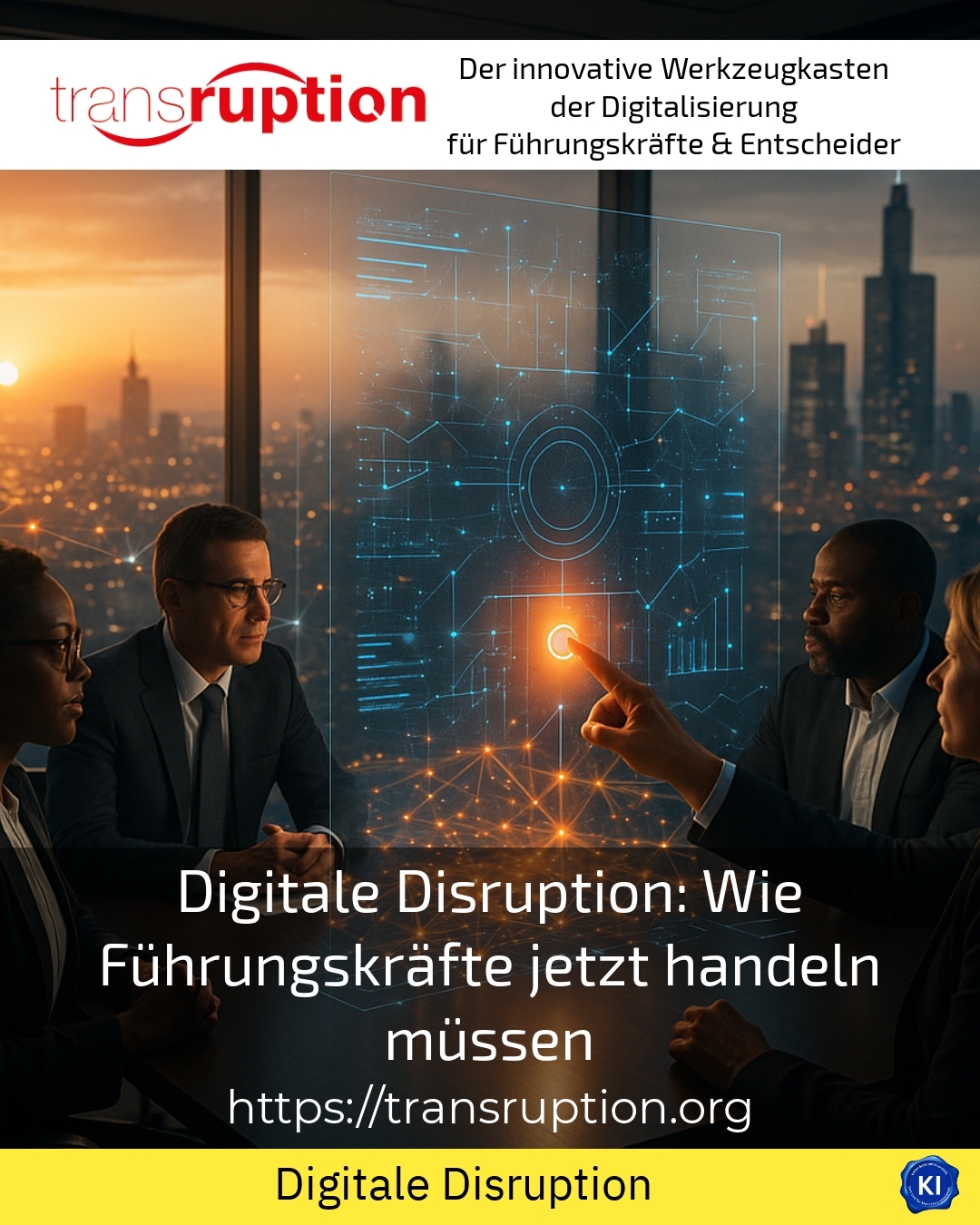
Digital disruption: How managers need to act now

4.2
(627)

Digital disruption presents leaders with complex challenges today, while also opening up significant opportunities. New technologies such as Artificial Intelligence (AI), the Internet of Things (IoT) and data-driven business models are fundamentally changing markets and customer behaviour. Those who act strategically now can future-proof their company and achieve competitive advantages. The following explains how those responsible can understand and successfully navigate digital upheavals.

Recognising and shaping digital disruption as an opportunity

Digital disruption refers not only to the disruption of previous business models, but also the emergence of new value chains through digital innovations[3]. Companies from various sectors are utilising this impetus to make processes more efficient or to develop completely new offerings. For example, a logistics company is implementing AI-based route planning, making supply chains significantly faster and more flexible[1]. In the manufacturing industry, networked sensors, so-called smart factories, make it possible to monitor the performance of machines in real time, which reduces maintenance costs and increases product quality. In the financial sector, big data enables more precise risk assessments and a more personalised customer approach.

This is how digital disruption can empower leaders when they actively integrate it. Clients often report that a clear digital strategy and the targeted combination of interdisciplinary knowledge are key success factors. Cultural frameworks also play a role: an openness to experimental work and controlled risks supports innovation, despite uncertainties and setbacks.

BEST PRACTICE at the customer (name hidden due to NDA contract) A medium-sized mechanical engineering company implemented digital twins to precisely predict maintenance cycles. This significantly reduced unplanned downtime. Simultaneously, new service models emerged, increasing customer loyalty and satisfaction.

How leaders should react to digital disruption

Today, leaders need to be flexible and adopt a proactive stance. Digital disruption cannot be managed solely by adapting existing structures. Instead, it is crucial to identify and actively shape disruptive potential. The evaluation and management of data as a strategic resource is becoming increasingly important. Furthermore, innovation-friendly structures are also helpful, such as the establishment of interdisciplinary teams and innovation labs, which promote new ideas and unlock potential more quickly[1].

Furthermore, digital disruption demands a greater customer focus. Feedback from social networks and digital channels allows expectations to be recognised early and products or services to be adapted more agilely. Leaders guiding the change support their employees by promoting knowledge sharing and digital skills, thus making the entire organisation fit for the future.

BEST PRACTICE at the customer (name hidden due to NDA contract) A service company established an interdisciplinary innovation team. This team developed an app that digitalised internal processes. As a result, efficiency increased by over 20 percent, and numerous new ideas emerged for further platform development.

Practical Tips for Leaders in Dealing with Digital Disruption

In everyday working life, there are several starting points for constructively supporting digital disruption:

  • Regular analysis of digital trends to identify potential impacts in a timely manner.
  • Promoting a culture of error that supports a willingness to take risks and a passion for innovation.
  • Investment in further training, specifically in digital skills and agile methods.
  • Strengthening collaboration across departments and hierarchies.
  • Involving customers in innovation processes through digital feedback channels.

These measures help not only to manage change but also to actively shape it. In this way, leaders can fulfil their role as catalysts and purposefully support digital transformation.

Digital Disruption Across Various Industries: Examples and Impulses

Many industries are experiencing digital disruption in different ways:

  • Handel E-commerce platforms are transforming customer contact and logistics. Digital marketplaces offer consumers diverse choices and real-time price comparisons.
  • Tourism Online booking systems and sharing models with apps increase flexibility and customer proximity. Providers adapt quickly to changing booking patterns.
  • Finance Digital payment systems and robo-advisors are revolutionising traditional banking services. Customers expect personalised services available around the clock.

In all these examples, it becomes clear that digital disruption creates new business models and changes customer behaviour. This also leads to new competitive arenas that require active management and adaptation.

My analysis

Digital disruption is a process that poses significant challenges for many companies. Managers should see change not as a threat but as an opportunity and actively shape it. The integration of new technologies, the promotion of an innovative corporate culture and a clear customer focus are crucial. In this way, it is possible to make your own business models fit for the future and secure competitive advantages. Digital disruption thus becomes a driver for sustainable growth and innovation.

Further links from the text above:

Digital Disruption: Opportunities and Risks for Decision-Makers 2025
Disruption Wave: How Tomorrow's Leaders Will Master the Storm
Innolytics Digital Disruption
Digital Disruption: 5 Success Factors for Businesses
Digital Disruption Definition, IT Glossary – Capterra Germany
Digital Disruption – OMR
What is disruption and how do I deal with it properly?
How four disruptions are changing the German economy
Digital Disruption and Business Process Management – Navvia
Digital disruption: How to make your company future-proof – SAULDIE

For more information and if you have any questions, please contact Contact us or read more blog posts on the topic TRANSRUPTION here.

How useful was this post?

Click on a star to rate it!

Average rating 4.2 / 5. Vote count: 627

No votes so far! Be the first to rate this post.

Spread the love

transruption.org

The digital toolbox for
the digital winners of today and tomorrow

Business excellence for decision-makers & managers by and with Sanjay Sauldie

transruption
transruption

transruption: The digital toolbox for
the digital winners of today and tomorrow

Start » Digital disruption: How managers need to act now
24 October 2025

Digital disruption: How managers need to act now

4.2
(627)

Digital disruption presents leaders with complex challenges today, while also opening up significant opportunities. New technologies such as Artificial Intelligence (AI), the Internet of Things (IoT) and data-driven business models are fundamentally changing markets and customer behaviour. Those who act strategically now can future-proof their company and achieve competitive advantages. The following explains how those responsible can understand and successfully navigate digital upheavals.

Recognising and shaping digital disruption as an opportunity

Digital disruption refers not only to the disruption of previous business models, but also the emergence of new value chains through digital innovations[3]. Companies from various sectors are utilising this impetus to make processes more efficient or to develop completely new offerings. For example, a logistics company is implementing AI-based route planning, making supply chains significantly faster and more flexible[1]. In the manufacturing industry, networked sensors, so-called smart factories, make it possible to monitor the performance of machines in real time, which reduces maintenance costs and increases product quality. In the financial sector, big data enables more precise risk assessments and a more personalised customer approach.

This is how digital disruption can empower leaders when they actively integrate it. Clients often report that a clear digital strategy and the targeted combination of interdisciplinary knowledge are key success factors. Cultural frameworks also play a role: an openness to experimental work and controlled risks supports innovation, despite uncertainties and setbacks.

BEST PRACTICE at the customer (name hidden due to NDA contract) A medium-sized mechanical engineering company implemented digital twins to precisely predict maintenance cycles. This significantly reduced unplanned downtime. Simultaneously, new service models emerged, increasing customer loyalty and satisfaction.

How leaders should react to digital disruption

Today, leaders need to be flexible and adopt a proactive stance. Digital disruption cannot be managed solely by adapting existing structures. Instead, it is crucial to identify and actively shape disruptive potential. The evaluation and management of data as a strategic resource is becoming increasingly important. Furthermore, innovation-friendly structures are also helpful, such as the establishment of interdisciplinary teams and innovation labs, which promote new ideas and unlock potential more quickly[1].

Furthermore, digital disruption demands a greater customer focus. Feedback from social networks and digital channels allows expectations to be recognised early and products or services to be adapted more agilely. Leaders guiding the change support their employees by promoting knowledge sharing and digital skills, thus making the entire organisation fit for the future.

BEST PRACTICE at the customer (name hidden due to NDA contract) A service company established an interdisciplinary innovation team. This team developed an app that digitalised internal processes. As a result, efficiency increased by over 20 percent, and numerous new ideas emerged for further platform development.

Practical Tips for Leaders in Dealing with Digital Disruption

In everyday working life, there are several starting points for constructively supporting digital disruption:

  • Regular analysis of digital trends to identify potential impacts in a timely manner.
  • Promoting a culture of error that supports a willingness to take risks and a passion for innovation.
  • Investment in further training, specifically in digital skills and agile methods.
  • Strengthening collaboration across departments and hierarchies.
  • Involving customers in innovation processes through digital feedback channels.

These measures help not only to manage change but also to actively shape it. In this way, leaders can fulfil their role as catalysts and purposefully support digital transformation.

Digital Disruption Across Various Industries: Examples and Impulses

Many industries are experiencing digital disruption in different ways:

  • Handel E-commerce platforms are transforming customer contact and logistics. Digital marketplaces offer consumers diverse choices and real-time price comparisons.
  • Tourism Online booking systems and sharing models with apps increase flexibility and customer proximity. Providers adapt quickly to changing booking patterns.
  • Finance Digital payment systems and robo-advisors are revolutionising traditional banking services. Customers expect personalised services available around the clock.

In all these examples, it becomes clear that digital disruption creates new business models and changes customer behaviour. This also leads to new competitive arenas that require active management and adaptation.

My analysis

Digital disruption is a process that poses significant challenges for many companies. Managers should see change not as a threat but as an opportunity and actively shape it. The integration of new technologies, the promotion of an innovative corporate culture and a clear customer focus are crucial. In this way, it is possible to make your own business models fit for the future and secure competitive advantages. Digital disruption thus becomes a driver for sustainable growth and innovation.

Further links from the text above:

Digital Disruption: Opportunities and Risks for Decision-Makers 2025
Disruption Wave: How Tomorrow's Leaders Will Master the Storm
Innolytics Digital Disruption
Digital Disruption: 5 Success Factors for Businesses
Digital Disruption Definition, IT Glossary – Capterra Germany
Digital Disruption – OMR
What is disruption and how do I deal with it properly?
How four disruptions are changing the German economy
Digital Disruption and Business Process Management – Navvia
Digital disruption: How to make your company future-proof – SAULDIE

For more information and if you have any questions, please contact Contact us or read more blog posts on the topic TRANSRUPTION here.

How useful was this post?

Click on a star to rate it!

Average rating 4.2 / 5. Vote count: 627

No votes so far! Be the first to rate this post.

Spread the love

Other content worth reading:

Digital disruption: How managers need to act now

written by:

Keywords:

#DigitaleDisruption 1TP5ManagersBalance #Business models #InnovationDurchAchtsamkeit #artificial intelligence

Follow me on my channels:

Questions on the topic? Contact us now without obligation

Contact us

[wpforms id="331781" title="false"]

More articles worth reading

    Leave a comment