kiroi.org

KIROI - Artificial Intelligence Return on Invest
The AI strategy for decision-makers and managers

Business excellence for decision-makers & managers by and with Sanjay Sauldie

KIROI - Artificial Intelligence Return on Invest: The AI strategy for decision-makers and managers

KIROI - Artificial Intelligence Return on Invest: The AI strategy for decision-makers and managers

Start » Data Intelligence: Maximising Big Data & Smart Data for Decision-Makers
24 October 2025

Data Intelligence: Maximising Big Data & Smart Data for Decision-Makers

4.6
(1298)

Many companies today face the challenge of extracting real value from the flood of digital information. Data intelligence – the ability to collect, evaluate, and transform data into smart decisions – has therefore become a decisive success factor. Many of you come to me with specific questions: How do we develop viable data strategies? How do we find the truly relevant data in the information jungle? And how do we manage to involve employees from all departments?

From Big Data to Smart Data: Data Intelligence in Practice

Big Data describes enormous volumes of structured and unstructured data that arise in companies on a daily basis. The challenge rarely lies in collecting the data, but rather in selecting it: not every byte is valuable, and many companies get lost in data management because they store too much irrelevant information. This is where data intelligence comes into play. The aim is to specifically filter out Smart Data from Big Data, i.e. data that is clean, up-to-date, meaningful, and directly usable.

A company in the logistics sector used to collect all sensor and tracking data, and often had no overview. Only through data intelligence and targeted filtering was it possible to analyse only those parameters that are really important for real-time delivery forecasts and supplier evaluations. This made it possible to shorten delivery times and reduce costs.

BEST PRACTICE at the customer (name hidden due to NDA contract): A manufacturing company relied on a combination of maintenance data, machine runtime, and workshop reports. AI-powered analyses identified error patterns linked to ordering data. This streamlined the process and optimised warehouse planning, as spare parts could now be reordered more precisely and earlier.

Data intelligence is also demonstrated by sensibly connecting different sources. For example, a medium-sized retailer uses sales data, customer feedback, and weather data to plan targeted promotional campaigns. This increases the accuracy of marketing efforts because only data that is clearly linked to business success is used.

Data Intelligence as a Key Value Driver

More and more companies are realising that simply collecting data does not bring any added value. What is crucial is the ability to use data for specific questions – in other words, to build true data intelligence[2]. This means handling data in such a way that it enables informed decisions, improves processes, and drives innovation.

A classic example: analysing customer journey progressions across different channels. This helps companies with project management to understand the actual usage of software or services and to identify needs before customers leave[3]. This increases customer satisfaction, as adjustments can be made early on.

Data intelligence also makes it possible to specifically deploy sales and marketing measures. A B2B company used smart data applications to identify which customers were particularly interested in new solutions. The target group approach was then specifically controlled, which led to an increase in efficiency and sales [8].

BEST PRACTICE at the customer (name hidden due to NDA contract): A service provider in the healthcare sector used data intelligence to analyse the utilisation of practices and the workload of staff. This made it possible to reduce waiting times, optimise working hours and noticeably increase patient satisfaction, as processes were adapted flexibly and based on data.

Harnessing data intelligence specifically for your own business

There's no magic bullet, but many companies benefit from structured implementation of data intelligence. Here are some practical tips:

1. Define objectives clearly Consider what questions you want to answer. Only in this way can you decide which data are truly relevant and how they need to be processed.

2. Promoting Data Literacy Invest in the further training of your employees. Data intelligence thrives when everyone in the company can handle data effectively.

3. Using technology wisely: Utilise AI and machine learning to recognise relevant patterns. This allows large volumes of data to be filtered and analysed automatically [6].

4. Use current data: Do not rely on outdated information. Smart Data is current because it was already processed at the time of collection[1].

5. Starting with pilot projects First, test data intelligence in small units. This way, experience can be gained and the approach can be adapted for larger projects.

A company in the energy sector utilised data intelligence to optimise asset consumption. By analyzing sensor and load data, peak loads could be identified and energy usage precisely controlled. This not only saved costs but also made production more sustainable.

BEST PRACTICE at the customer (name hidden due to NDA contract): A medium-sized industrial company integrated data intelligence directly into production planning. Sensor data from machines was linked with order and inventory data. This made it possible to identify bottlenecks early on, minimise downtime, and meet delivery deadlines more reliably.

Transruptions-Coaching: Your Partner for Data Intelligence

Many of my clients start with uncertainties. They know that data is important, but they lack the structure to use it optimally. This is exactly where we come in with transruptions coaching: we guide you step-by-step on the path to data intelligence – from defining goals and selecting the right tools to sustainable implementation.

In coaching, we take a practical approach. Together, we'll analyse your starting position, identify your most important data sources, and develop individual strategies for your business success. We use agile methods so you can see initial results quickly and respond flexibly to changes.

You'll benefit from experienced sparring that helps you actively shape change. Your company will always remain at the centre of proceedings – and your employees will learn how to profitably use data intelligence in their day-to-day work.

My analysis

Data intelligence is not a short-term trend, but a central building block for the future. Companies that succeed in extracting smart, usable information from Big Data create clear competitive advantages. They optimise processes, increase customer satisfaction, and discover new business opportunities[2][6].

Data intelligence requires courage, curiosity, and a clear strategy. And it thrives on the collaboration of all stakeholders. Those who become active here shape the digital future – and benefit from increased efficiency, innovation, and flexibility.

If you want to make better use of your data, the journey to data intelligence is worthwhile. You don't have to know everything yourself – get the right support. Ask yourself: Where are we today? What do we want to achieve? And how can we get started together?

Further links from the above text:

Netconomy: Big Data vs. Smart Data – Is More Always Better? [1]

HubSpot DE: Was ist Smart Data? Definition, Anwendung und Vorteile [2]

Dataversity: Big Data vs. Smart Data [3]

Netconomy DE: Big Data vs. Smart Data – Is more always better? [6]

B2B Smart Data GmbH: What is Smart Data? [8]

Google Cloud: What Is Big Data? [9]

Oracle: What is Big Data? [13]

For more information and if you have any questions, please contact Contact us or read more blog posts on the topic TRANSRUPTION here.

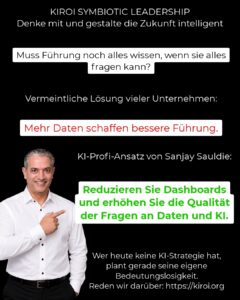
How useful was this post?

Click on a star to rate it!

Average rating 4.6 / 5. Vote count: 1298

No votes so far! Be the first to rate this post.

Spread the love

transruption.org

The digital toolbox for
the digital winners of today and tomorrow

Business excellence for decision-makers & managers by and with Sanjay Sauldie

transruption
transruption

transruption: The digital toolbox for
the digital winners of today and tomorrow

Start » Data Intelligence: Maximising Big Data & Smart Data for Decision-Makers
24 October 2025

Data Intelligence: Maximising Big Data & Smart Data for Decision-Makers

4.6
(1298)

Many companies today face the challenge of extracting real value from the flood of digital information. Data intelligence – the ability to collect, evaluate, and transform data into smart decisions – has therefore become a decisive success factor. Many of you come to me with specific questions: How do we develop viable data strategies? How do we find the truly relevant data in the information jungle? And how do we manage to involve employees from all departments?

From Big Data to Smart Data: Data Intelligence in Practice

Big Data describes enormous volumes of structured and unstructured data that arise in companies on a daily basis. The challenge rarely lies in collecting the data, but rather in selecting it: not every byte is valuable, and many companies get lost in data management because they store too much irrelevant information. This is where data intelligence comes into play. The aim is to specifically filter out Smart Data from Big Data, i.e. data that is clean, up-to-date, meaningful, and directly usable.

A company in the logistics sector used to collect all sensor and tracking data, and often had no overview. Only through data intelligence and targeted filtering was it possible to analyse only those parameters that are really important for real-time delivery forecasts and supplier evaluations. This made it possible to shorten delivery times and reduce costs.

BEST PRACTICE at the customer (name hidden due to NDA contract): A manufacturing company relied on a combination of maintenance data, machine runtime, and workshop reports. AI-powered analyses identified error patterns linked to ordering data. This streamlined the process and optimised warehouse planning, as spare parts could now be reordered more precisely and earlier.

Data intelligence is also demonstrated by sensibly connecting different sources. For example, a medium-sized retailer uses sales data, customer feedback, and weather data to plan targeted promotional campaigns. This increases the accuracy of marketing efforts because only data that is clearly linked to business success is used.

Data Intelligence as a Key Value Driver

More and more companies are realising that simply collecting data does not bring any added value. What is crucial is the ability to use data for specific questions – in other words, to build true data intelligence[2]. This means handling data in such a way that it enables informed decisions, improves processes, and drives innovation.

A classic example: analysing customer journey progressions across different channels. This helps companies with project management to understand the actual usage of software or services and to identify needs before customers leave[3]. This increases customer satisfaction, as adjustments can be made early on.

Data intelligence also makes it possible to specifically deploy sales and marketing measures. A B2B company used smart data applications to identify which customers were particularly interested in new solutions. The target group approach was then specifically controlled, which led to an increase in efficiency and sales [8].

BEST PRACTICE at the customer (name hidden due to NDA contract): A service provider in the healthcare sector used data intelligence to analyse the utilisation of practices and the workload of staff. This made it possible to reduce waiting times, optimise working hours and noticeably increase patient satisfaction, as processes were adapted flexibly and based on data.

Harnessing data intelligence specifically for your own business

There's no magic bullet, but many companies benefit from structured implementation of data intelligence. Here are some practical tips:

1. Define objectives clearly Consider what questions you want to answer. Only in this way can you decide which data are truly relevant and how they need to be processed.

2. Promoting Data Literacy Invest in the further training of your employees. Data intelligence thrives when everyone in the company can handle data effectively.

3. Using technology wisely: Utilise AI and machine learning to recognise relevant patterns. This allows large volumes of data to be filtered and analysed automatically [6].

4. Use current data: Do not rely on outdated information. Smart Data is current because it was already processed at the time of collection[1].

5. Starting with pilot projects First, test data intelligence in small units. This way, experience can be gained and the approach can be adapted for larger projects.

A company in the energy sector utilised data intelligence to optimise asset consumption. By analyzing sensor and load data, peak loads could be identified and energy usage precisely controlled. This not only saved costs but also made production more sustainable.

BEST PRACTICE at the customer (name hidden due to NDA contract): A medium-sized industrial company integrated data intelligence directly into production planning. Sensor data from machines was linked with order and inventory data. This made it possible to identify bottlenecks early on, minimise downtime, and meet delivery deadlines more reliably.

Transruptions-Coaching: Your Partner for Data Intelligence

Many of my clients start with uncertainties. They know that data is important, but they lack the structure to use it optimally. This is exactly where we come in with transruptions coaching: we guide you step-by-step on the path to data intelligence – from defining goals and selecting the right tools to sustainable implementation.

In coaching, we take a practical approach. Together, we'll analyse your starting position, identify your most important data sources, and develop individual strategies for your business success. We use agile methods so you can see initial results quickly and respond flexibly to changes.

You'll benefit from experienced sparring that helps you actively shape change. Your company will always remain at the centre of proceedings – and your employees will learn how to profitably use data intelligence in their day-to-day work.

My analysis

Data intelligence is not a short-term trend, but a central building block for the future. Companies that succeed in extracting smart, usable information from Big Data create clear competitive advantages. They optimise processes, increase customer satisfaction, and discover new business opportunities[2][6].

Data intelligence requires courage, curiosity, and a clear strategy. And it thrives on the collaboration of all stakeholders. Those who become active here shape the digital future – and benefit from increased efficiency, innovation, and flexibility.

If you want to make better use of your data, the journey to data intelligence is worthwhile. You don't have to know everything yourself – get the right support. Ask yourself: Where are we today? What do we want to achieve? And how can we get started together?

Further links from the above text:

Netconomy: Big Data vs. Smart Data – Is More Always Better? [1]

HubSpot DE: Was ist Smart Data? Definition, Anwendung und Vorteile [2]

Dataversity: Big Data vs. Smart Data [3]

Netconomy DE: Big Data vs. Smart Data – Is more always better? [6]

B2B Smart Data GmbH: What is Smart Data? [8]

Google Cloud: What Is Big Data? [9]

Oracle: What is Big Data? [13]

For more information and if you have any questions, please contact Contact us or read more blog posts on the topic TRANSRUPTION here.

How useful was this post?

Click on a star to rate it!

Average rating 4.6 / 5. Vote count: 1298

No votes so far! Be the first to rate this post.

Spread the love

Other content worth reading:

Data Intelligence: Leveraging Big Data & Smart Data Optimally for Decision-Makers

written by:

Keywords:

#Big Data #Datenintelligenz #Data strategy #DigitalisierungSportverein #SmartData

Follow me on my channels:

Questions on the topic? Contact us now without obligation

Contact us

[wpforms id="331781" title="false"]

More articles worth reading

    Leave a comment