
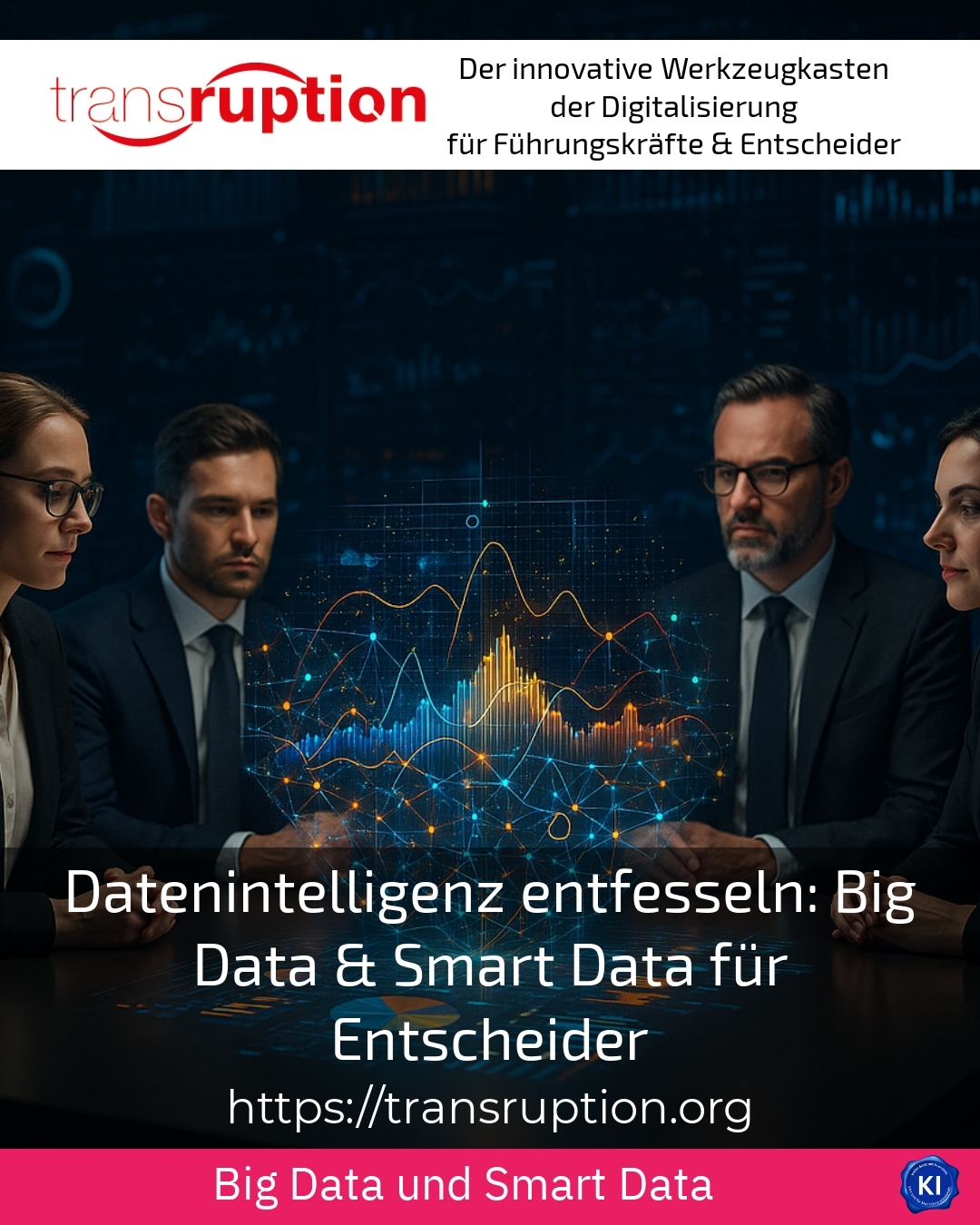
In the digital age, every company faces the challenge of extracting genuine added value from vast amounts of data. Data intelligence is the key to generating meaningful and usable insights from big data. Decision-makers benefit from targeted data analysis, as it enables precise decisions and supports sustainable business development. Data intelligence combines technology, processes, and human expertise to turn data into knowledge.
Big Data and Smart Data: What's the Difference?
Big Data describes the vast amounts of data that originate from a wide variety of sources. These include transaction data, sensor data, or information from social media. Often, this data is unstructured and difficult to process. Smart Data, on the other hand, consists of purposefully prepared datasets that provide directly usable insights. They are created through intelligent filtering, analysis, and contextualisation.
An example from the automotive industry: sensors deliver millions of data points per vehicle. With data intelligence, only the relevant values are extracted to predict maintenance needs. This creates smart data that concretely supports companies.
In healthcare, patient data and laboratory results are combined. Data intelligence helps to develop individual therapeutic approaches and optimise the course of treatment. In retail too, customer data is analysed to plan targeted marketing measures.
Data Intelligence in Practice: Application Areas and Examples
Personalised marketing strategies
Companies use data intelligence to recognise customer preferences. This allows marketing campaigns to be individually tailored. An online shop analyses purchasing behaviour and recommends suitable products. This increases conversion rates and customer satisfaction.
Another example: An insurance company segments its target groups and develops tailored offers. Data analysis shows which products are in particular demand and where improvements are needed.
Customer data is also analysed in the B2B sector to strengthen business relationships. Data intelligence helps to identify individual needs and offer solutions.
Optimisation of business processes
Data intelligence supports the optimisation of internal processes. A logistics company analyses routes and delivery times to improve the flow of goods. This reduces costs and increases customer satisfaction.
Another example: A manufacturing plant monitors machines in real-time. Data intelligence allows maintenance requirements to be identified early and downtime to be minimised.
Processes are also being optimised in the financial sector. Transaction data is analysed to identify risks and prevent fraud.
Trend and behaviour prediction
Data intelligence enables the prediction of market developments. A retailer analyses sales data to identify future trends. This allows for targeted adjustments to the product range.
Another example: An energy supplier forecasts consumption and adjusts generation accordingly. This prevents bottlenecks and increases security of supply.
Trends are also being recognised in the healthcare sector. Data intelligence helps to identify disease outbreaks early and take action.
Data intelligence as a strategic success factor
Data intelligence is a crucial competitive advantage today. Companies that use data strategically are faster and more flexible. They recognise opportunities and risks early and act proactively.
An example from industry: A machine manufacturer uses data intelligence to implement predictive maintenance. This prevents failures and increases product quality.
In retail, customer data is analysed to reduce returns. Data intelligence shows which products are frequently returned and why. This allows for improvements to be made.
Hospitals also benefit from data intelligence in the healthcare sector. Patient data is analysed to optimise treatment plans and reduce costs.
My analysis
Data intelligence is more than just a technology. It is a strategic mindset that empowers companies to generate knowledge from data. Decision-makers benefit from targeted data analysis, as it enables precise decisions and supports sustainable business development. Data intelligence combines technology, processes, and human expertise to create added value from data.
However, the implementation of data intelligence requires not only technical solutions, but also a clear strategy and the willingness to change processes. Companies that take this path are better positioned and can assert themselves on the market in the long term.
Further links from the text above:
Big data vs. smart data: is more always better?
Data intelligence: big data and smart data for decision-makers
Big data: the utilisation of large amounts of data
Smart data: definition, application and difference to big data
For more information and if you have any questions, please contact Contact us or read more blog posts on the topic TRANSRUPTION here.











 Deutsch
  English (UK)