kiroi.org

KIROI - Artificial Intelligence Return on Invest
The AI strategy for decision-makers and managers

Business excellence for decision-makers & managers by and with Sanjay Sauldie

KIROI - Artificial Intelligence Return on Invest: The AI strategy for decision-makers and managers

KIROI - Artificial Intelligence Return on Invest: The AI strategy for decision-makers and managers

Start » Cybersecurity Threats: How Decision-Makers Can Protect Themselves Now
6 November 2025

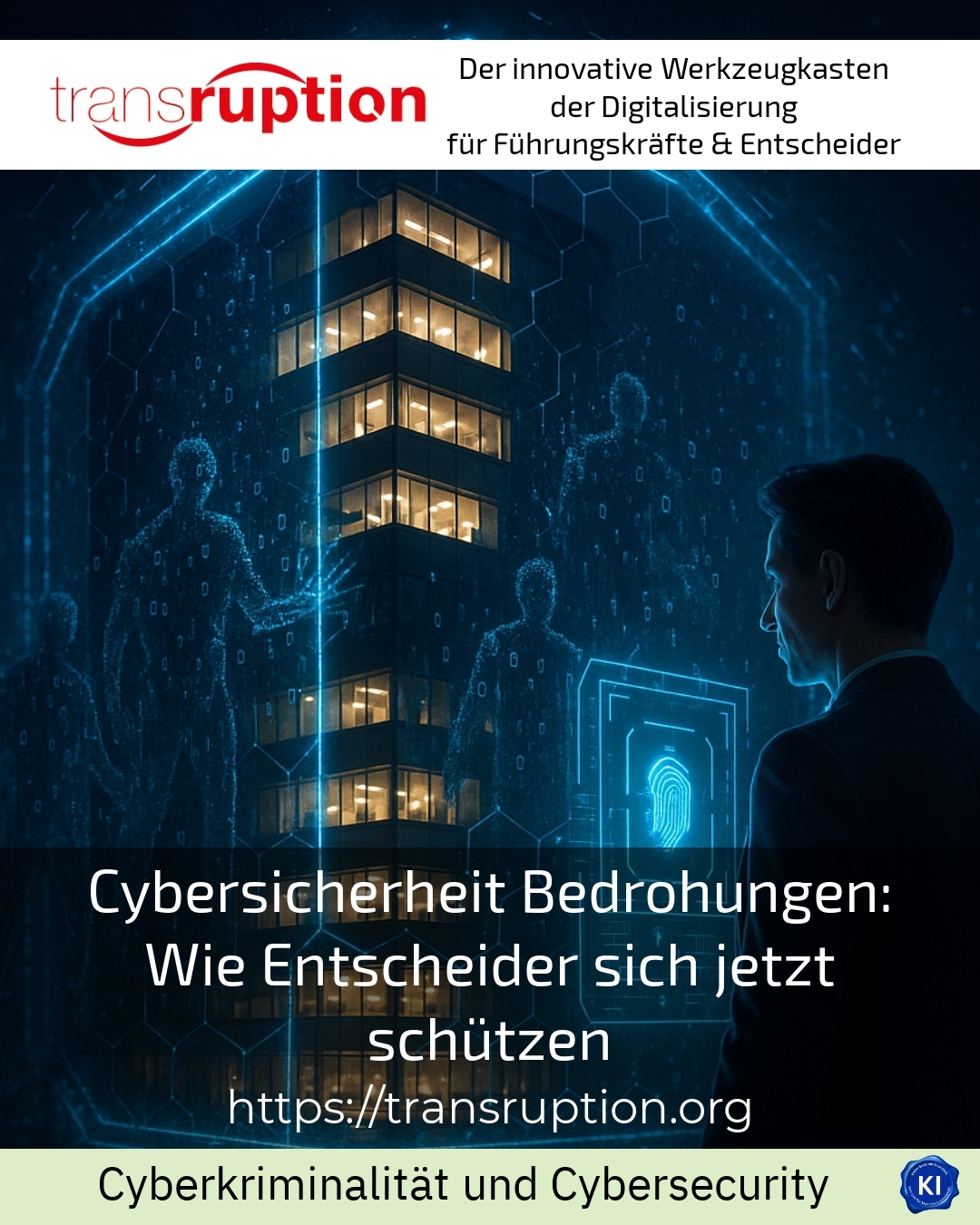
Cybersecurity Threats: How Decision-Makers Can Protect Themselves Now

4.2
(735)

In today's era, cyber-attacks are increasing in complexity and frequency. Executives, in particular, face the challenge of actively engaging with cybersecurity threats. Attackers are using increasingly sophisticated methods such as AI-powered attacks, phishing, or ransomware to compromise companies and critical infrastructure. Therefore, it is essential to implement appropriate protective measures in a timely manner and to align organisational processes accordingly.

Cybersecurity Threats: Recognising Challenges and Risks

Cybersecurity threats are increasing across many industries, posing a growing danger to businesses, especially small and medium-sized enterprises. A common example is the use of phishing emails, which deceive employees within companies and entice them to reveal sensitive data. For instance, a mechanical engineering firm from North Rhine-Westphalia reported that a supposed price list update containing malware brought its entire production to a standstill for days, incurring high costs.

In parallel, healthcare companies are increasingly experiencing ransomware attacks, where systems are encrypted and only released after ransom payment. E-commerce firms are also facing a rise in attacks using manipulated identities and deepfakes, which significantly strain IT security. Supply chains are also being targeted: an IT service provider experienced attacks initiated via suppliers, underlining the importance of holistic security concepts.

For these reasons, the threat from cyber-attacks is no longer just an IT issue, but a strategic challenge for the entire management. State and criminal actors are increasing the pressure, particularly on critical infrastructures such as energy and water supply, which requires cross-border cooperation.

How decision-makers can now effectively protect themselves from cybersecurity threats

Leaders must actively include the topic of cybersecurity threats on their agenda and think beyond purely technical solutions. The following three practical measures can help with this:

1. Building digital resilience and fault tolerance

A company from the logistics sector comprehensively secured its data centres and fibre optic networks against power outages and targeted attacks. This resulted in significantly higher operational stability. A financial service provider also invested in redundant systems to avoid data loss and downtime. Similarly, a manufacturer of medical devices proactively protects its cloud-based infrastructure against attacks, thereby minimising potential downtimes.

2. Combination of Training and AI-powered Monitoring

The continuous expansion of employee training is crucial to making phishing and social engineering attacks more difficult. A medium-sized software company regularly uses interactive workshops to raise awareness. In parallel, artificial intelligence monitors suspicious activities and alerts the security team early on. This helped a manufacturing company to stop a ransomware attack before data could be encrypted.

3. Promoting cooperation and industry-wide networks

An example from the chemical industry shows how companies in an alliance exchange information on current threats and security vulnerabilities. Likewise, a regional association of energy suppliers secures a higher level of protection against state-sponsored attacks through close cooperation and joint cyber exercises. Furthermore, the sharing of lessons learned by a telecommunications provider has specifically improved defences against new malware.

BEST PRACTICE at the customer (name hidden due to NDA contract) In a manufacturing company, we supported the implementation of a holistic cybersecurity strategy. We assisted management in selecting future-proof technologies, establishing emergency processes, and training employees. Furthermore, we helped implement compliance requirements such as the NIS 2 Directive to sustainably minimise risks.

Cybersecurity Threats: What Issues Leaders Are Facing Today

Most decision-makers report that they increasingly have to deal with protection against AI-powered attacks. In particular, the automated generation of malware or deceptive deepfake techniques present new challenges. One manufacturing company is intensively involved with post-quantum cryptography to protect sensitive data in the long term. Another is relying on a hybrid strategy of technical security and employee training to minimise risks.

Furthermore, governance issues such as compliance with legal requirements (NIS-2 or Cyber Resilience Act) have increasingly come into focus. Many executives are seeking guidance in developing practical measures and implementing binding standards to make their organisations more resilient.

My analysis

Cybersecurity threats are one of the biggest challenges for businesses across all industries today. The threat landscape is constantly growing, particularly due to new technologies like Artificial Intelligence and increasing digitalisation. Responses to this must be strategic: investments in resilience, focused employee training, and collaborative security networks are important building blocks. Decision-makers should actively shape this issue and seek professional guidance to effectively reduce risks and secure business operations.

Further links from the text above:

TÜV Cybersecurity Study

Strategic Priorities for Cybersecurity 2025

Cyber insurance in the shadow of growing threats

For more information and if you have any questions, please contact Contact us or read more blog posts on the topic TRANSRUPTION here.
How useful was this post?

Click on a star to rate it!

Average rating 4.2 / 5. Vote count: 735

No votes so far! Be the first to rate this post.

Spread the love

transruption.org

The digital toolbox for
the digital winners of today and tomorrow

Business excellence for decision-makers & managers by and with Sanjay Sauldie

transruption
transruption

transruption: The digital toolbox for
the digital winners of today and tomorrow

Start » Cybersecurity Threats: How Decision-Makers Can Protect Themselves Now
6 November 2025

Cybersecurity Threats: How Decision-Makers Can Protect Themselves Now

4.2
(735)

In today's era, cyber-attacks are increasing in complexity and frequency. Executives, in particular, face the challenge of actively engaging with cybersecurity threats. Attackers are using increasingly sophisticated methods such as AI-powered attacks, phishing, or ransomware to compromise companies and critical infrastructure. Therefore, it is essential to implement appropriate protective measures in a timely manner and to align organisational processes accordingly.

Cybersecurity Threats: Recognising Challenges and Risks

Cybersecurity threats are increasing across many industries, posing a growing danger to businesses, especially small and medium-sized enterprises. A common example is the use of phishing emails, which deceive employees within companies and entice them to reveal sensitive data. For instance, a mechanical engineering firm from North Rhine-Westphalia reported that a supposed price list update containing malware brought its entire production to a standstill for days, incurring high costs.

In parallel, healthcare companies are increasingly experiencing ransomware attacks, where systems are encrypted and only released after ransom payment. E-commerce firms are also facing a rise in attacks using manipulated identities and deepfakes, which significantly strain IT security. Supply chains are also being targeted: an IT service provider experienced attacks initiated via suppliers, underlining the importance of holistic security concepts.

For these reasons, the threat from cyber-attacks is no longer just an IT issue, but a strategic challenge for the entire management. State and criminal actors are increasing the pressure, particularly on critical infrastructures such as energy and water supply, which requires cross-border cooperation.

How decision-makers can now effectively protect themselves from cybersecurity threats

Leaders must actively include the topic of cybersecurity threats on their agenda and think beyond purely technical solutions. The following three practical measures can help with this:

1. Building digital resilience and fault tolerance

A company from the logistics sector comprehensively secured its data centres and fibre optic networks against power outages and targeted attacks. This resulted in significantly higher operational stability. A financial service provider also invested in redundant systems to avoid data loss and downtime. Similarly, a manufacturer of medical devices proactively protects its cloud-based infrastructure against attacks, thereby minimising potential downtimes.

2. Combination of Training and AI-powered Monitoring

The continuous expansion of employee training is crucial to making phishing and social engineering attacks more difficult. A medium-sized software company regularly uses interactive workshops to raise awareness. In parallel, artificial intelligence monitors suspicious activities and alerts the security team early on. This helped a manufacturing company to stop a ransomware attack before data could be encrypted.

3. Promoting cooperation and industry-wide networks

An example from the chemical industry shows how companies in an alliance exchange information on current threats and security vulnerabilities. Likewise, a regional association of energy suppliers secures a higher level of protection against state-sponsored attacks through close cooperation and joint cyber exercises. Furthermore, the sharing of lessons learned by a telecommunications provider has specifically improved defences against new malware.

BEST PRACTICE at the customer (name hidden due to NDA contract) In a manufacturing company, we supported the implementation of a holistic cybersecurity strategy. We assisted management in selecting future-proof technologies, establishing emergency processes, and training employees. Furthermore, we helped implement compliance requirements such as the NIS 2 Directive to sustainably minimise risks.

Cybersecurity Threats: What Issues Leaders Are Facing Today

Most decision-makers report that they increasingly have to deal with protection against AI-powered attacks. In particular, the automated generation of malware or deceptive deepfake techniques present new challenges. One manufacturing company is intensively involved with post-quantum cryptography to protect sensitive data in the long term. Another is relying on a hybrid strategy of technical security and employee training to minimise risks.

Furthermore, governance issues such as compliance with legal requirements (NIS-2 or Cyber Resilience Act) have increasingly come into focus. Many executives are seeking guidance in developing practical measures and implementing binding standards to make their organisations more resilient.

My analysis

Cybersecurity threats are one of the biggest challenges for businesses across all industries today. The threat landscape is constantly growing, particularly due to new technologies like Artificial Intelligence and increasing digitalisation. Responses to this must be strategic: investments in resilience, focused employee training, and collaborative security networks are important building blocks. Decision-makers should actively shape this issue and seek professional guidance to effectively reduce risks and secure business operations.

Further links from the text above:

TÜV Cybersecurity Study

Strategic Priorities for Cybersecurity 2025

Cyber insurance in the shadow of growing threats

For more information and if you have any questions, please contact Contact us or read more blog posts on the topic TRANSRUPTION here.

How useful was this post?

Click on a star to rate it!

Average rating 4.2 / 5. Vote count: 735

No votes so far! Be the first to rate this post.

Spread the love

Other content worth reading:

Cybersecurity Threats: How Decision-Makers Can Protect Themselves Now

written by:

Keywords:

#cybersicherheit #Cat attacks #Management #phishing #ransomware

Follow me on my channels:

Questions on the topic? Contact us now without obligation

Contact us

[wpforms id="331781" title="false"]

More articles worth reading

    Leave a comment