kiroi.org

KIROI - Artificial Intelligence Return on Invest
The AI strategy for decision-makers and managers

Business excellence for decision-makers & managers by and with Sanjay Sauldie

KIROI - Artificial Intelligence Return on Invest: The AI strategy for decision-makers and managers

KIROI - Artificial Intelligence Return on Invest: The AI strategy for decision-makers and managers

Start » Cyber Threat Protection: Innovative Strategies for Decision-Makers
24 October 2025

Cyber Threat Protection: Innovative Strategies for Decision-Makers

4.1
(1027)

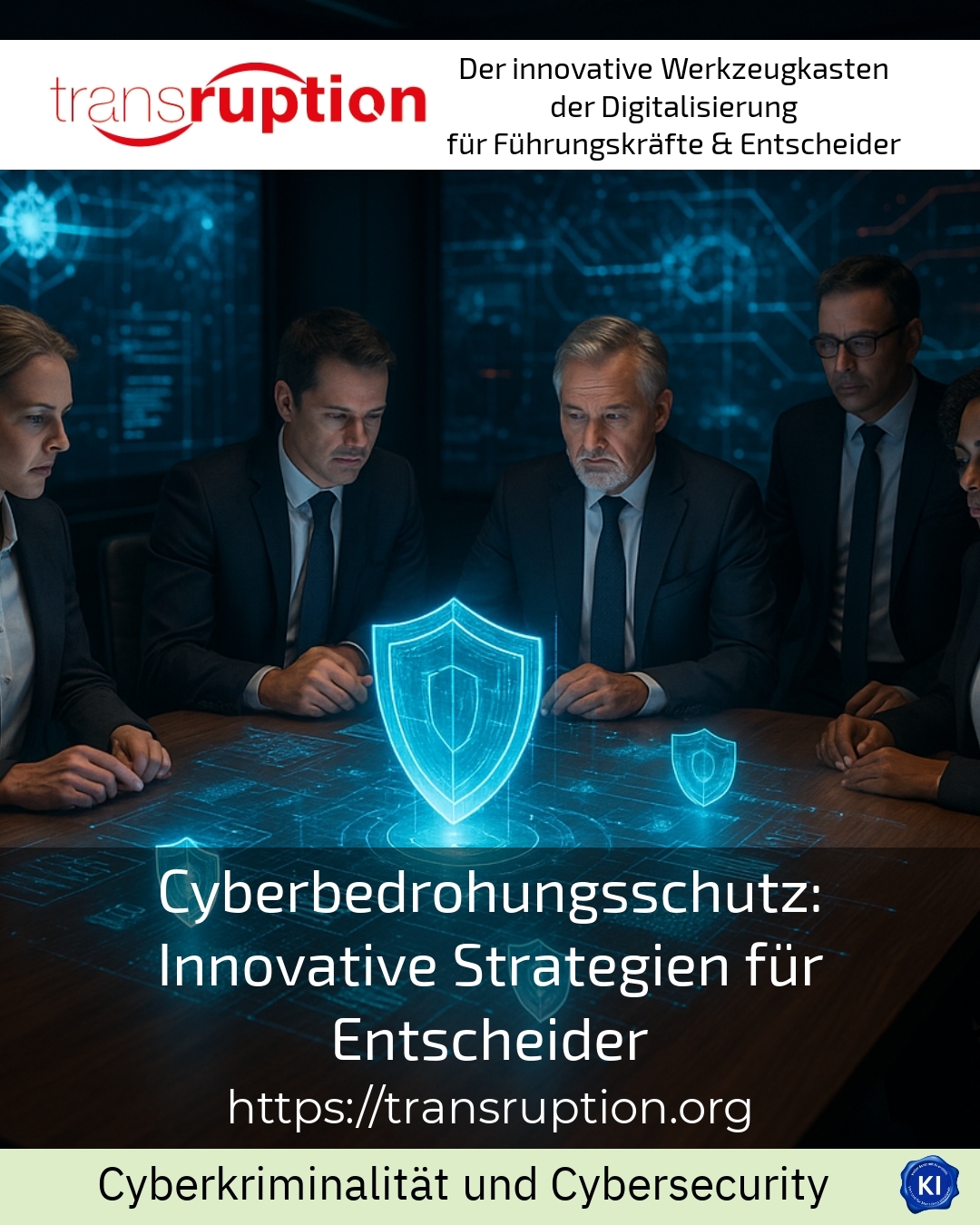
In an increasingly digitised world, the Cyber threat protection are increasingly important for companies. Attacks on IT infrastructures are becoming more complex and diverse, which is why decision-makers must proactively develop innovative strategies. Only in this way can potential damage be minimised and the integrity of sensitive data be guaranteed. Protection against cyber threats is no longer purely a technical task, but a strategic challenge that executives should actively address.

The importance of cyber threat protection for decision-makers

Decision-makers today face the challenge of not only purchasing technical solutions, but also designing comprehensive protection concepts. In this context, the awareness that humans are often the weakest link in the security chain is essential. Many companies report successful phishing attacks despite technical measures. An international financial services provider has significantly improved its detection rate for social engineering attacks through targeted employee training. Likewise, building a resilient infrastructure is necessary to remain operational in the event of failures. A medium-sized manufacturing company therefore invested in redundant server landscapes and backup systems that allow for quick recovery in emergencies.

Existing security strategies should increasingly integrate AI-powered technologies in the future. For example, a logistics company has introduced AI-based anomaly detection as part of its digitisation strategy. This detects irregularities in data traffic and issues early warnings of potential attacks. In parallel, many industry representatives are focusing on building security partnerships to quickly exchange information about new threats and coordinate joint countermeasures.

Innovative approaches to cyber threat protection

Modern strategies for Cyber threat protection rely on a combination of technical solutions and organisational resilience. Classic firewalls alone are often no longer sufficient to fend off sophisticated attacks. Instead, companies are establishing so-called zero-trust models, where no access is trusted by default – neither within nor outside the network.

An international energy sector group successfully implemented this access control, thereby significantly reducing the risk of internal and external threats. In addition to technical systems, regular crisis simulations are another key component. These help to test emergency scenarios in a practical way and identify weaknesses in procedures. A major telecommunications provider reports improved response times through targeted incident response exercises.

Furthermore, encrypted communication and post-quantum cryptography are gaining relevance. Due to advances in quantum computing, banks are rethinking their encryption methods to protect sensitive customer data in the long term. For example, a major German bank has launched a pilot project to evaluate new encryption techniques and integrate them into its IT security strategy.

Best Practices from the Industry

BEST PRACTICE at the customer (name hidden due to NDA contract) A leading technology company has developed a hybrid defence strategy that detects automated attacks in real-time with AI-powered monitoring. Simultaneously, staff are made aware of cyber risks through regular workshops. This combination led to a significant reduction in security incidents within one year.

BEST PRACTICE at the customer (name hidden due to NDA contract) A trading company strictly monitored its access controls following a transition to cloud services, applying Zero Trust principles and thus avoiding data breaches. Particular emphasis was placed on multi-factor authentication and proactive analysis of user behaviour.

BEST PRACTICE at the customer (name hidden due to NDA contract) In the health sector, a network of various clinics has been established to exchange important cyber threat intelligence. This cooperation helps in the rapid identification of new threats and the coordinated defence against complex attack patterns.

Practical tips for sustainable implementation

For the more successful Cyber threat protection Continuous training is crucial. Employees should be trained regularly to better recognise things like phishing emails. Without active awareness, even the best technology cannot be fully utilised. Furthermore, businesses can benefit from regular audits of their security architecture in order to identify hidden vulnerabilities.

Furthermore, it is advisable to develop clear emergency planning. This allows for the coordination of processes and the limitation of damage in an emergency. Transparent communication within the organisation promotes acceptance and understanding of security measures. One manufacturing company found that open discussions about risks and potential consequences significantly increased safety awareness within the team.

Last but not least, decision-makers should constantly monitor the dynamics of current threats. Trends such as the increase in AI-powered attacks or the expansion of ransomware require a proactive response and flexible adaptation of protection concepts.

My analysis

Protection against cyber threats is evolving into a core strategic task for decision-makers across all sectors. Innovative concepts that integrate technical innovations such as AI while also taking human behaviour into account are gaining importance. Particularly, the combination of technical prevention, organisational resilience, and cross-industry cooperation helps companies increase their robustness. Decision-makers are well advised to support these approaches holistically in order to remain capable of action in the long term and minimise risks. This is because cyber threat protection is not a state, but an ongoing process that provides impetus for a secure future.

Further links from the text above:

[1] Cybersecurity 2025: Four Strategic Priorities for Businesses
[2] Cybersecurity Trends 2025: Trends, Challenges & Opportunities
[3] 8 Upcoming Cybersecurity Trends in 2025
[4] Cyber Security Trends 2025 & Must-Do Measures
[5] The six most important cyber security trends in 2025 in Germany & Europe
[6] Cybersecurity Trends 2025: The Challenges for CISOs
[8] Cybersecurity 2025: New Threats & Protective Measures

For more information and if you have any questions, please contact Contact us or read more blog posts on the topic TRANSRUPTION here.
How useful was this post?

Click on a star to rate it!

Average rating 4.1 / 5. Vote count: 1027

No votes so far! Be the first to rate this post.

Spread the love

transruption.org

The digital toolbox for
the digital winners of today and tomorrow

Business excellence for decision-makers & managers by and with Sanjay Sauldie

transruption
transruption

transruption: The digital toolbox for
the digital winners of today and tomorrow

Start » Cyber Threat Protection: Innovative Strategies for Decision-Makers
24 October 2025

Cyber Threat Protection: Innovative Strategies for Decision-Makers

4.1
(1027)

In an increasingly digitised world, the Cyber threat protection are increasingly important for companies. Attacks on IT infrastructures are becoming more complex and diverse, which is why decision-makers must proactively develop innovative strategies. Only in this way can potential damage be minimised and the integrity of sensitive data be guaranteed. Protection against cyber threats is no longer purely a technical task, but a strategic challenge that executives should actively address.

The importance of cyber threat protection for decision-makers

Decision-makers today face the challenge of not only purchasing technical solutions, but also designing comprehensive protection concepts. In this context, the awareness that humans are often the weakest link in the security chain is essential. Many companies report successful phishing attacks despite technical measures. An international financial services provider has significantly improved its detection rate for social engineering attacks through targeted employee training. Likewise, building a resilient infrastructure is necessary to remain operational in the event of failures. A medium-sized manufacturing company therefore invested in redundant server landscapes and backup systems that allow for quick recovery in emergencies.

Existing security strategies should increasingly integrate AI-powered technologies in the future. For example, a logistics company has introduced AI-based anomaly detection as part of its digitisation strategy. This detects irregularities in data traffic and issues early warnings of potential attacks. In parallel, many industry representatives are focusing on building security partnerships to quickly exchange information about new threats and coordinate joint countermeasures.

Innovative approaches to cyber threat protection

Modern strategies for Cyber threat protection rely on a combination of technical solutions and organisational resilience. Classic firewalls alone are often no longer sufficient to fend off sophisticated attacks. Instead, companies are establishing so-called zero-trust models, where no access is trusted by default – neither within nor outside the network.

An international energy sector group successfully implemented this access control, thereby significantly reducing the risk of internal and external threats. In addition to technical systems, regular crisis simulations are another key component. These help to test emergency scenarios in a practical way and identify weaknesses in procedures. A major telecommunications provider reports improved response times through targeted incident response exercises.

Furthermore, encrypted communication and post-quantum cryptography are gaining relevance. Due to advances in quantum computing, banks are rethinking their encryption methods to protect sensitive customer data in the long term. For example, a major German bank has launched a pilot project to evaluate new encryption techniques and integrate them into its IT security strategy.

Best Practices from the Industry

BEST PRACTICE at the customer (name hidden due to NDA contract) A leading technology company has developed a hybrid defence strategy that detects automated attacks in real-time with AI-powered monitoring. Simultaneously, staff are made aware of cyber risks through regular workshops. This combination led to a significant reduction in security incidents within one year.

BEST PRACTICE at the customer (name hidden due to NDA contract) A trading company strictly monitored its access controls following a transition to cloud services, applying Zero Trust principles and thus avoiding data breaches. Particular emphasis was placed on multi-factor authentication and proactive analysis of user behaviour.

BEST PRACTICE at the customer (name hidden due to NDA contract) In the health sector, a network of various clinics has been established to exchange important cyber threat intelligence. This cooperation helps in the rapid identification of new threats and the coordinated defence against complex attack patterns.

Practical tips for sustainable implementation

For the more successful Cyber threat protection Continuous training is crucial. Employees should be trained regularly to better recognise things like phishing emails. Without active awareness, even the best technology cannot be fully utilised. Furthermore, businesses can benefit from regular audits of their security architecture in order to identify hidden vulnerabilities.

Furthermore, it is advisable to develop clear emergency planning. This allows for the coordination of processes and the limitation of damage in an emergency. Transparent communication within the organisation promotes acceptance and understanding of security measures. One manufacturing company found that open discussions about risks and potential consequences significantly increased safety awareness within the team.

Last but not least, decision-makers should constantly monitor the dynamics of current threats. Trends such as the increase in AI-powered attacks or the expansion of ransomware require a proactive response and flexible adaptation of protection concepts.

My analysis

Protection against cyber threats is evolving into a core strategic task for decision-makers across all sectors. Innovative concepts that integrate technical innovations such as AI while also taking human behaviour into account are gaining importance. Particularly, the combination of technical prevention, organisational resilience, and cross-industry cooperation helps companies increase their robustness. Decision-makers are well advised to support these approaches holistically in order to remain capable of action in the long term and minimise risks. This is because cyber threat protection is not a state, but an ongoing process that provides impetus for a secure future.

Further links from the text above:

[1] Cybersecurity 2025: Four Strategic Priorities for Businesses
[2] Cybersecurity Trends 2025: Trends, Challenges & Opportunities
[3] 8 Upcoming Cybersecurity Trends in 2025
[4] Cyber Security Trends 2025 & Must-Do Measures
[5] The six most important cyber security trends in 2025 in Germany & Europe
[6] Cybersecurity Trends 2025: The Challenges for CISOs
[8] Cybersecurity 2025: New Threats & Protective Measures

For more information and if you have any questions, please contact Contact us or read more blog posts on the topic TRANSRUPTION here.

How useful was this post?

Click on a star to rate it!

Average rating 4.1 / 5. Vote count: 1027

No votes so far! Be the first to rate this post.

Spread the love

Other content worth reading:

Cyber Threat Protection: Innovative Strategies for Decision-Makers

written by:

Keywords:

#Cyberbedrohungsschutz #cybersicherheit #Privacy #KIinIT #Zero Trust

Follow me on my channels:

Questions on the topic? Contact us now without obligation

Contact us

[wpforms id="331781" title="false"]

More articles worth reading

    Leave a comment