kiroi.org

KIROI - Artificial Intelligence Return on Invest
The AI strategy for decision-makers and managers

Business excellence for decision-makers & managers by and with Sanjay Sauldie

KIROI - Artificial Intelligence Return on Invest: The AI strategy for decision-makers and managers

KIROI - Artificial Intelligence Return on Invest: The AI strategy for decision-makers and managers

Start » Mastering cultural transformation: KIROI step 4 for leaders
26 January 2025

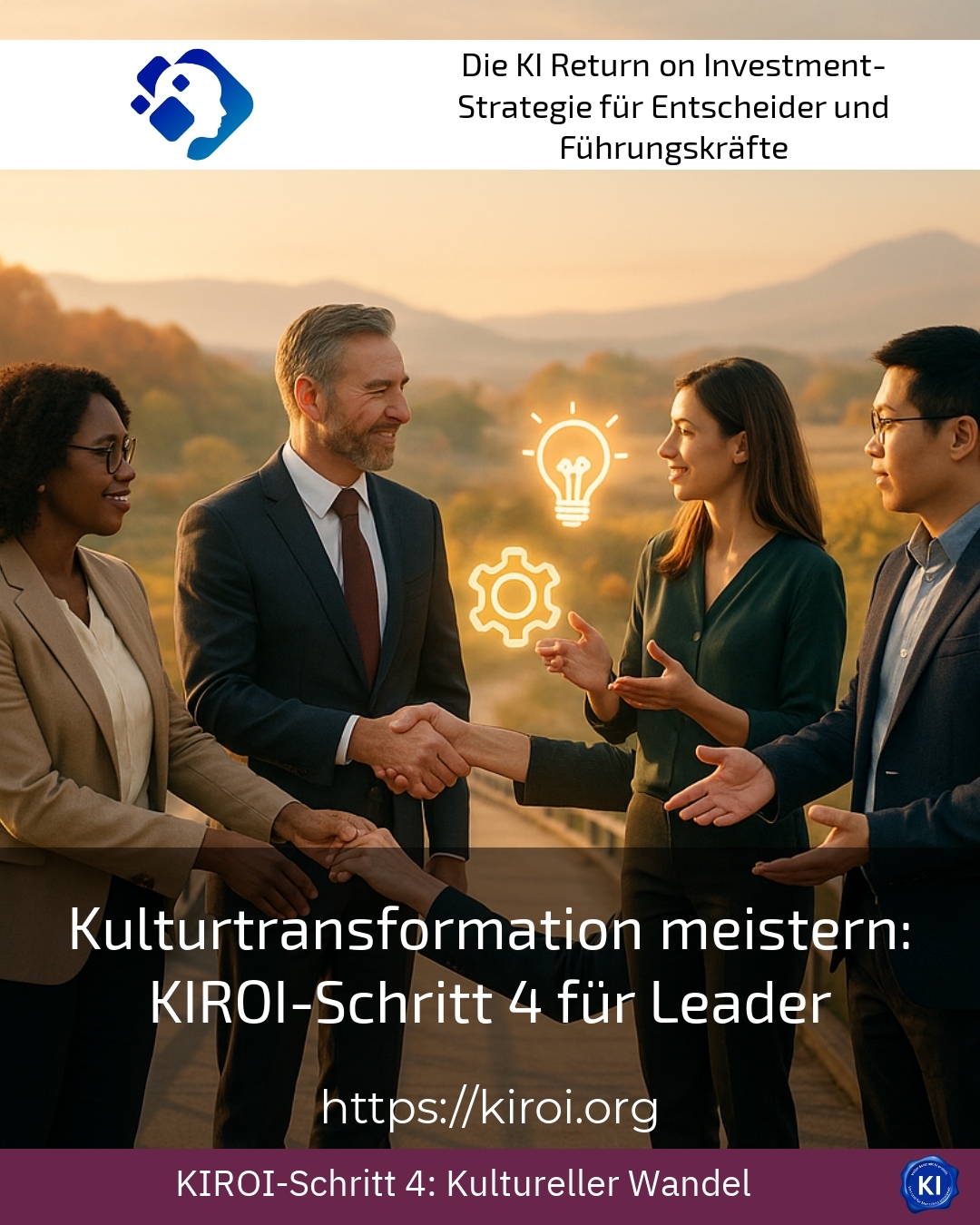
Mastering cultural transformation: KIROI step 4 for leaders

4.3
(747)

Culture transformation is an essential lever today for sustainably strengthening companies in a dynamically changing world. For leaders in particular, the fourth step in the KIROI model represents a key phase: they are challenged to actively support cultural change and take responsibility for long-term transformation. In this article, you will learn how leaders can master culture transformation successfully – with practical examples and concrete impulses.

Understanding and Shaping Cultural Transformation

The term "culture transformation" describes a profound process in which values, beliefs, and behaviours within an organisation are systematically developed. It is not about superficial adjustments, but about sustainable changes that enable better adaptation to today's challenges, such as digitalisation or new ways of working. Leaders are central to this, as they must act as role models and drivers of change. Only through their active embodiment of the desired culture do credible impulses and acceptance arise among employees.

In sectors such as manufacturing SMEs, for example, innovative leadership teams support cultural transformations by enabling greater transparency and promoting agile working methods. In the service sector, clients often report that trust and open communication are essential for breaking down existing silo structures. An international IT company, in turn, uses cultural transformation to embed an innovation-driven mindset and retain talent in the long term.

KIROI Step 4: Actively Lead Cultural Transformation

The fourth step in the KIROI process particularly emphasises the role of leaders: managers should keep the new culture alive together with their teams. This means they should make the change visible, encourage feedback processes, and consistently demand change. They don't just support it; they ensure that the defined values and behaviours become tangible day after day.

An example from the healthcare sector shows how a hospital manager supported cultural transformation through regular workshops and personal conversations. This quickly addressed reservations about new workflows and established a collaborative culture of learning from mistakes. In a retail company, on the other hand, high employee motivation was achieved through transparent communication of transformation progress. Another example is provided by an educational organisation where managers act as cultural mediators. They promote exchange between generations and create space for learning.

Best Practice: Cultural Transformation with KIROI Step 4

BEST PRACTICE with one customer (name hidden due to NDA contract) The leadership of an innovative technology group used Step 4 of the KIROI model to anchor the new culture through targeted coaching and structured feedback cycles. Employees were more involved in decision-making processes, and leaders acted as role models for the culture. The changes led to a measurable increase in innovative strength and employee satisfaction.

Practical tips for leaders during cultural transformation

To successfully support cultural transformation, the following measures are recommended:

  • Clear communication: Regularly share the status of the change and explain the reasoning behind it.
  • Take on a role model function: Live the new values authentically to generate credibility.
  • Foster a feedback culture: Encourage teams to openly discuss progress and obstacles.
  • Make successes visible: Celebrate milestones and recognise individual commitment.
  • Maintain flexibility: Adapt action plans iteratively to new findings and needs.

In the automotive industry, executives report that creating safe learning environments significantly reduces resistance. In the consulting sector, cultural change processes are particularly successful when employees are actively involved in shaping them. An energy provider was able to noticeably increase resonance and appreciation through regular team events and leadership seminars, which are central pillars of a new culture.

Cultural transformation as a competitive advantage

The design of a vibrant corporate culture is not just an internal concern. Companies that consistently implement cultural transformation benefit from greater adaptability and innovative capacity. New talent is more strongly attracted, and employee retention improves. Thus, cultural change becomes a sustainable driver of corporate success.

Above all, for leaders: they are the catalysts and companions in the complex process of cultural transformation. Their ability to shape change and bring people along often determines success. In doing so, it is worthwhile to continuously invest in one's own development in order to keep pace with the dynamics of change.

My analysis

Culture transformation is a multifaceted process that is significantly shaped by the commitment of leadership. The fourth step in the KIROI model illustrates how leaders can act as active shapers of their cultural environment. Through authentic role-modelling, clear communication, and targeted feedback, they can anchor change sustainably. Practical examples from various industries show that flexible and participatory approaches are particularly promising. It is becoming increasingly important for companies to strategically support culture transformation, as this is the only way to master the challenges of the future.

Further links from the text above:

The path to successful cultural transformation
Leaders as catalysts for co-creative transformation
Culture transformation – 4 steps and 4 interconnections
Cultural change: 6 effective steps to transform company culture
Corporate Transformation: Culture, Processes & AI
Culture and Leadership Development
Conscious culture transformation
Cultural Transformation: Management's Responsibilities
Cultural Transformation – Definition and Approach
Mastering cultural transformation: KIROI step 4 for managers

For more information and if you have any questions, please contact Contact us or read more blog posts on the topic Artificial intelligence here.

How useful was this post?

Click on a star to rate it!

Average rating 4.3 / 5. Vote count: 747

No votes so far! Be the first to rate this post.

Spread the love

transruption.org

The digital toolbox for
the digital winners of today and tomorrow

Business excellence for decision-makers & managers by and with Sanjay Sauldie

transruption
transruption

transruption: The digital toolbox for
the digital winners of today and tomorrow

Start » Mastering cultural transformation: KIROI step 4 for leaders
26 January 2025

Mastering cultural transformation: KIROI step 4 for leaders

4.3
(747)

Culture transformation is an essential lever today for sustainably strengthening companies in a dynamically changing world. For leaders in particular, the fourth step in the KIROI model represents a key phase: they are challenged to actively support cultural change and take responsibility for long-term transformation. In this article, you will learn how leaders can master culture transformation successfully – with practical examples and concrete impulses.

Understanding and Shaping Cultural Transformation

The term "culture transformation" describes a profound process in which values, beliefs, and behaviours within an organisation are systematically developed. It is not about superficial adjustments, but about sustainable changes that enable better adaptation to today's challenges, such as digitalisation or new ways of working. Leaders are central to this, as they must act as role models and drivers of change. Only through their active embodiment of the desired culture do credible impulses and acceptance arise among employees.

In sectors such as manufacturing SMEs, for example, innovative leadership teams support cultural transformations by enabling greater transparency and promoting agile working methods. In the service sector, clients often report that trust and open communication are essential for breaking down existing silo structures. An international IT company, in turn, uses cultural transformation to embed an innovation-driven mindset and retain talent in the long term.

KIROI Step 4: Actively Lead Cultural Transformation

The fourth step in the KIROI process particularly emphasises the role of leaders: managers should keep the new culture alive together with their teams. This means they should make the change visible, encourage feedback processes, and consistently demand change. They don't just support it; they ensure that the defined values and behaviours become tangible day after day.

An example from the healthcare sector shows how a hospital manager supported cultural transformation through regular workshops and personal conversations. This quickly addressed reservations about new workflows and established a collaborative culture of learning from mistakes. In a retail company, on the other hand, high employee motivation was achieved through transparent communication of transformation progress. Another example is provided by an educational organisation where managers act as cultural mediators. They promote exchange between generations and create space for learning.

Best Practice: Cultural Transformation with KIROI Step 4

BEST PRACTICE with one customer (name hidden due to NDA contract) The leadership of an innovative technology group used Step 4 of the KIROI model to anchor the new culture through targeted coaching and structured feedback cycles. Employees were more involved in decision-making processes, and leaders acted as role models for the culture. The changes led to a measurable increase in innovative strength and employee satisfaction.

Practical tips for leaders during cultural transformation

To successfully support cultural transformation, the following measures are recommended:

  • Clear communication: Regularly share the status of the change and explain the reasoning behind it.
  • Take on a role model function: Live the new values authentically to generate credibility.
  • Foster a feedback culture: Encourage teams to openly discuss progress and obstacles.
  • Make successes visible: Celebrate milestones and recognise individual commitment.
  • Maintain flexibility: Adapt action plans iteratively to new findings and needs.

In the automotive industry, executives report that creating safe learning environments significantly reduces resistance. In the consulting sector, cultural change processes are particularly successful when employees are actively involved in shaping them. An energy provider was able to noticeably increase resonance and appreciation through regular team events and leadership seminars, which are central pillars of a new culture.

Cultural transformation as a competitive advantage

The design of a vibrant corporate culture is not just an internal concern. Companies that consistently implement cultural transformation benefit from greater adaptability and innovative capacity. New talent is more strongly attracted, and employee retention improves. Thus, cultural change becomes a sustainable driver of corporate success.

Above all, for leaders: they are the catalysts and companions in the complex process of cultural transformation. Their ability to shape change and bring people along often determines success. In doing so, it is worthwhile to continuously invest in one's own development in order to keep pace with the dynamics of change.

My analysis

Culture transformation is a multifaceted process that is significantly shaped by the commitment of leadership. The fourth step in the KIROI model illustrates how leaders can act as active shapers of their cultural environment. Through authentic role-modelling, clear communication, and targeted feedback, they can anchor change sustainably. Practical examples from various industries show that flexible and participatory approaches are particularly promising. It is becoming increasingly important for companies to strategically support culture transformation, as this is the only way to master the challenges of the future.

Further links from the text above:

The path to successful cultural transformation
Leaders as catalysts for co-creative transformation
Culture transformation – 4 steps and 4 interconnections
Cultural change: 6 effective steps to transform company culture
Corporate Transformation: Culture, Processes & AI
Culture and Leadership Development
Conscious culture transformation
Cultural Transformation: Management's Responsibilities
Cultural Transformation – Definition and Approach
Mastering cultural transformation: KIROI step 4 for managers

For more information and if you have any questions, please contact Contact us or read more blog posts on the topic Artificial intelligence here.

How useful was this post?

Click on a star to rate it!

Average rating 4.3 / 5. Vote count: 747

No votes so far! Be the first to rate this post.

Spread the love

Other content worth reading:

Mastering cultural transformation: KIROI step 4 for leaders

written by:

Keywords:

#ChangeManagement #compliance #Ethikrichtlinien #remote leadership #yellow #Kulturtransformation #Sustainability #Unternehmenskultur #Verantwortungsketten

Follow me on my channels:

Questions on the topic? Contact us now without obligation

Contact us

[wpforms id="331781" title="false"]

More articles worth reading

    Leave a comment